

From Insight to Impact
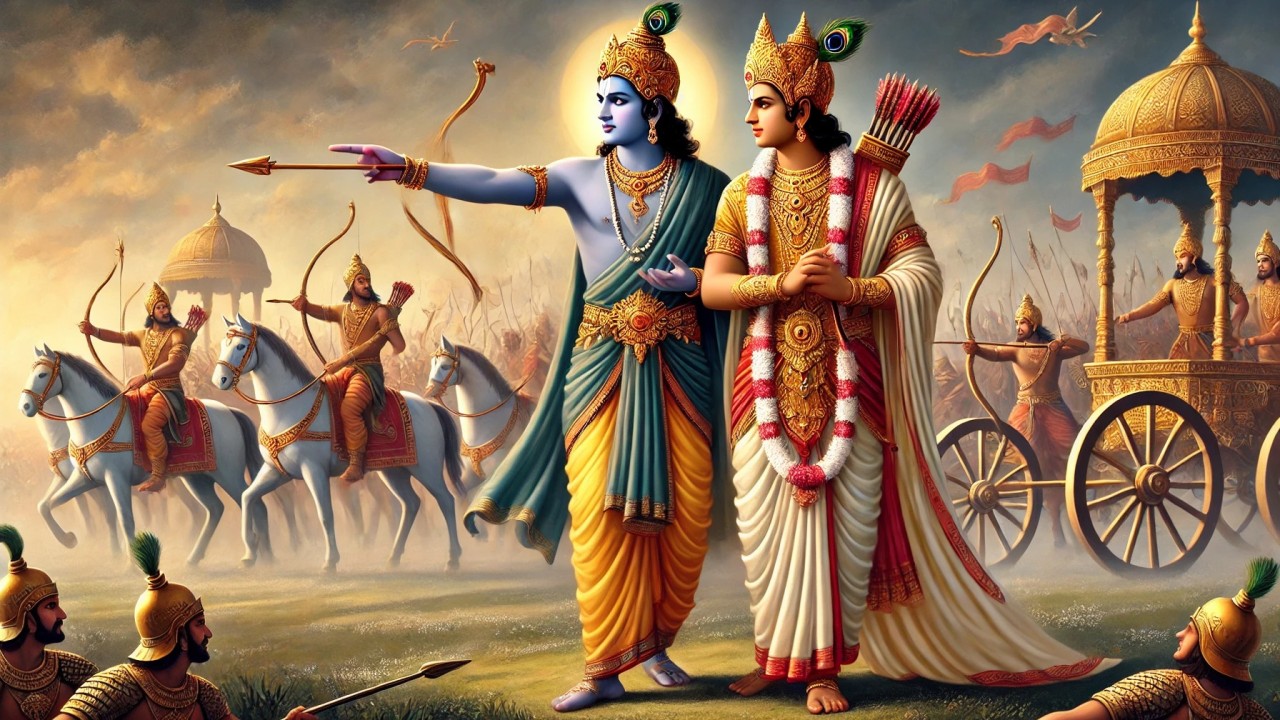
Today is Janmashtami, a Hindu festival that celebrates the birth of Lord Krishna. Krishna’s teachings in the Bhagavad Gita are among the most enduring leadership principles. It is here that Krishna imparts profound lessons to Prince Arjuna, focusing on duty, detachment, and self-realisation. Krishna, like a mentor and a coach, guides Arjuna to perform his duties without attachment to outcomes, emphasising the importance of action and self-discipline. These teachings offer timeless wisdom for modern organisational leadership. They help leaders navigate complexity, inspire others, and lead with integrity and clarity.
When we strip away the mythology and the battlefield, what you get is a leadership playbook for modern organisations. Here is my interpretation of Krishna’s teachings to modern-day leadership.
🔑 1. Dharma = Purpose-Driven Leadership
Krishna constantly reminds Arjuna of his dharma—his duty, his role in the greater cosmic order.
In corporate terms, leaders need to anchor themselves in purpose and responsibility. Not just their ambitions, but the higher mission of the organisation and the well-being of stakeholders. Leaders who lose sight of this often burn out or mislead their teams.
🔑 2. Detached Involvement = Leading Without Ego
Krishna’s famous line: “You have the right to action, not to the fruits of action.”
Translation: focus on excellence and integrity in execution, but don’t get entangled in outcomes, titles, or recognition. This is a crucial lesson for leaders drowning in quarterly targets or obsessed with optics. Detachment from ego allows for clarity, resilience, and better decision-making.
🔑 3. Clarity in Ambiguity = Decision-Making in Crisis
The Gita is one long executive coaching session: Arjuna is paralysed by self-doubt, and Krishna guides him back to clarity.
In leadership: when teams face uncertainty, the leader’s role is to hold space, cut through confusion, and enable courageous choices. A Krishna-style leader doesn’t give easy answers but helps others rise into their wisdom.
🔑 4. Self-Mastery = Emotional Intelligence
Krishna emphasises the balance of the mind and mastery over impulses. In today’s workplace, emotional intelligence, self-awareness, and regulation are the bedrock of sustainable leadership. If a leader can’t manage their inner state, they won’t manage an organisation effectively.
🔑 5. Service, Not Self = Servant Leadership
Krishna leads by serving—he becomes Arjuna’s charioteer, not his commander. That image alone is powerful: true leaders roll up their sleeves, guide, and empower rather than dominate.
🔑 6. Inspiring Action = Visionary Communication
Krishna inspires not by giving orders but by connecting Arjuna to purpose, values, and the bigger picture. Leadership is not about power; it’s about evoking commitment and energy in others through vision and narrative.

The dialogue between Krishna and Arjuna in the Bhagavad Gita is deeply insightful for steering life’s challenges. Through Krishna’s teachings, leaders can find actionable wisdom to overpower modern-day struggles with boldness, clarity, and intention.
When we boil it down: Krishna’s leadership is purpose-led, ego-free, service-oriented, emotionally intelligent, and deeply human. Exactly what modern organisations desperately need.