

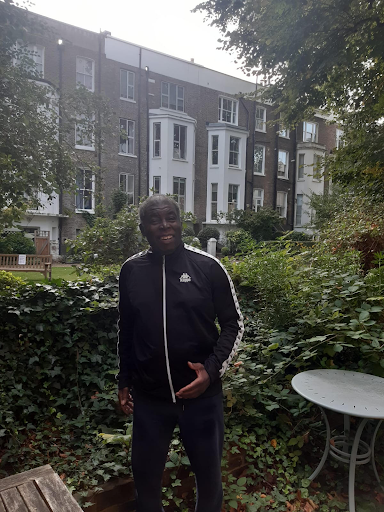
In this Thrive Global series, we hear directly from people sharing stories of transformation after using GLP-1 medications, a new class of drugs for diabetes and weight management.
Kofi Agyemang’s weight journey
Growing up in London with his two siblings, Kofi Agyemang enjoyed playing rugby and other sports. At home, the family sat down for meals together. “My mother cooked all the time, but we were encouraged to eat everything on our plate, and I ate too many carbohydrates like rice and cereal,” says Kofi. “And I had way too much sugar.”
As a young man, Kofi continued to exercise regularly, but that changed when he started a high-pressure job in finance. He says he was overworking and not taking care of himself. “My lifestyle wasn’t great, and it started to catch up with me.”
At 32, he was diagnosed with type 2 diabetes, and in his 50s, he developed chronic kidney disease — a serious complication of diabetes.
He tried a variety of eating programs, but nothing worked long-term. “I was yo-yo dieting — I’d lose weight and gain it again.” His health conditions, including obesity, affected his quality of life. “I was tired all the time. I’d rationalize and make excuses to get out of doing activities with friends.”
Why Kofi started a GLP-1
Kofi, now 59 — a retired logistics manager — lives in London with his brother, Doug. Devoted to his large, close-knit family, in recent years he often didn’t have enough energy for them. He recalls taking his 14-year-old niece, Jemima, to the theater: “I was exhausted,” he says.
A new doctor told him he was looking at the prospect of dialysis. At 5 foot 10½, he weighed 280 pounds. “I was scared and thought, I’ve got to do something different.”
At the diabetes clinic he attends, his endocrinologist recommended a GLP-1 to help manage his diabetes and weight. Encouraged by two close friends who’d had great results with GLP-1s, Kofi decided to give it a try.
Kofi’s Early experiences on a GLP-1
Right away, Kofi found his appetite diminished. “I was having lunch with my friend and her kids, and I wasn’t hungry at all — I was literally pushing food around my plate.”
At first he experienced heartburn and nausea, but gradually learned to manage his side effects. What helped: avoiding meat in the evenings, alcohol, and late-night snacks, and staying well hydrated by drinking water and tea throughout the day.
Kofi adjusted his diet, cutting down on rice and pasta and eating more salad and vegetables like cauliflower and broccoli. He also added more fruit — especially apples and fresh berries.
“Dinner might be a small bowl of Thai noodles and two chicken drumsticks. It’s a fraction of what I used to eat.” He cut way down on fast food too. “I still have a burger occasionally — everything in moderation. And I do keep some chocolate and ice cream on hand in case I want a little.”
Regular exercise — walking, swimming, and Pilates — has become part of his daily life. “I’m doing so much more. I have a rowing machine at home, and I used to walk past it and look at it — now I’m using it every day, and I’m building strength.”
As the pounds dropped, Kofi felt noticeably healthier.
How life feels today
Now 60 pounds lighter, the biggest impact has been on Kofi’s health. “There’s been a huge improvement,” he says. “When I see my doctors, they’re always smiling when they look at my numbers. They say, keep on doing what you’re doing.”
Kofi has more energy for his family now. “I went to a museum with Jemima and some friends and I was able to walk around for three hours.”
An unexpected benefit: he’s saving money. “My Uber Eats bill used to be really high from fast food deliveries; it’s much less now.”
As he’s lost weight, Kofi’s confidence has grown. “Self-esteem goes hand in hand with wellbeing,” he says. “You feel good, so you don’t slouch and drag your feet.” Clothes that were too tight a year ago now fit, and outings with friends are more enjoyable. “When I go to watch the cricket at Lord’s— instead of wearing tracksuit bottoms like I used to, I wear well-fitting trousers with a shirt and blazer. I feel comfortable and nice.”
For the first time in decades, the future looks bright. “I’m much more optimistic now,” says Kofi. “There was a time when I thought, oh gosh, am I going to survive? Now I’m looking forward to the next decade.”
What Kofi wants others to know
Kofi recommends avoiding ultra-processed food. “Junk food shouldn’t be your staple diet. You don’t have to give everything up, but your body will get used to feeling healthier, and you won’t want to go back to fast food. It won’t taste good.”
Another key for Kofi is movement. “Even if you’re just walking instead of sitting, it’ll feel good,” he says. “I found if you exercise in conjunction with the GLP-1 and eat well, you’ll accelerate the whole process.”