Every single organization out there… it’s goal is to serve a customer.
– Hermie the HR Hermit Crab
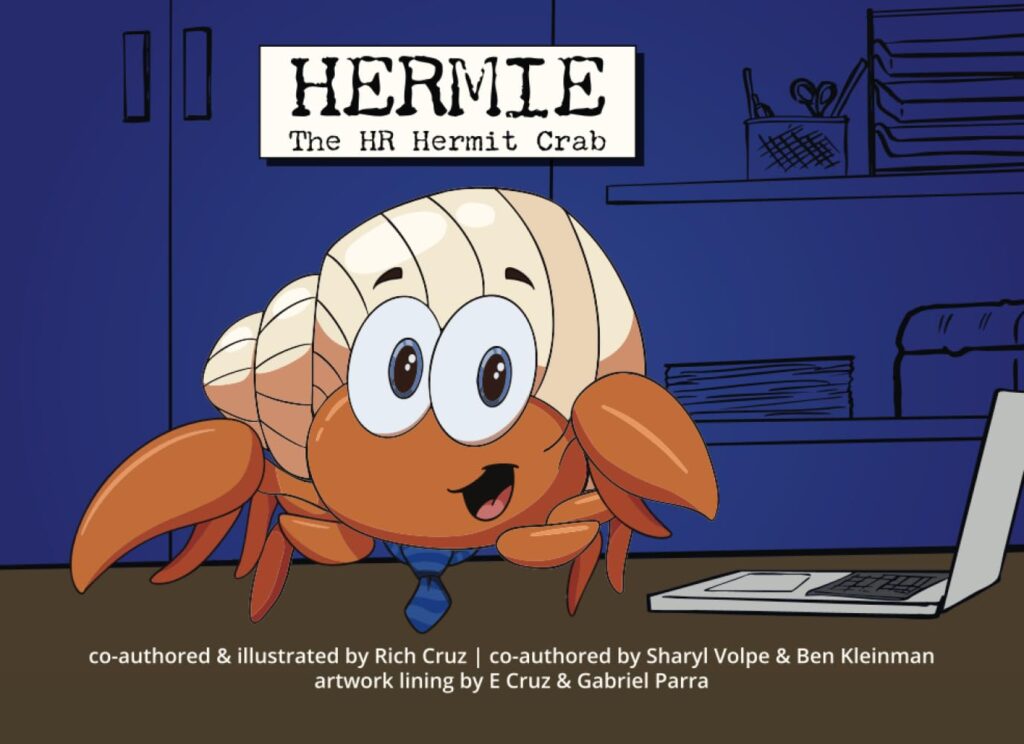
This episode dives into the character of Hermie the HR Hermit Crab—a workplace cartoon brought to life through Harmonious Workplaces. With a cast that includes Boss Beta, Cat Meow, Marshall Fetcher (a Labrador in Sales), Gary Gecko in IT, Rocco Ratt the custodian, Pia Mooch the Chihuahua project manager, and Hermione McCrab in DEI, Hermie uses humor to make serious conversations feel safe. He’s here to talk about adapting to change—minus the crabbiness—and to bring a little Monday‑morning human connection to the way we lead, learn, and work.
In this conversation with Stacey Chillemi, we explore why change feels like an ending, the fight–flight–fawn–freeze responses that show up at work, and what actually helps teams move forward: champions, shared goal‑setting, and real psychological safety. We dig into communication (without the noise), structured feedback, and the messy reality of IT and system shifts—right down to a typewriter‑to‑word‑processor moment—along with the role of appreciation and a simple truth: organizations exist to serve a customer. We also touch on Hermie’s growing world of comics and stories, the book available on Amazon and through Ingram, and the next volume already in the works. Dive in below
Thank you so much for joining us! Our readers would love to get to know you a bit better. Can you tell us a bit about your backstory?
I’m Hermie the HR Hermit Crab, a workplace cartoon who lives among a crew that makes organizational life both relatable and oddly comforting: Boss Beta, Cat Meow, Marshall Fetcher the Labrador in Sales, Gary Gecko in IT, Rocco Ratt the custodian, Pia Mooch the Chihuahua project manager, and Hermoine McCrab in DEI. My purpose is to help people adapt to change without the crabbiness, using humor to make serious topics feel safe and approachable. It’s humbling to step from the page into a conversation like this, because the heart of the work is human connection—starting the week grounded, seen, and heard. I’m brought to life through the Harmonious Workplaces platform, where stories and cartoons pair with practical ideas to make workplaces more human and more effective.
Why do people get so “crabby” when change hits the workplace?
Change often signals an ending, and endings trigger grief—even when people ask for the change. The familiar routines we rely on can feel like a warm blanket—or, for me, a well‑worn shell—and letting them go is emotionally taxing. Humans are deeply habitual; our brains equate predictability with safety, so uncertainty can feel like a threat. Recognizing that discomfort as normal makes it easier to meet one another with empathy rather than judgment, which is where real adaptation begins.
A lot of us “test” new leaders—even when we wanted the change. What’s going on there?
That testing phase is a natural defense mechanism: the ego checks whether a new leader understands the world before trust is granted. Internally, there’s a tug‑of‑war—grieving the loss of the old status quo while hoping for the benefits of what’s next. Those mixed emotions surface as resistance, snark, or even silence; none of that means people are bad actors, only that they’re protecting what felt safe. Naming the tension, setting clear expectations, and creating early wins help the psyche move from guarded to engaged.
Walk us through the classic fight–flight–fawn–freeze responses at work.
When change lands, the reptilian brain flips to survival mode: fight, flight, fawn, or freeze. Fight resists directly—debates, roadblocks, or passive‑aggressive pushback that can stall momentum while signaling fear underneath. Flight retreats into the shell—avoiding meetings, dodging decisions, or hiding in busywork—which feels safer but solves little. Fawn tries to please change agents so the discomfort disappears, while freeze is the shutdown state where disengagement takes root; all four are common, understandable reactions leaders should anticipate and meet with clarity and care.
Can you introduce a few members of your HR crew?
Gary Gecko in IT is diligent and skilled, but when stress spikes, he’s a world‑class hider; we even captured that tendency in a recent comic for a gentle laugh and a knowing nod. Rocco Ratt, our custodian, is newer to the cast and a quiet backbone—always keeping operations moving, even if the occasional lock‑in reminds us everyone’s human. The crew’s quirks are intentional; they’re mirrors we can smile at while recognizing our own patterns. Through these characters, there’s a safe distance to talk about very real workplace behaviors.
What simple, human steps actually help people adapt?
First, acknowledge feelings; organizations are social systems made of nervous systems, and emotions are data. Second, recruit change champions who can normalize the new way and provide peer‑to‑peer safety so people don’t feel alone. Third, use shared goal‑setting so individuals align organizational aims with personal development—when strengths are leveraged, positive affect, satisfaction, and engagement rise. Those basics don’t eliminate fear, but they give it somewhere constructive to go and keep progress moving.
Departures and layoffs can spike anxiety. How important is communication?
It’s foundational—communication is the core responsibility of any change leader. Everyone touched by the shift is a stakeholder, and they deserve timely, accessible information with as little “static” as possible. Psychological safety is non‑negotiable; without it, uncertainty trips the primitive brain and attention collapses. Short stand‑ups, consistent updates, and clear avenues for questions calm the system so people can keep doing their best work.
Can there be too much communication?
Absolutely! Over‑communication without structure becomes noise and exhausts people. That’s why mechanisms matter: feedback forms (anonymous or not) let people speak without a stage; town halls work when they’re well‑scaffolded; moderated Q&A channels keep dialogue focused and respectful. Even simple chat backchannels and private question queues lower the bar to participation. The goal is not “more messages,” but “more clarity with less friction.”
IT and system changes often create chaos. How should organizations approach them?
Technology quickly becomes part of culture because it shapes daily behavior. Switching suites, or running blended ones, confuses where work lives, so start with clear policies: which tool for which purpose, and why. Map how people actually work now, then teach the side‑by‑side “old way/new way,” moving from explain to demonstrate to guided practice to empowerment. When people understand the why and feel supported in the how, adoption accelerates and morale stays intact.
Any memorable example of skill transitions?
There’s a classic scenario of moving an organization from typewriters to word processors; at first, folks kept sneaking back to the typewriters. Removing them felt like a gut punch, but it also created the conditions to translate skills and discover the joy of editing without whiteout. The lesson isn’t to be harsh; it’s to pair necessary constraints with meaningful support so people experience new competence quickly. Once that happens, resistance softens into momentum.
On the lighter side, do hermit crabs hug?
We’re more social than people think. We share shells, true hand‑me‑downs that get a bit of spit‑and‑polish and a second life, and we show affection in our claw‑armed way, taking care not to pinch. The image is playful, but the principle is serious: growth often requires borrowing safety from the community until a new shell fits. A workplace that normalizes mutual aid makes change feel less like exposure and more like evolution.
What else reduces “crabbiness” during change?
Invite people to set and own their goals; autonomy turns compliance into commitment. Encourage real friendships at work; social support is a powerful buffer against uncertainty and a reliable source of courage. Above all, treat change as a future ally: fear will show up, so plan for the fear and keep moving anyway. Helping others through the transition often becomes the very thing that steadies us.
What’s one universal truth about organizations?
Every organization exists to serve a customer, whether that customer is a patient, student, congregant, or buyer. When daily choices orient toward truly meeting those needs, individual needs find alignment and meaning follows. Customer‑centrism is a focusing device that clarifies priorities when turbulence hits and prevents work from turning inward. It also reminds teams that coherence inside the organization is how care is delivered outside.
Where does appreciation fit in?
Appreciation is the connective tissue that keeps the hamster wheel from feeling pointless. When people feel seen, the grind regains purpose, and the nervous system relaxes enough to learn. Small, specific acknowledgments travel farther than generic praise because they mark a real contribution in real time. In periods of change, appreciation is fuel—it keeps discretionary effort available when the road bends.
Where can readers find your book—and what’s next?
The book is available on Amazon, and it’s also distributed through Ingram, so some booksellers who source via Ingram may carry it. People can reach out through the Harmonious Workplaces channels if they want a copy or to connect about the work. Behind the scenes, the authors are developing book two while continuing to publish new cartoons and stories online. It’s a playful doorway into practical conversations about culture, communication, and change.
Any parting encouragement for teams navigating change right now?
Hang in there… it might only be the third quarter, and the final quarter can change everything. Keep communication loops open, keep support systems warm, and keep looking for the next small step forward. Treat change like a friend you’re still getting to know: set boundaries, ask questions, and remain curious. Progress in uncertain times grows from clear intentions and compassionate execution.
How can our readers further follow your work online?
Readers can explore the characters, cartoons, and updates on the Hermie pages and across the Harmonious Workplaces site, which hosts resources and stories for more human‑centered change. The book is on Amazon for those who want the full collection in one place. The broader platform offers an easy way to keep laughter and learning in the same conversation while staying in the loop on new releases. It’s the simplest path to continue making change.
Hermie, thank you for bringing wisdom with a smile. This was a joy!
Thank you, Stacey. Grateful for the conversation…and here’s to every team making change.