

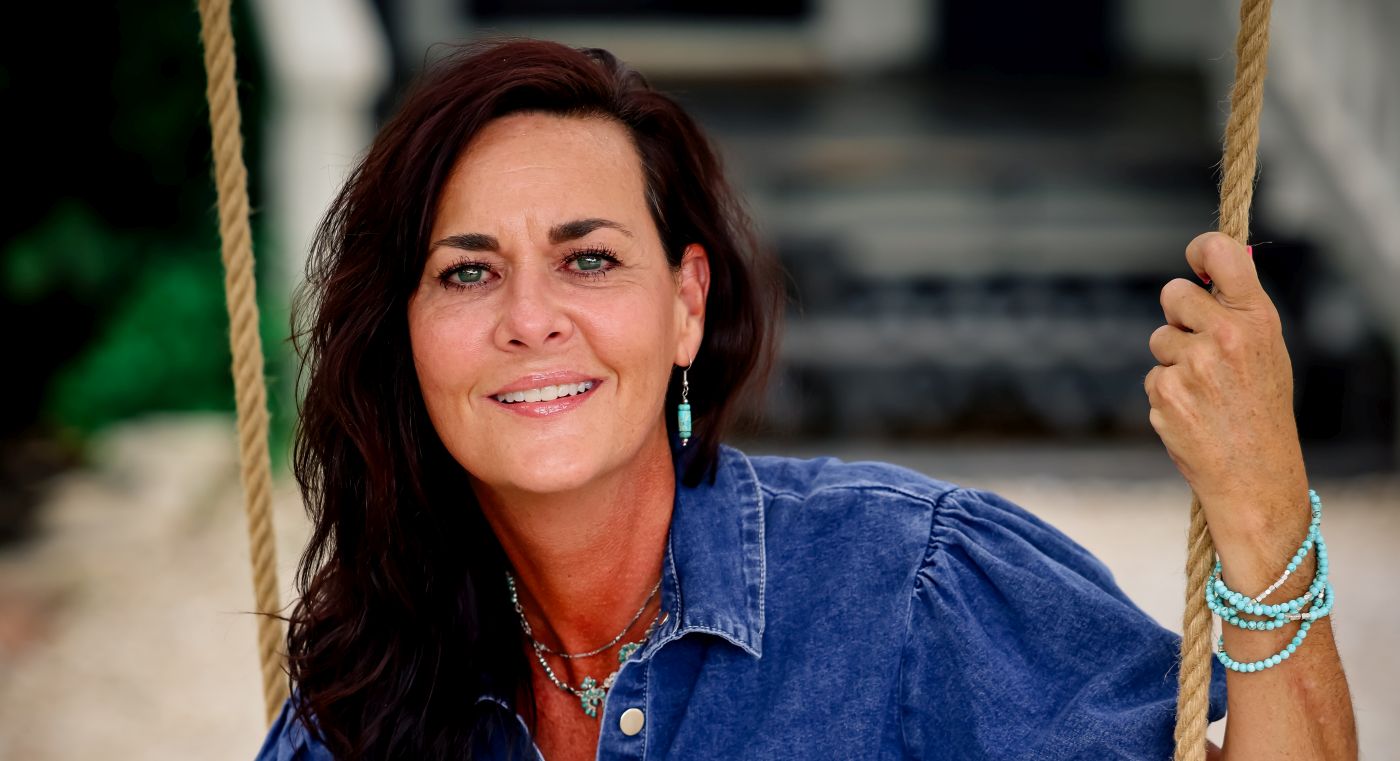
As a forensic accountant and fraud investigator, Beth Jones worked on complex investigations around the world, including the Enron case. Her job required her to read behavior under pressure, and identify patterns that other people missed.
But despite decades of investigating others, there was one person she never thought to investigate: herself.
A personal breakthrough in 2020 led Jones to reexamine the way she showed up as a leader. What she discovered surprised her. Many of the qualities that had helped her succeed professionally – self-sufficiency, emotional distance, and the need to stay in control – were survival patterns she had developed long before she ever managed a team.
Today, Jones works as a leadership performance strategist. She developed The HEAL Framework™ to help executives identify the hidden behaviors that may be affecting the way they lead and connect with others.
In this interview, she shares what she learned from turning her investigative lens inward and how you, too, can build healthier relationships with both yourself and your team.
Beth, you spent more than 30 years as a forensic accountant and fraud investigator working with firms across dozens of countries. That’s not a typical path into leadership development. What finally pulled you away from it?
During those 30 years, I observed human behavior under pressure. Not only in the people I investigated, but also in the people and leaders on the teams I worked with. So much of what I observed was when the pressure became too much for an individual it was as if something inside them felt threatened.
Today, I know that’s exactly what was happening. Often, people defaulted to their survival patterns.
I got really good at reading those reactions. When they came from alleged perpetrators or witnesses, they were often signs that we were on the right path to the truth and should keep digging. When they came from the team, I knew they meant that something about the working arrangement had to change. As a leader, it was my job to figure out the underlying issue and help resolve it.
The commonality is that I always traced behavior back to its root cause. What I didn’t see coming was the moment I turned that same lens on myself.
In June 2020, I had a life-altering event that upended my world. I realized I had no idea who I am, and if I didn’t know me, that meant no one knew me. I was terrified.
I went on a healing journey to figure it out. I had to investigate myself (finally!). That included discovering my purpose and the reason I’m here on Earth. Today, I know that it is the sum of all of me: my trauma, the ways I survived, my healing journey, and my 30+ year career, together, those make me relatable to those I serve as a leadership performance strategist and the HEALing Mentor.

You were someone who operated at a very high level for a very long time. Was there a moment when you looked at your own behavior, such as the patterns, the ambition, and the way you showed up, and realized something wasn’t adding up?
There was no single moment when I had that realization. Instead, it was a slow burn that unfolded over time as I went through my healing journey. Of course, what I was experiencing personally intersected with my professional life. I’m a human being.
That life-altering event was a hypnotherapy session I went to for help “connecting with people.” What I discovered that day was a buried memory of childhood sexual abuse, trauma I had been carrying since I was five years old. Ultimately, my inability to connect stemmed from a 45-year-old protective wall I had been building and living behind since that day. My healing journey is where I did the work to dismantle that wall, which was full of my trauma, unprocessed emotions, and the coping mechanisms I had used to survive my life.
At first, my investigation was entirely personal, but soon I began to see that many of my survival patterns had been and were showing up in my leadership style. And many of them are the behaviors we reward in high-performing leaders.
For example, I played the part of a professional, put-together, in-control leader. I never mixed personal Beth with professional Beth. Back then, you were either a Facebook friend or a LinkedIn connection, but never both.
That person’s on their game, right? That is what we reward: performative leadership and executive presence.
Really, I was keeping people at arm’s length, not allowing them to get close to me, though I didn’t really know it, and I definitely didn’t know why. That was my inability to connect showing up in my leadership style. And it had been there my entire career.
What did that recognition feel like, and what changed first?
What I discovered that day in hypnotherapy sent me into a very dark and desolate place. There were some days early on when I struggled to get out of bed. But that big job I had meant I had a lot of accountability and responsibility. So I was forced into a place of vulnerability because I had to ask for help, above and below me.
The first people I told were my boss, our regional head of HR, and my partner, with whom I was co-managing the biggest and most difficult investigation of my career. Telling them was scary because all of the questions you can imagine about credibility, sanity, trust, and keeping my job were running through my head. But it was also liberating because I was beginning to talk about what had happened to me in my past. Some of that pain in my wall was beginning to come out.
Their responses were wonderful, compassionate, and completely supportive.
Then I started talking to the people who technically reported up to me, human to human, not boss to employee. And so many of them opened up. The gap between me and new hires, me and men, and me and people from other cultures (I was living in Hong Kong at the time) began to close as more and more people leaned in to me.
My ability to be truly vulnerable and connect with people is what changed first.
You created The HEAL Framework™ to provide other leaders with a structured path through this work. For someone who hears the word “healing” and immediately wants to close the browser tab, what would you want them to know before they do?
I want them to know that closing the browser tab is the survival pattern in action. Avoidance, right on cue.
At any point in time in our lives, we are the sum of all of our experiences. If a leader is carrying trauma and unprocessed emotions, which most of us are, that cannot be separated from the professional part of the leader and left at the door when he/she enters the office. That is impossible.
I’m not asking leaders to sit in a circle and talk about their feelings. I’m asking them to look honestly at whether the way they’re leading right now is actually working — for themselves, for their team, for the people in their lives who are waiting for the version of the leader who is not running on hypervigilance, perfectionism, and control.
High performers are extraordinarily good at optimizing everything except the thing underneath our performance, the survival patterns. I’m talking about the survival patterns that formed long before we had a title, long before we had a team, long before anyone was watching us.
Our survival patterns formed because something happened to us, and we adapted to stay safe. That adaptation was intelligent and necessary at the time. It kept us functioning when we had no other tools. But those patterns do not stay in the past. They show up in every meeting where we shut down feedback we can’t process. In every relationship where we hold people at arm’s length without understanding why. And in every decision we make out of fear rather than clarity.
The HEAL Framework™ is not theoretical, academic, clinical, or “woo woo.” It’s a structured, practical methodology for identifying which behavioral patterns are survival strategies in disguise, and for replacing them with ones that actually serve the leader you want to be. We cannot perform our way out of a survival pattern. We can only heal it.
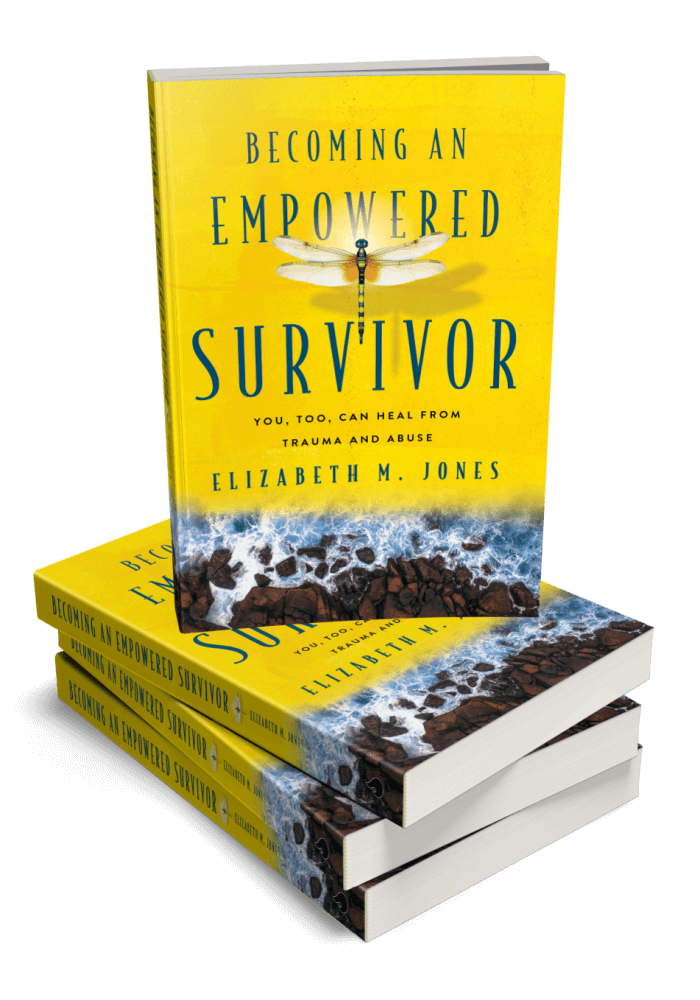
You work with high-performing leaders who, from the outside, look like they have it completely together. What do you actually see when you look at them?
Sometimes I see high-performing leaders who are also healthy. But, most of the time, I see the version of me who used to exist. I see the leader, who, the day before hypnotherapy, was exhausted from the version of me I had built to survive.
Through 30 years of investigations, witness interviews, and working with teams under intense pressure, I’ve learned to read what’s happening beneath the performance. With leaders, it shows up in very specific ways, such as the one who controls every detail of every project because delegation feels like a threat to their safety rather than a management choice. Or, the one who processes everything alone, who would rather get it wrong quietly than risk being seen struggling, or the one whose team produces excellent results, but their team member with the highest potential would rather leave than stay another year working for someone they can’t reach.
What most people call a bad leader, or difficult leadership behavior, I recognize as survival mode.
The precision that looks like perfectionism. The self-sufficiency that looks like strength. The distance that reads as professional boundaries. These are not character flaws. They are adaptations. Those highly intelligent adaptations to something that happened long before that person ever held a leadership role.
When I see these leaders, I also see someone who lacks self-awareness. The thing about survival mode is that it is invisible to the person inside it. You cannot see the wall when you are the one who built it.
What does your own life look like now, day to day, compared to who you were when you were deep in the investigation work?
My life is radically different today, in every possible way. I don’t do forensic accounting investigations anymore because, as I mentioned earlier, I am living my purpose as a leadership performance strategist and the HEALing Mentor today. But I still use those same investigative skills to serve the people I work with and to continue with my own healing. And although healing is hard work and sometimes painful, it’s nothing compared to the over-functioning, exhaustion, and sometimes near-burnout that my life used to cost me.
I don’t live behind my wall anymore. I have processed my trauma and A LOT of my emotions that were stuck in that wall. All the people I had exiled from my life, such as my family and friends, are back in it. I no longer engage in reckless behavior where I could have killed myself or someone else. In fact, I don’t even drink a glass of wine with dinner anymore. And my inner critic, whom I like to call my wretched abuser, only has an occasional soft whisper these days.
Most importantly, my days are filled with love because now I know how to show up in and with love for the people I hold dear. Every decision I make is driven by self-love first. And while my first marriage was a casualty of my healing process, today I am married to a wonderful man who genuinely loves me for who I am, not who I used to be. In fact, he has no idea who that person is.
Did you know?
The pressure to stay “on” doesn’t disappear when people reach the top. In fact, it often gets worse. A ZeroBounce survey found that nearly 3 in 4 professionals feel pressure to respond to work emails outside regular working hours, and that pressure is even higher among top earners. The same study found that 71% of people check work email while on vacation, with many saying they do it out of fear rather than necessity.
Ready to look beneath the surface?
If Beth Jones’s story resonated with you, there’s much more to explore. To learn more about her work and The HEAL Framework™, visit her website, Empowered Survivors, and explore the free resources. You might want to subscribe to Beth’s podcast and Substack, too.