
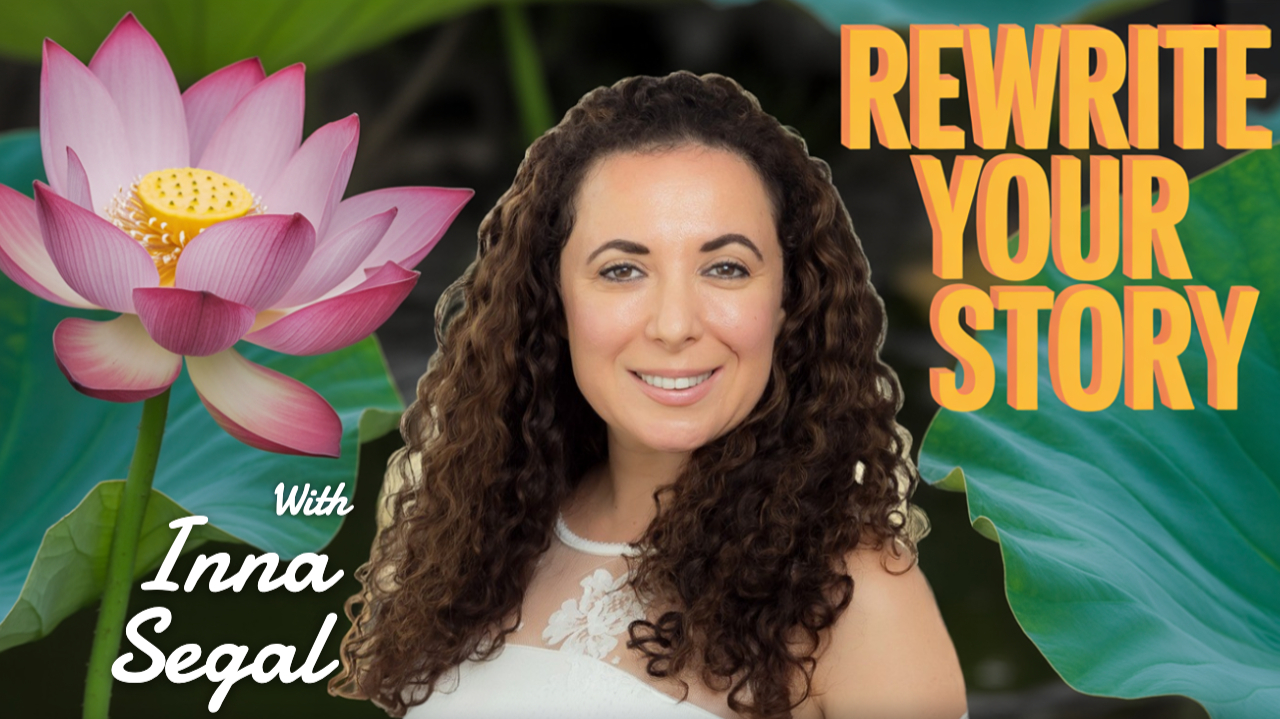
“The body often reflects what has gone unspoken, especially across generations.”
– Inna Segal
Across cultures and family systems, stories are often passed down not only through words, but through patterns—emotional responses, health challenges, and deeply ingrained beliefs about safety, belonging, and survival. While these patterns may not always be consciously remembered, many people sense their influence in the body itself: chronic tension, recurring symptoms, or emotional reactions that seem disproportionate to present-day circumstances.
For Inna Segal, this realization emerged through her own family history. As she began exploring her health, she noticed recurring digestive challenges across generations—patterns that appeared less coincidental and more interconnected. That curiosity became the foundation of her work, which focuses on helping people explore how inherited emotional experiences may shape both physical and emotional well-being.
The Body as a Record Keeper
Segal describes the body as a kind of archive—holding experiences that were never fully processed or expressed. In families where trauma, displacement, or loss went unspoken, the emotional residue often found expression elsewhere. Silence, she observed, didn’t erase hardship; it redirected it.
Her grandparents’ experiences during wartime displacement and survival left a profound imprint on her understanding of generational stress. Though rarely discussed aloud, the emotional weight of fear, instability, and prolonged uncertainty shaped family dynamics long after the events themselves had passed.
Early Conditioning and the Nervous System
Developmental research suggests that the early years of life are a period of heightened sensitivity. During this time, children often absorb not only behaviors but emotional cues from caregivers—stress, anxiety, or emotional suppression—before they have language to interpret them.
Segal’s work emphasizes that awareness of this early conditioning can be an important step toward change. While patterns may form unconsciously, they do not have to remain fixed. Understanding how the nervous system learned to respond allows people to introduce new signals of safety and regulation later in life.
Patterns That Repeat Until They’re Seen
Many people notice that certain challenges—whether emotional, relational, or health-related—seem to recur within families. Segal suggests that identifying these patterns with curiosity rather than blame can soften their hold.
When people begin tracing similarities across generations, they often discover that what once felt personal or isolating has a broader context. That realization alone can reduce shame and create space for compassion—for oneself and for those who came before.
The Role of Choice and Resonance
Not every inherited experience carries forward in the same way. Segal notes that individuals resonate differently with shared family history. Some patterns are embraced, others resisted, and some are expressed indirectly. Even when a person consciously chooses a different path, emotional echoes may still surface until they are acknowledged.
Healing, in this framework, is less about erasing the past and more about relating to it differently.
Listening to the Body’s Signals
Segal encourages paying attention to the body’s messages without immediately trying to “fix” them. Areas such as digestion, breath, posture, and muscular tension often respond quickly to emotional stress. Rather than interpreting these signals as failures, she frames them as invitations—to slow down, reflect, and restore balance.
Practices like journaling, gentle movement, breath awareness, and visualization can help people reconnect with internal cues in a way that feels accessible rather than overwhelming.
Boundaries as an Act of Care
One theme that emerges consistently in Segal’s work is the importance of boundaries—particularly within families. Learning to distinguish between empathy and emotional over-responsivity can improve both personal well-being and relationships.
Setting limits, she explains, is not a rejection of connection, but a way of sustaining it with clarity and respect.
A Gentle, Ongoing Process
Segal does not describe healing as a single breakthrough, but as a gradual process of awareness and choice. Each small insight—each moment of self-reflection—can shift how the nervous system responds to stress.
By meeting inherited patterns with curiosity instead of judgment, people may find greater freedom to respond to life as it is now, rather than through the lens of what was once necessary for survival.
What to Remember
While family history may influence how people experience the world, it does not dictate their future. Awareness creates options. And over time, those options can lead to greater ease, resilience, and self-understanding.