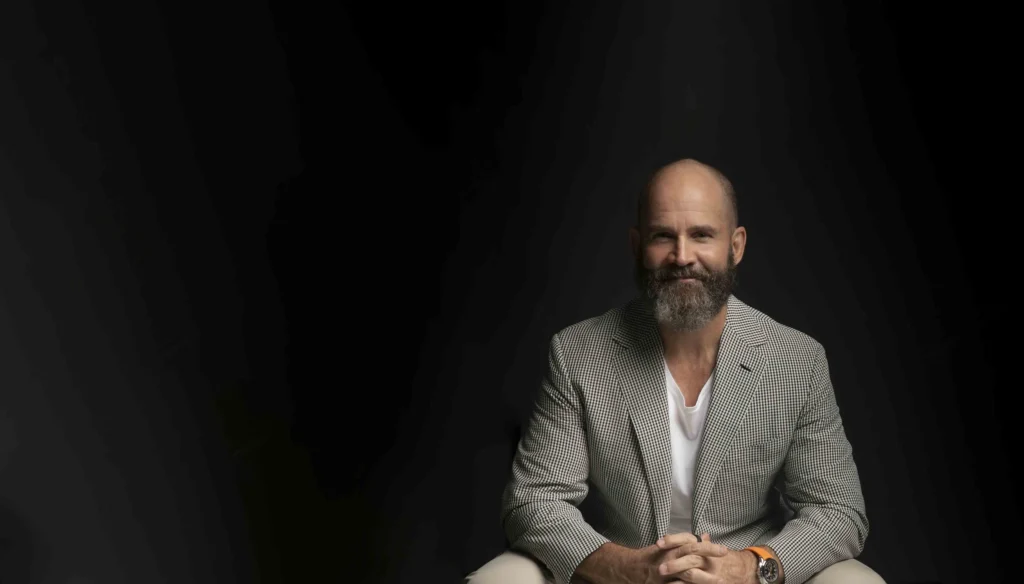

“Awareness is where everything begins—when you slow down enough to notice what you’re feeling, you stop reacting on autopilot and start choosing how you want to live.”
How the “fire–earth–air–water” framework can turn reflection into resilient routines—without forcing a January sprint.
The first week back after the holidays can feel oddly disorienting: your calendar says “go,” but your body says “slow.” In a recent conversation, entrepreneur and leader Rich Lyons offered a simple reframe: maybe the point isn’t to snap back into the same routines—it’s to assess what served you, release what didn’t, and rebuild with intention.
Rich described doing this through a traditional sweat lodge ceremony (temazcal), guided through four elements—fire, earth, air, and water. You don’t need a ceremony (or a plane ticket) to use the insight. You can treat the elements as a practical, repeatable way to reset your habits—especially if you’re a high performer prone to pushing harder when life asks for steadier.
Below is an element-by-element playbook you can use this week.
Fire: Burn the “worry loop” and keep the lesson
In the ceremony, fire represents release—what you’re ready to let burn away. Rich named a big one: worry.
He drew a clear distinction: fear is information; worry is often repetitive, energy-draining mental rehearsing. Research on repetitive thought patterns (like worry and rumination) links them to poorer sleep and mental strain, which is exactly what many people notice when stress follows them into bed.
Try this “Fire Filter” (2 minutes):
- Write the worry in one sentence: “I’m worried that ___.”
- Ask: Is there a direct action I can take within 24 hours?
- If yes: define one concrete next step (even tiny).
- If no: name what you’re choosing instead (trust, patience, “not now,” etc.).
This converts mental spinning into either action or intentional release—both reduce the “background burn” that drains focus.
Micro-habit to keep: If worry hits at night, keep a notepad by the bed and write the next action in one line. Then stop negotiating with your brain.
Earth: Build support structures before you need them
Earth, for Rich, wasn’t just “nature.” It was the reminder that we’re supported—often more than we allow ourselves to feel. He admitted something many high performers relate to: it’s easy to say “call me anytime”… and still struggle to reach out when you’re the one who needs help.
That’s why he talked about structures—regular touchpoints that make support automatic, not dependent on willpower in a hard moment.
This aligns with what we know about resilience: perceived social support consistently correlates with better mental health outcomes and coping capacity across populations.
Try this “Earth Structure” (10 minutes):
- Choose one support anchor for Q1:
- a weekly check-in with a friend
- a standing “walk-and-talk”
- a monthly dinner with someone who grounds you
- a short accountability text every Monday
Make it recurring. No emotional speech required. Just consistency.
Bonus grounding practice (30 seconds): before opening email, put both feet on the floor and take one slow breath. This is “earth” as a nervous-system cue: I’m here. I’m supported. Start from steadiness.
Air: Let clarity “blow in” by designing better cues
In the air phase, the question wasn’t “What are you forcing?” but “What do you want the wind to bring in?” Rich described seeing new relationships and opportunities—then realizing the bigger point: you have to stay open and attentive enough to notice what arrives.
This is where habit science helps: the bridge between intention and action is often an if–then plan—a pre-decided response to a specific cue. Implementation intentions (“If X happens, then I will do Y”) reliably improve follow-through.
Try this “Air Plan” (5 minutes):
Pick one habit that supports your year and write it as an if–then:
- If I make coffee, then I will drink a full glass of water first.
- If I feel myself spiraling, then I will take 3 slow breaths before replying.
- If I open my laptop, then I will write the one outcome that matters today.
Air isn’t vague motivation—it’s clear triggers that invite the behavior in.
Water: Feel your feelings without making them a crisis
Water brought Rich to emotion: flow, cleansing, and the ability to feel without judging feelings as “good” or “bad.” He also challenged a common workplace script: people apologize for crying, for being moved, for being human.
A healthier approach is emotional integration: noticing what you feel, letting it move through, and choosing your response. Mindfulness-based programs show benefits for employee well-being (even if they don’t always outperform every other workplace intervention on performance outcomes).
Try this “Water Move” (60–90 seconds):
- Name the emotion plainly: “This is sadness / anger / fear / joy.”
- Locate it in the body: tight chest, heat in face, knot in stomach.
- Say: “I can feel this and still choose my next action.”
That last line matters. It’s the difference between emotional honesty and emotional hijack.
Cleansing ritual (simple, daily): take a shower at the end of the day and consciously “close the loop” with one sentence: “Today is complete.” It trains your brain to stop carrying the day into sleep.
Put it together: The Four-Element Weekly Reset
You can do this every Sunday in under 20 minutes:
- Fire: What am I releasing this week (worry, overthinking, perfectionism)?
- Earth: What support do I need, and what structure makes it automatic?
- Air: What do I want to invite in, and what if–then plan will cue it?
- Water: What feelings need space, and how will I let them move through?
If you want it even simpler, choose one element per week for January. Winter is not always a “sprint” season—sometimes it’s a “set the foundation” season.
A closing reflection for 2026
The most sustainable habits rarely come from trying to dominate your calendar. They come from learning your patterns—what you cling to, what drains you, what supports you, what you’re ready to welcome, and what you’ve been afraid to feel.
So if your new year feels “out of sorts,” consider this permission slip: you don’t have to force a complete reinvention. Start with awareness, make one small release, add one support structure, and choose one if–then plan that makes the next right action easier.
Your life doesn’t need a harder push. It might need a steadier flow.