

In an age of accelerating technological capability, every generation for the last few hundred years has been given the opportunity to turn its luxuries into the next generation’s commodities.
That was the moral code of progress, and a feature of progress is the ability to pursue the next horizon of comfort, creativity, or prestige.
AI gives us the chance to reset the rules. If we let it work, it can right the wrongs that have warped these costs of living for many in our current economic climate.
The promise of AI is not that it makes luxuries affordable, but that it makes essentials abundant. With it, we can make life less expensive, expand access to human necessities for all, and restore the broken contract between generations.
In 2019, Graham Duncan, a dear friend, appeared on The Tim Ferriss Show and proposed a new way of viewing wealth, in a world of abundance: “A million seconds is 11 days. A billion seconds is slightly over 31 years . . . I feel like in our culture, we’re so obsessed with money. And we deify dollar billionaires in a way . . . But when I see 20-year-olds, I think . . . they probably have two billion seconds left . . . But they aren’t relating to themselves as time billionaires . . . They don’t see themselves as having more than me . . . when they clearly do.”
The most contentious belief I hold about AI is that it will give us much more time. I think of time, in this context, on two axes. On the x-axis, I believe we will live much longer. When pressed, I sometimes suggest that young people today may one day get to decide when they die. People scoff at that. But not nearly as much as when I tell them, on the y-axis, I think we will work a lot less.
That is the part people hate. They bristle, dismiss me as naive or pollyanna. The vitriol I get online is something to behold. The refrain usually goes like this: “We will not work? How will anything get done? How will anyone have a purpose?” Or: “Software promised to make us productive so we could work less. Instead, it made me work more. Why would AI be any different?”
I have learned that most people cannot fathom a happy life without work. When asked to imagine it, they stop at the fear of losing their identity. Even many of those nearing retirement, with a blank canvas of opportunity in front of them, cannot see past their identity displacement far enough to glimpse the beauty in what might replace it. Imagine, I say to people, waking up and simply asking: “What do I want to do today?”
Sadly, even if someone is willing to explore that vision, we have lost our sense of what free time even feels like. We already work fewer hours than our parents or grandparents, but the time we have reclaimed has not translated into joy. And here is where I become insufferable: I’ll often ask to see someone’s screen time.
You would think I was asking for their net worth. The typical defense is “Why does that matter?” But some people are far more offended. Very few people want a stranger to audit their screen time because very few want to see it themselves. What I have discovered is the quiet shame an entire species carries for agreeing to a social contract in which it’s not just “the kids” wasting their lives in front of a display. It’s everyone.
Companies have learned to commoditize our focus, turning leisure into busyness, distraction, and shame. Social media, email, notifications, they monetize our attention and sell us back the illusion of virtue in staying busy or being popular.
The result is a culture where time is abundant but true leisure is scarce. A recent study quantified this, showing that deactivating Facebook and Instagram caused a quantifiable improvement in emotional states, reducing depression and anxiety.
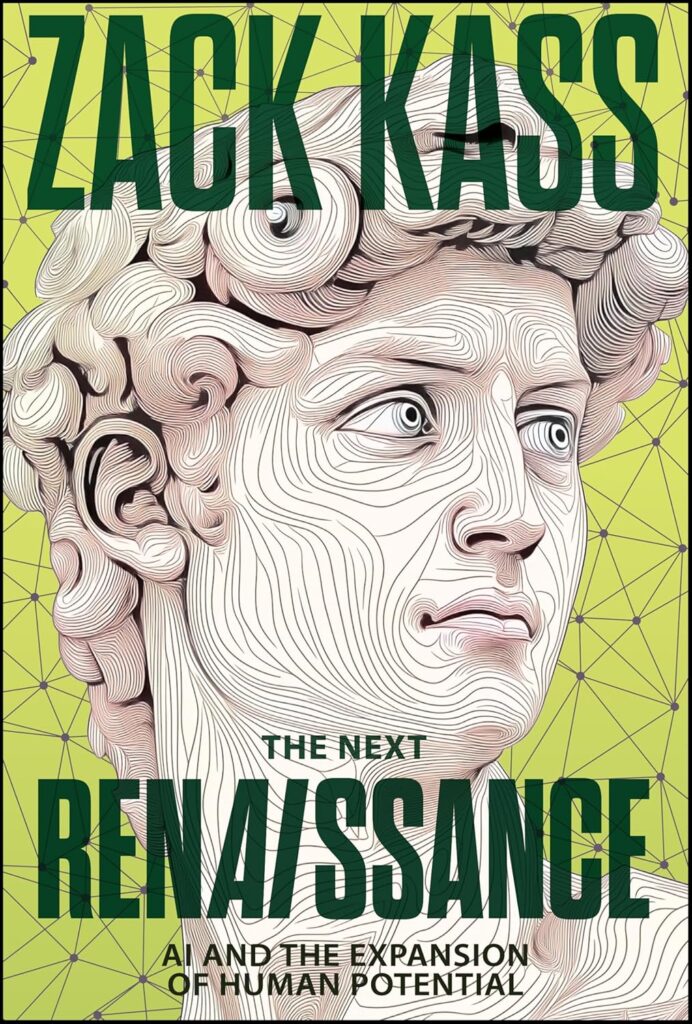
Excerpted with permission from the publisher, Wiley, from The Next Renaissance: AI and the Expansion of Human Potential by Zack Kass. Copyright © 2026 by John Wiley & Sons, Inc. All rights reserved. This book is available wherever books and eBooks are sold.