

Healthcare leaders are dealing with staffing shortages, burnout, new technology, an aging population, and growing expectations from patients. I was struck by how often the solution comes back to something basic: leaders need to understand what the work actually feels like for the people doing it.
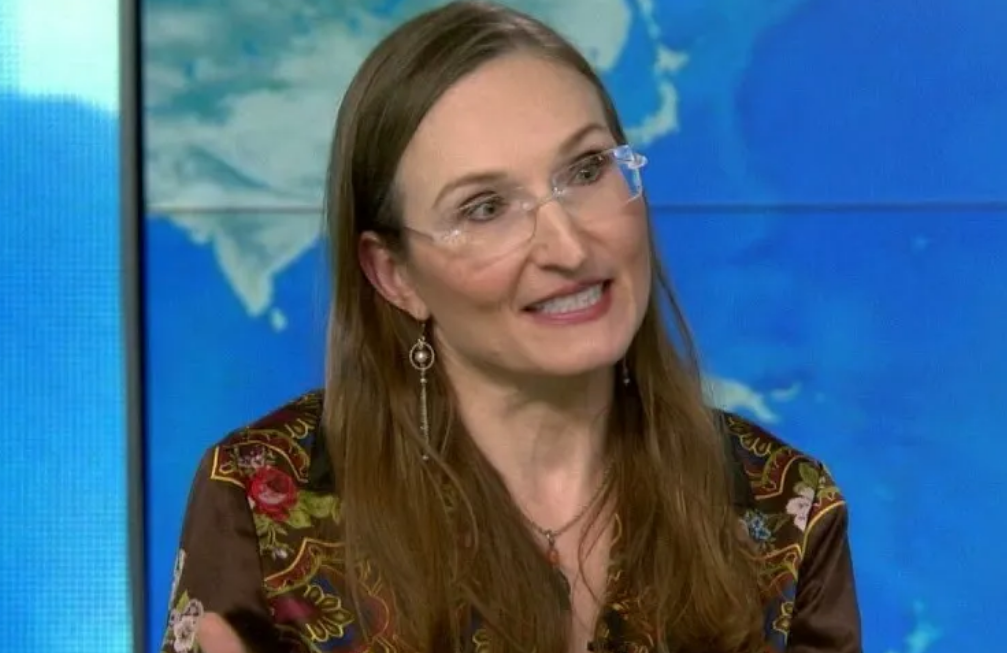
Below are selected insights from my conversation with Dr. Kate Tulenko, Founder and Chief Executive Officer of Corvus Health.
On the growing complexity of healthcare work
“You have almost these like polycrises in healthcare that both health workers and executives need to handle.”
Kate described a healthcare environment where several pressures are arriving at once. Staffing shortages continue, the effects of COVID-era burnout remain, and patients are more informed and involved in their care.
That last shift creates its own challenge. Patients coming into an appointment with information from Google can lead to more discussion and negotiation between clinicians and patients. The work becomes more complex even when the length of the appointment does not change.
For leaders, understanding that difference matters. The job may look the same on a schedule, but the work happening inside that appointment has changed.
On why leaders need to get closer to the work
“Leadership really has to be based on listening to the clinicians.”
Kate believes this is particularly important when executives do not have a clinical background or have not practiced medicine recently. Her recommendation is straightforward: go where the work is happening.
She talked about going into an emergency department during a busy afternoon, visiting a primary care clinic, asking health workers what their problems are, and then focusing on solving those problems.
There is something refreshingly direct about that approach. Leaders can spend enormous amounts of time looking at reports and discussing performance from a distance. Sometimes the better information is standing in front of them.
On technology that adds work instead of removing it
“When you add new tools such as AI, you need to completely redesign the workflow.”
Kate’s concerns about AI are not primarily about whether the technology works in theory. They are about what happens when it enters an already crowded clinical workflow.
She gave the example of a new tool that could help monitor babies who are not growing properly. The technology may be valuable, but if using it takes five minutes out of a 15-minute visit, something else has to give. Kate sees the same problem in electronic medical records, where poor design and excessive clicks have contributed to cognitive load and, in some cases, pushed health workers away from clinical practice.
For leaders introducing AI, that creates a larger responsibility. A new tool cannot simply be added to the existing workflow and called innovation. The workflow itself may need to change..
On listening before implementing
“We found this really cool tool. We spoke to the sales rep and we’re going to integrate it next week. That’s the wrong way to go about it.”
Kate teaches a course at the Johns Hopkins School of Public Health on integrating clinical settings, and her approach begins with the people doing the work: identify the problem, understand what health workers actually need, find a solution, then integrate it into the workflow.
It sounds simple, but healthcare has plenty of examples where technology is selected first and the people expected to use it are brought in later. Kate’s point is that the order matters.
On the workforce challenges ahead
Kate identified three major forces that will reshape healthcare leadership: AI, aging, and labor strikes.
The first two are closely connected to workforce capacity. An aging population will require substantially more care, while healthcare organizations are already struggling to recruit and retain enough people to provide it.
She pointed to the shortage of elder-care workers as one example of how poorly the system can use the workforce it already has. In some cases, highly trained nurses are working below their qualifications because the structures for training, licensing, and deploying elder-care workers have not kept pace with demand.
The third issue, strikes, points to something else. Kate noted that recent healthcare strikes have involved demands around patient safety, staffing, burnout, and quality alongside wages.
“Healthcare workers don’t want to strike. They want to take care of their patients.”
That observation reframes the issue. A labor dispute can also be a signal that people closest to the work believe their concerns are not being heard.
On what AI leaders may be missing
Kate also raised an important question about responsibility as AI enters clinical decision-making.
“As of now, I tell leaders it’s the health worker with the license, and so it’s the health worker who is legally responsible for any medical decisions that are made.”
Her point is that technology does not remove the responsibility carried by the licensed professional using it. If AI allows a nurse to take on more patients, for example, the organization has to consider what that actually means for workload, decision-making, and liability.
There is also the question of trust. Kate described speaking with emergency professionals who had tried an ambient AI scribe that did not fit their workflow. Instead of saving time, they found themselves spending more time correcting the record.
That experience matters because healthcare workers have already seen technology promised as a solution only to create new work. Leaders asking them to embrace the next generation of AI have to account for that history.
On seeing health workers as part of the solution
“The common misperception is that health workers are the problem.”
This may be the most important leadership idea from our conversation.
Kate argues that healthcare organizations need to create bridges between management and clinicians rather than treating the two sides as opposing forces. Health workers want to provide good care. When something is getting in the way of that, leaders should be asking what can be changed to help them do the work they came to do.
That requires a different kind of leadership relationship. Instead of assuming resistance is the problem, leaders can become more curious about what the resistance is telling them.
Reflecting on my conversation with Dr. Kate Tulenko, I kept coming back to one idea: leaders cannot redesign healthcare effectively from a distance. There will always be another technology to consider, another staffing challenge to address, another operational problem to solve, or another demand competing for their attention. Before adding another solution, leaders need to understand the work that already exists. They need to see where time is being lost, where cognitive load is building, and where people are being asked to work around systems that were never designed for today’s reality. That often requires listening to the people closest to the work and treating what they see as valuable information. They often know where a system is creating friction long before that friction becomes visible in a dashboard or in the metrics.
This is the final interview in my Healthcare Leadership Operating System series. After twelve conversations about how healthcare leaders navigate change, pressure, people, technology, and performance, it feels fitting to end with the systems themselves. For me, that raises an important question for healthcare leadership: are we asking people to adapt to systems that no longer fit the work, or are we willing to rethink the systems around the people doing it?Originally published as part of my Healthcare Leadership Operating System interview series.