

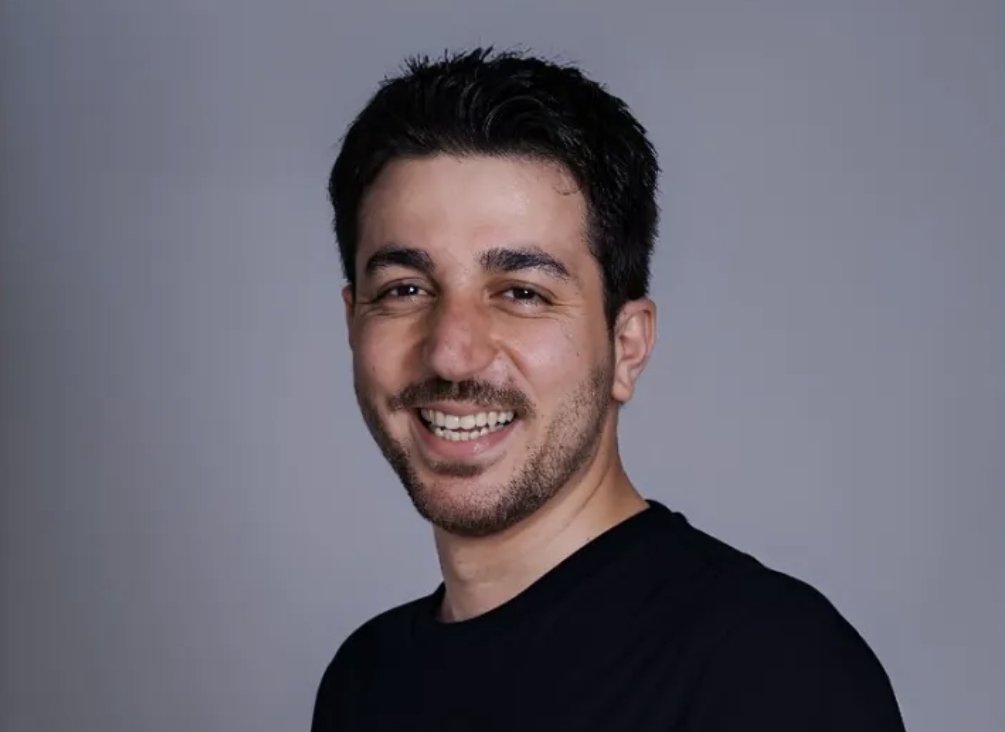
One theme that keeps coming through these conversations is the tension between the pace healthcare requires and the pace at which the system is able to change. In my conversation with Reza Amin, that tension came up repeatedly, along with a question that may be even more important: how do leaders make sure that the pressure to move faster actually produces something useful?
Below are selected insights from my conversation with Reza Amin, Founder and CEO of Bastion Health.
On dealing with the pace of healthcare
“I think speed in healthcare is always a problem. Healthcare moves slow. Startups need to move fast, and the gap kills the momentum.”
Reza’s response is to work around that gap rather than allow it to stop progress. His approach is to run multiple initiatives in parallel and increase the volume of opportunities moving through the system, recognizing that healthcare’s longer cycles can make it difficult for a startup to maintain momentum.
It is a practical reality for healthcare leaders working across organizations that do not all move at the same speed.
On keeping leadership connected to purpose
“Leaders should stay close to the mission, and if in healthcare the mission is having a good outcome for the patient, that gives a very good purpose.”
For Reza, resilience also comes back to what happens outside the organization. He keeps track of three things in particular: sleep, exercise, and family time.
That stood out because resilience is often discussed as something leaders need to develop in order to handle more pressure. Amin approaches it differently. The mission provides purpose, but personal well-being gives leaders the foundation to keep showing up for that mission.
On measuring whether an idea is actually working
“I think it’s very important in healthcare to focus on outcome and ROI.”
Reza believes new products and solutions need to fit the healthcare ecosystem and create measurable value for the people and organizations involved, including payers, employers, and providers.
That focus on outcomes also gives leaders a way to distinguish progress from activity. Healthcare can generate a tremendous amount of work around a new initiative. The more useful question is whether that work is producing an outcome that matters.
On simplifying work and reducing burnout
“We believe innovation helps the well-being of the organization.”
Reza makes an interesting connection between innovation and employee well-being. His view is that burnout can come from chaos and unnecessary complexity, rather than simply from working hard.
His organization looks for ways to simplify systems, automate where appropriate, and create processes that make high-impact work easier to execute. The goal is to give people better ways to do their jobs instead of simply adding another layer of technology or process.
That is an important distinction as healthcare organizations continue to introduce new tools. Innovation can create more work if it is layered on top of an already complicated system. It can also remove friction when it is designed around the work people actually need to accomplish.
On making short-term decisions serve the long term
“Short-term should always validate the long-term goals.”
Reza applies that principle to deals, pilots, and product launches. Each short-term decision should contribute to the larger strategy. If it does not compound toward that goal, he considers it a distraction.
There is a useful discipline in that approach. Healthcare leaders are constantly presented with opportunities that can appear valuable on their own. Connecting each one back to the larger direction creates a way to decide which opportunities deserve attention and which ones do not.
On what healthcare leaders need to understand
“In order to redesign a solution, first you need to have a good understanding of the clinical and financial operations of today’s status quo.”
Reza believes healthcare technology leaders need to understand how the system actually works before trying to redesign it.
That means understanding both the clinical and financial sides of healthcare, then looking for ways to change the existing model while producing measurable outcomes. Technology can enable that work, but the starting point is understanding the system itself.
On rethinking the idea that more care means better care
“Having more care does not equal better outcomes.”
This may have been the idea from our conversation that stayed with me the most. Reza argues for care that is simpler, smarter, comprehensive, and proactive, with success measured by its impact rather than by utilization alone.
As healthcare continues to adopt AI, move toward value-based care, and place greater emphasis on measurable outcomes, that distinction becomes increasingly relevant. More activity can be easy to measure. Better outcomes require a much closer look at whether the system is actually helping people.
As I thought back on my conversation with Reza Amin, I kept coming back to the idea of simplicity. Healthcare leaders are being asked to adopt new technologies, demonstrate ROI, and keep their organizations moving toward a long-term vision. In that environment, adding more can sometimes make the work harder. Reza’s perspective points toward a different kind of discipline: understand the system, define the outcome, simplify where possible, and make sure the decisions being made today contribute to where the organization is trying to go. That becomes especially important as AI moves deeper into healthcare and the industry continues shifting toward outcome-driven care. The technology may change quickly. The need for leaders to understand what they are trying to accomplish, and why, does not.
Originally published as part of my Healthcare Leadership Operating System interview series.