

I’ve been interviewing healthcare CEOs and CMOs on how decision-making, performance measurement, and clinical leadership are evolving inside complex healthcare systems.
One pattern that keeps showing up is that healthcare doesn’t usually break from a lack of knowledge. The breakdown happens when the system stops reflecting what patients are actually experiencing.
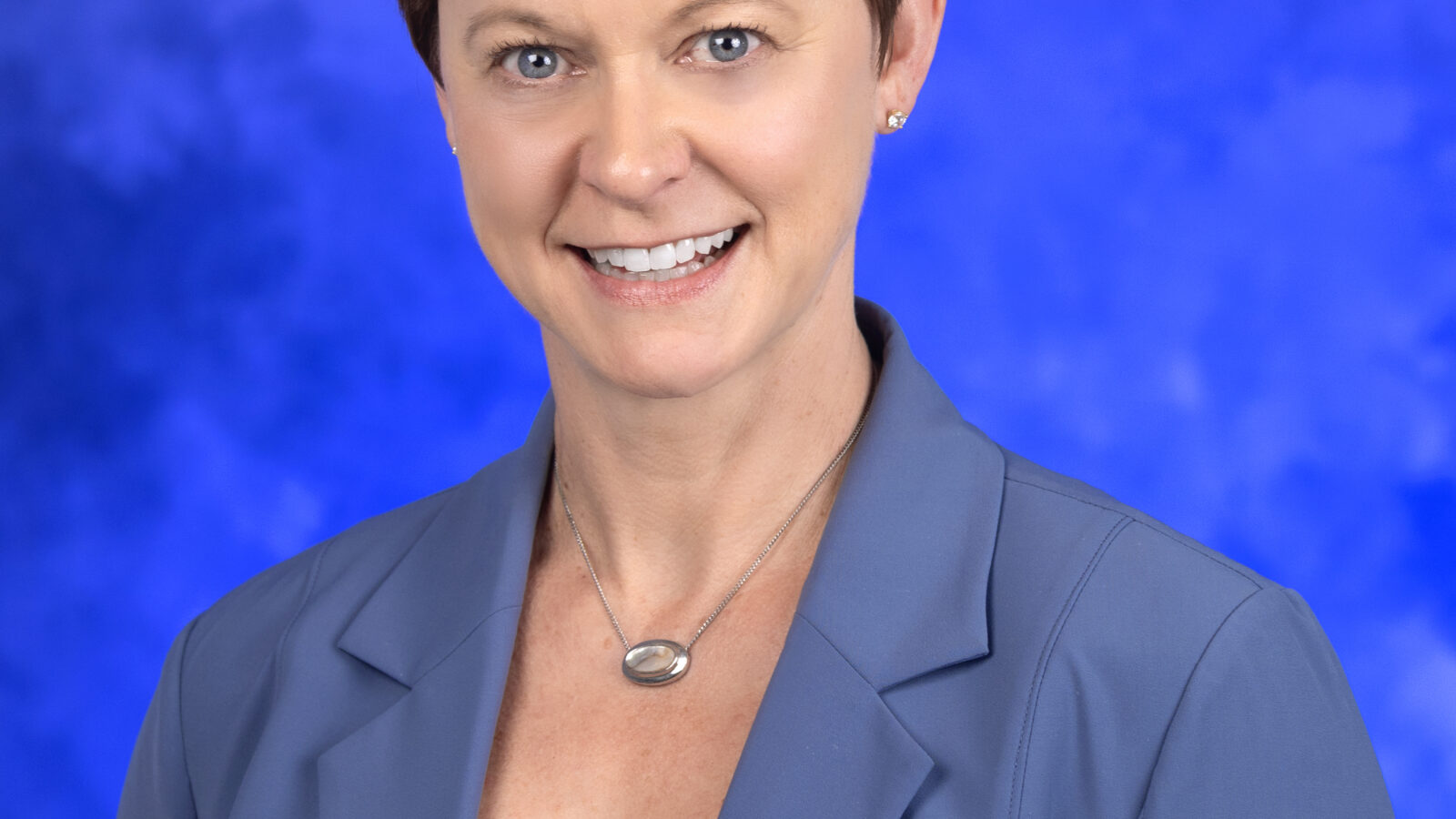
Below are selected insights from my conversation with Dr. Kristina Newport, Chief Medical Officer for the American Academy of Hospice & Palliative Medicine and Chief of Palliative Care at Penn State Health and Penn State College of Medicine.
On advancing health equity in real-world care delivery
Dr. Newport’s perspective begins outside the system itself, focused instead on the people inside it.
“As Chief Medical Officer for the American Academy of Hospice and Palliative Medicine, that work is not specifically within the healthcare system, but it’s supporting our members who are delivering healthcare. And some of the important ways that we work towards that are engaging and mentoring the next generation of healthcare professionals…”
What stands out in her approach is how equity is built through exposure and representation, not just policy.
“We know that it’s important for people in their communities to see somebody who they can relate to in the care that they provide…it’s really great when people are in the field who can relate to the people in their community and speak to them in a way that’s meaningful to them.”
For her, equity is not an abstract system goal. It is a proximity problem, who is in the room, who gets supported, and who gets the opportunity to enter the field in the first place.
On clinical innovation and the human reality it often misses
As healthcare rapidly adopts AI and system-wide automation, Dr. Newport draws attention to a recurring blind spot, implementation without context.
“Obviously it’s exciting to have so much innovation in healthcare, and it’s accelerated by our opportunities with AI. I think one of the biggest challenges and most important aspects of implementing new clinical innovation is to consider the human element.”
Her concern is not innovation itself, but the assumption that innovation translates evenly across populations.
“If we are going to use AI, for instance, to better identify ways of scheduling our patients, well, what does that mean? For my 82-year-old patient who only communicates over the phone and calls in to reschedule because her gout is acting up and she can’t come in to see me that day, well, that new innovation where people are contacted via text, it’s not going to work for her.”
The gap she highlights is subtle but critical. Systems are often optimized for efficiency, not inclusivity.
“We always need to be thinking about how it influences our patients and their families. Who is it leaving out?”
On naming the problem which is part of the solution
Dr. Newport is direct about a foundational barrier in healthcare improvement, discomfort with acknowledging inequity in the first place.
“Number one, we need to be able to speak openly and honestly about the fact that healthcare is not delivered equitably in all places at all times.”
For her, silence is not neutral. It preserves the status quo.
“We can’t fix a problem if we’re not allowed to examine it and to talk about it.”
This framing shifts equity from a policy initiative to a cultural permission structure inside healthcare organizations.
On a leadership habit healthcare must unlearn
As systems scale, Dr. Newport sees a consistent risk, losing sight of the individuality of clinicians and teams.
“We need to always keep in mind that healthcare professionals are not interchangeable. They are living and working in a community, and they are committed to their neighbors.”
Her concern is that efficiency models can unintentionally flatten identity and reduce clinicians to functional units rather than contextual humans.
“The concern and the challenge when healthcare systems get really large is that the professionals working in the system can be treated as interchangeable parts.”
What she emphasizes instead is relational leadership, knowing the people who deliver care, not just managing their output.
“If we forget that it’s people delivering care to other people, then we will fail.”
What stayed with me in this conversation with Dr. Kristina Newport is how often healthcare’s biggest risks are not technical, but perceptual in nature. Systems scale by standardizing processes. But care only works when someone still sees the individual inside the process. The tension is not between innovation and tradition, but between efficiency and recognition, and whether the system still has enough awareness to see the person in front of it clearly. And in healthcare, that awareness is not optional. It is the work.