
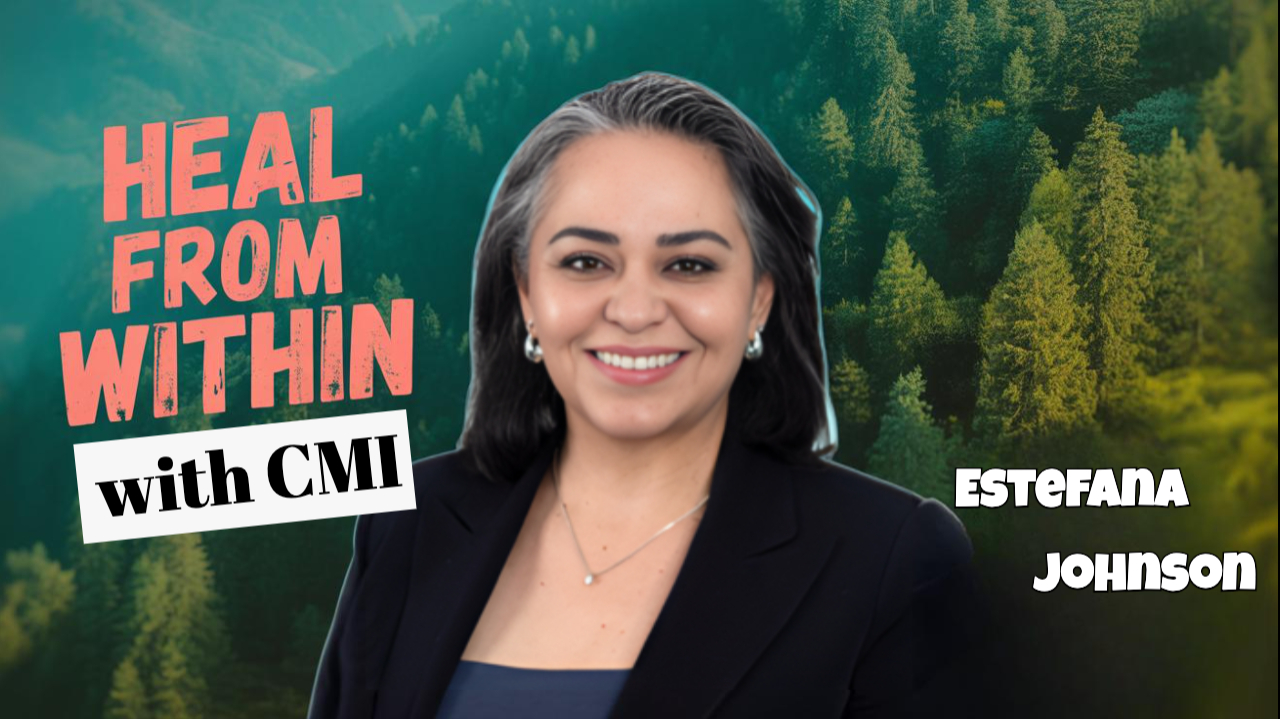
Healing isn’t about fixing what’s wrong; it’s about reconnecting with the parts of you that have always been whole.
– Estefana Johnson
Healing is not a straight path, and for many, it’s a journey of rediscovering the self beneath years of conditioning, survival strategies, and unprocessed pain. In this conversation with Stacey Chillemi, we explore Critical Memory Integration (CMI) with Estefana Johnson, a dedicated mental health professional who brings both personal experience and deep compassion to her work. As the founder and leader within Arise Alliance, Estefana has committed her career to helping individuals access their own inner wisdom, untangle long-standing emotional patterns, and step fully into their authentic selves. Her perspective challenges conventional trauma therapy models, offering an approach that is as human-centered as it is transformative.
Through candid discussion, Estefana shares how our early environments shape our emotional “first language,” why we often repeat patterns that harm us, and how CMI provides the tools to change those patterns for good. Drawing from her own upbringing and the stories of those she’s guided, she offers a refreshing reminder that healing is not about fixing what’s broken… it’s about reconnecting to what’s whole within us. Her insights invite us to view our emotions as vital signals, our past as a source of wisdom, and ourselves as capable of deep resilience and growth.
Thank you so much for joining us! Our readers would love to get to know you a bit better. Can you tell us a bit about your backstory?
I’m a first-generation Mexican American from Arizona, and my life has been a blend of two very different worlds. Spanish was my first language, and adapting to English brought unique challenges, from cultural food mashups to navigating two sets of values. My upbringing in a restrictive religious cult shaped my early identity in ways that didn’t align with who I truly was. Combined with a family culture that didn’t value mental health, I felt a deep need to find a more human-centered approach, which eventually led me to join Arise Alliance and pursue meaningful change in how we approach healing.
Many of us carry hidden wounds. How does unprocessed trauma show up in everyday life?
Unprocessed trauma often hides in the small decisions and habits we carry without realizing it. It influences how we avoid certain emotions, react strongly to minor triggers, or feel unsafe without knowing why. Many therapeutic approaches focus on symptom relief, but that doesn’t mean the person is truly living. Without addressing the root patterns formed early in life, people stay in survival mode, unable to fully embrace growth and joy.
Why do people tend to repeat unhealthy relationship patterns?
We tend to choose what feels familiar, even if it’s unhealthy. Early attachment patterns—whether avoidance, anxiety, or dismissiveness—become our first language in relationships. Without realizing it, we’re drawn to people who “speak” that same emotional language, and we interpret it as comfort. In reality, it’s the pull of familiarity, and breaking that cycle requires learning a new emotional language.
How does CMI help uncover and break these cycles?
CMI helps clients identify the gap between who they truly are and the adaptive responses they developed to survive. It guides them into the observer role, where they can see their patterns with clarity and compassion. By understanding how these responses formed, they can rewire the emotional drivers behind their choices. This creates the freedom to choose relationships and behaviors that truly align with their authentic self.
How is CMI different from traditional trauma therapy?
In CMI, the client is the expert on their life, and the therapist is the guide. We don’t impose our interpretations; instead, we help clients access the wisdom they already carry. The process is collaborative and focuses on integrating critical memories, whether they stem from trauma or not, that still influence behavior. This makes the healing more personalized, empowering, and sustainable.
How does CMI address PTSD beyond military-related trauma?
PTSD can result from many experiences, not just combat. CMI examines how the brain processes and stores impactful events, even those that don’t meet diagnostic criteria. We focus on what the nervous system has held onto, guiding clients to process and integrate those experiences fully. This approach normalizes human responses and offers tools for stability and self-trust.
You use the analogy of digestion a lot. Why?
Emotional digestion works like physical digestion: experiences need to be broken down and processed to nourish us. If we avoid or suppress emotions, they become toxic, impacting both our mental and physical health over time. Processing an experience means understanding it in context, extracting what is valuable, and letting go of what no longer serves us. Without doing this, we remain emotionally “constipated,” stuck in old pain and unable to make space for something new.
How does CMI approach early attachment injuries?
We aim for connection rather than correction. Clients revisit pivotal early experiences and meet the child they once were with compassion and validation. This allows them to update the meaning of those memories, shifting how they feel in the present. Over time, this deeper connection transforms the way they relate to themselves and others.
Can CMI help release inherited patterns of pain?
Yes! Our bodies store memory in the form of sensations, emotions, and patterns, many of which are passed down through generations. By tuning into these internal signals and exploring their origins, clients can update and release inherited patterns. This not only frees them but also changes what is passed forward to future generations.
How does CMI work with low self-esteem?
Low self-esteem often develops from early messages that told us we weren’t enough. CMI helps clients revisit those moments with curiosity, seeing them from a more empowered and adult perspective. When we reframe the experience in context, we dissolve shame and reclaim self-worth. This isn’t about surface-level affirmations… it’s about reconnecting with the truth of our inherent value.
How can CMI help with anxiety that stems from past threats?
Anxiety is natural when it warns us of real danger, but constant anxiety points to unresolved experiences. CMI helps the brain separate past from present, reducing the nervous system’s overreaction. By processing the original memories driving the anxiety, clients can respond to current life with clarity and calm. This opens more emotional space to live in the moment rather than in constant anticipation of harm.
How does CMI cultivate resilience?
Resilience comes from trusting yourself to face challenges without losing your sense of self. CMI teaches clients to navigate discomfort, fully process emotions, and emerge stronger. Each time they successfully face a challenge, they build evidence of their own capacity. Over time, this builds lasting confidence and the ability to meet future stressors with grounded strength.
Can you share an example of breaking free from becoming like one’s parents?
Many know what they don’t want to repeat, but they lack a clear model for what to do instead. CMI helps clients define and practice values-based responses rather than fear-based reactions. This gives them a roadmap for healthier relationships. It transforms interactions from reactive to intentional, opening space for love and authenticity.
What challenges come with becoming your true self?
When you live authentically, some relationships will be challenged. Setting boundaries can unsettle people accustomed to your old patterns, and that can be uncomfortable. However, maintaining those boundaries is essential to aligning with your values and protecting your well-being. Over time, this leads to deeper, more genuine connections that support who you truly are.
How do people-pleasers fit into this work?
People-pleasing often begins as a survival mechanism, but it comes at the cost of authenticity. CMI helps clients ensure their outward “yes” reflects an inward truth. This creates relationships built on honesty rather than self-sacrifice. The goal is to live in a way that honors both your own needs and the humanity of others.
What key takeaways do you want listeners to remember?
You are not broken… You are human. Start with curiosity about your experiences and seek safe spaces for exploration. Understanding yourself is the foundation for self-compassion, and self-compassion allows true transformation. This journey is about reclaiming the most authentic parts of who you are and living from that place.
How can our readers further follow your work online?
Visit arisealliance.org for resources, training information, and free webinars. We also share updates on our social media platforms to help more people access these tools. Whether you’re a practitioner or someone seeking a human-centered approach to healing, we welcome you to connect with us. This work is about changing lives one connection at a time.
Estefana, thank you so much for this deep and insightful conversation. I know our readers will walk away with tools and perspectives that can truly change their lives.
Thank you, Stacey. I’ve enjoyed our discussion and value the opportunity to share this work. My hope is that it encourages others to explore their own healing journey and embrace the fullness of who they are.