

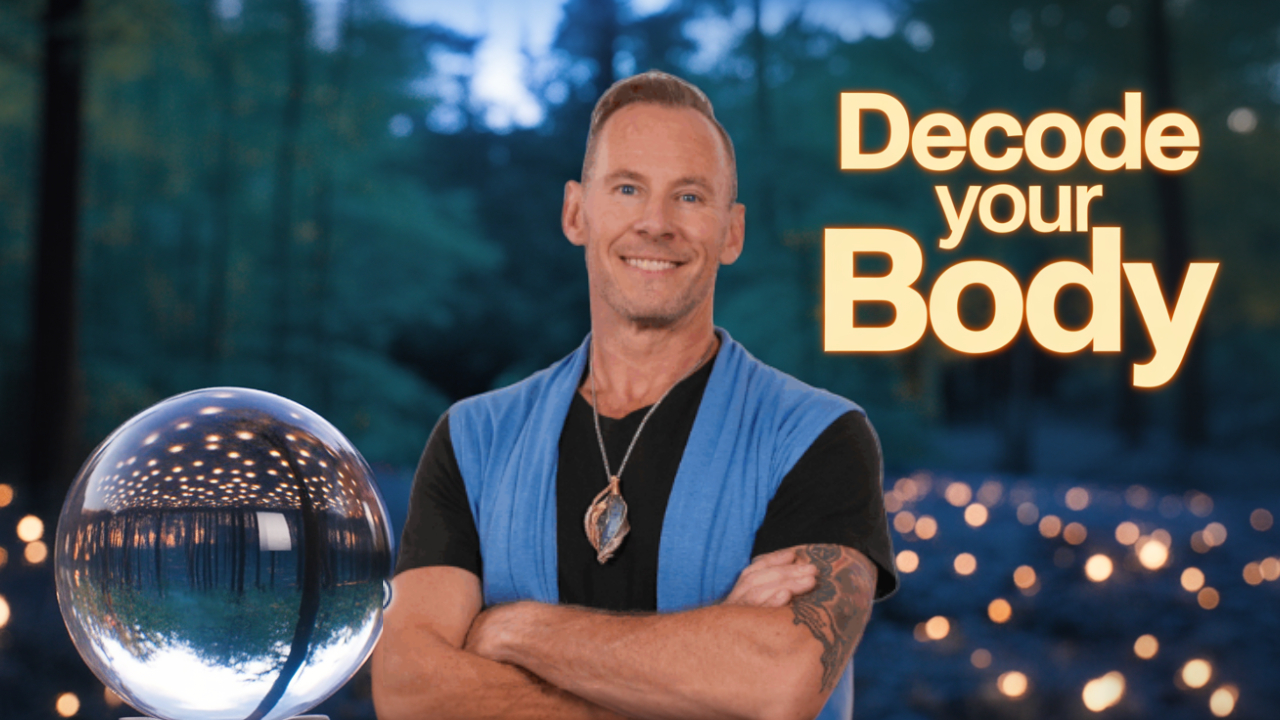
“True healing doesn’t come from fighting disease—it comes from remembering who you are. When you align your mind, body, and spirit, the impossible becomes I’m Possible.”
— Nate “Anāez” Zeleznick
As a child growing up in a small Utah town, Nate “Anāez” Zeleznick was deeply sensitive, perceptive, and different—and for years, that difference made him a target. Relentless bullying left him isolated and overwhelmed, culminating in a moment at age twelve when despair nearly ended his life. What interrupted that moment, he says, was not fear, but love: a sudden, overwhelming awareness of his connection to his parents and to life itself.
That turning point marked the beginning of a lifelong inquiry into consciousness, healing, and the nature of reality—one that would eventually carry him across cultures, disciplines, and near-death experiences, including a recent battle with a life-threatening brain tumor.
Zeleznick’s story is not framed around escape from hardship, but around relationship to it. “That early experience showed me that reality is far larger than what we can see or touch,” he explains. “It taught me that consciousness isn’t limited to the body—and that insight changed everything.”
Learning to Listen Beyond the Senses
Following that early awakening, Zeleznick spent decades studying meditation, breathwork, and energy practices, searching for systems that integrated discipline with inner awareness. A pivotal moment came when he encountered the Indonesian energy art of Merpati Putih, a centuries-old royal lineage traditionally closed to outsiders.
After persistent inquiry and an expressed intention to serve, he was invited to train—becoming the first Westerner granted permission to study within the lineage. The training, he recalls, was physically and mentally demanding, designed to test endurance, humility, and commitment. “It wasn’t about proving strength,” he says. “It was about learning restraint, presence, and responsibility.”
Those years shaped his understanding of the body not as a machine to dominate, but as a system to be regulated, informed, and respected.
When the Body Becomes the Teacher
In early 2025, Zeleznick experienced a sudden loss of bodily sensation. Medical imaging revealed an inoperable tumor on his brainstem, an area responsible for breathing and other vital functions. Faced with a diagnosis that offered little certainty, he turned inward—not to bypass medicine, but to engage it alongside the practices he had spent years refining.
“What mattered most in that moment was state,” he says. “Not panic, but presence. Not ‘why me,’ but ‘how do I respond?’”
He adopted a comprehensive approach that emphasized nutrition, nervous-system regulation, breathwork, frequency-based therapies, and careful monitoring. Within weeks, follow-up imaging showed a significant reduction in tumor size. While he is careful not to generalize outcomes, the experience reinforced a core belief: the body tends toward healing when supported with the right inputs.
A Framework Rooted in Awareness
From this synthesis of lived experience, Zeleznick developed what he describes as a practical framework centered on awareness, breath, nervous-system regulation, nourishment, and self-observation. At its core is the idea that healing begins not with force, but with listening.
“Data matters,” he says, pointing to the role of diagnostics in understanding internal patterns. “But data without awareness becomes noise. The goal is informed action, not obsession.”
For those new to optimization or wellness practices, his guidance is deliberately simple: start with breathing, sleep, whole foods, and curiosity. “Complexity comes later,” he notes. “Consistency comes first.”
Meaning as Medicine
Perhaps the most consistent thread through Zeleznick’s journey is meaning—not as a concept, but as a daily practice. His diagnosis, he says, stripped life down to essentials: presence, service, discipline, and gratitude.
“We’re not defined by our diagnoses, our past, or our fear,” he reflects. “We’re defined by how we relate to them.”
Rather than framing adversity as something to overcome, he sees it as something to engage. “Life isn’t happening to us,” he says. “It’s happening for us—if we’re willing to pay attention.”
In a culture often focused on optimization for performance, Zeleznick’s story offers a quieter takeaway: that the most sustainable form of strength comes from coherence—between body, mind, and intention—and from remembering that healing is not a destination, but a relationship we practice every day.
Nate “Anāez” Zeleznick is a transformational teacher and founder of the ASCEND Method, an integrative framework that brings together breathwork, meditation, and energy-based practices with evidence-informed wellness tools. Trained in the Royal Indonesian Energy Arts lineage Merpati Putih, Nate has spent more than two decades teaching martial arts, mindfulness, and consciousness-based practices to students around the world. His work is shaped by a lifelong exploration of resilience and human potential, including his personal experience navigating a serious health challenge that deepened his commitment to nervous-system regulation, lifestyle fundamentals, and self-inquiry. Today, he supports individuals in building sustainable daily practices that strengthen presence, restore balance, and help them live with greater clarity, purpose, and agency.