

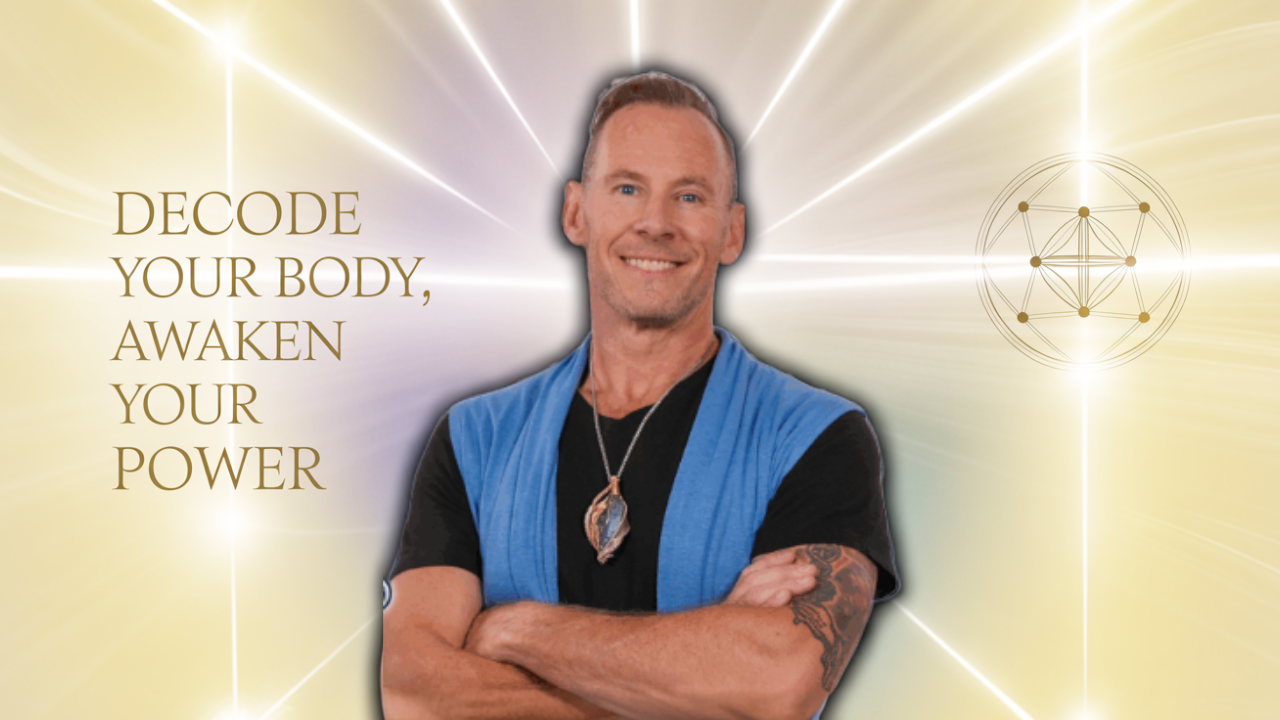
“Healing doesn’t begin when we fight disease—it begins when we remember who we truly are. The moment we align our breath, mind, and spirit, the impossible becomes I’m possible.”
— Nate “Anāez” Zeleznick
How breath, presence, and identity helped one man reimagine recovery—and what it reveals about resilience, attention, and the body’s capacity to adapt
In a culture that celebrates resilience but often overlooks reflection, stories of healing are frequently framed as battles to be won rather than transformations to be lived. We talk about survival. We celebrate perseverance. But we rarely pause to ask what happens after a crisis forces us to slow down—and to listen.
For Nate “Anāez” Zeleznick, that question became unavoidable after a life-altering diagnosis. Confronted with a brain tumor, he found himself standing at a crossroads that many people reach in quieter ways: a moment when the body interrupts the pace of life and demands a different kind of attention.
Rather than viewing healing as a return to who he was before, Zeleznick approached it as an invitation to become someone new. Drawing on decades of study in breathwork, energy arts, and consciousness practices, he began experimenting with how presence, oxygen, and intention shape the nervous system—and, by extension, how we experience stress, illness, and meaning itself.
What emerged from that period was not a single technique, but a shift in identity.
Healing Begins With Who We Believe Ourselves to Be
Zeleznick is careful to point out that change rarely succeeds through willpower alone. Practices only stick, he says, when they align with how a person sees themselves.
“When you ask, ‘Who do I want to be?’ instead of ‘What do I need to force myself to do?’ the relationship to habit changes,” he explains. “Small actions stop feeling like discipline and start feeling like expression.”
That perspective reframes transformation as something built through consistency rather than intensity. Two minutes of conscious breathing. A pause between meetings. A moment of stillness before sleep. Over time, these small acts accumulate—not just as behaviors, but as signals to the nervous system that the present moment is safe.
The Quiet Power of Presence
At the center of Zeleznick’s approach is a simple practice: returning attention to “here” and “now.” It’s a reminder that sounds almost too obvious to matter—until stress, fear, or illness pulls the mind elsewhere.
Presence, he notes, is less about emptying the mind and more about orienting the body. Slow, rhythmic breathing helps regulate carbon dioxide and oxygen levels, which in turn affects how efficiently cells function. When breathing becomes calmer, the nervous system follows.
This physiological grounding creates space for awareness. Instead of reacting automatically, people gain the ability to notice what’s happening internally—and to respond with intention.
Why Not All Breathwork Is the Same
One misconception Zeleznick frequently encounters is the idea that all breathwork produces the same effect. In reality, different styles create very different physiological responses.
Fast, intense breathing techniques can rapidly alter mental states, but they may also disrupt oxygen delivery at the cellular level when practiced excessively. Slower approaches—particularly those that gently increase tolerance to carbon dioxide—can improve circulation, mitochondrial function, and overall energy regulation.
The goal, he emphasizes, isn’t stimulation. It’s sustainability.
“Breath is something you’re already doing,” he says. “The shift is learning how to do it in a way that supports your body instead of overriding it.”
Sleep, Light, and the Nervous System
Many of the insights Zeleznick shares are striking in their simplicity. Avoid eating late at night so the body can focus on repair rather than digestion. Reduce exposure to bright, blue-toned light in the evening to support natural melatonin production. Use slow breathing before bed to signal safety to the nervous system.
None of these practices require dramatic lifestyle changes, yet together they form a pattern: an environment that encourages the body to rest, regulate, and recover.
Listening Before the Body Has to Shout
One theme that surfaces repeatedly in Zeleznick’s reflections is the importance of early signals. Fatigue, inflammation, disrupted sleep, and mood changes often appear long before a diagnosis. The challenge, he says, is that modern life trains people to ignore those cues.
Learning to listen—through awareness, testing, or simple observation—allows for course correction before stress becomes illness. The body, in his view, is not an adversary to overcome but a communicator to understand.
Flow Without Escape
For people navigating demanding careers and constant pressure, Zeleznick is quick to dispel the idea that balance requires withdrawal. Flow, he suggests, isn’t about slowing life down—it’s about entering it fully.
When the nervous system is regulated, focus becomes easier. Tasks feel less forced. Creativity increases. Productivity follows not because of strain, but because effort aligns with attention.
A Different Definition of Healing
Perhaps the most striking aspect of Zeleznick’s story is not the techniques he shares, but the question he returns to again and again: What do I want to experience right now?
It’s a question that shifts healing away from fear and toward choice. Away from survival and toward participation.
Illness may have been the catalyst, but presence became the practice. And in that practice, healing transformed from a destination into a way of living—one breath, one moment, one conscious pause at a time.