

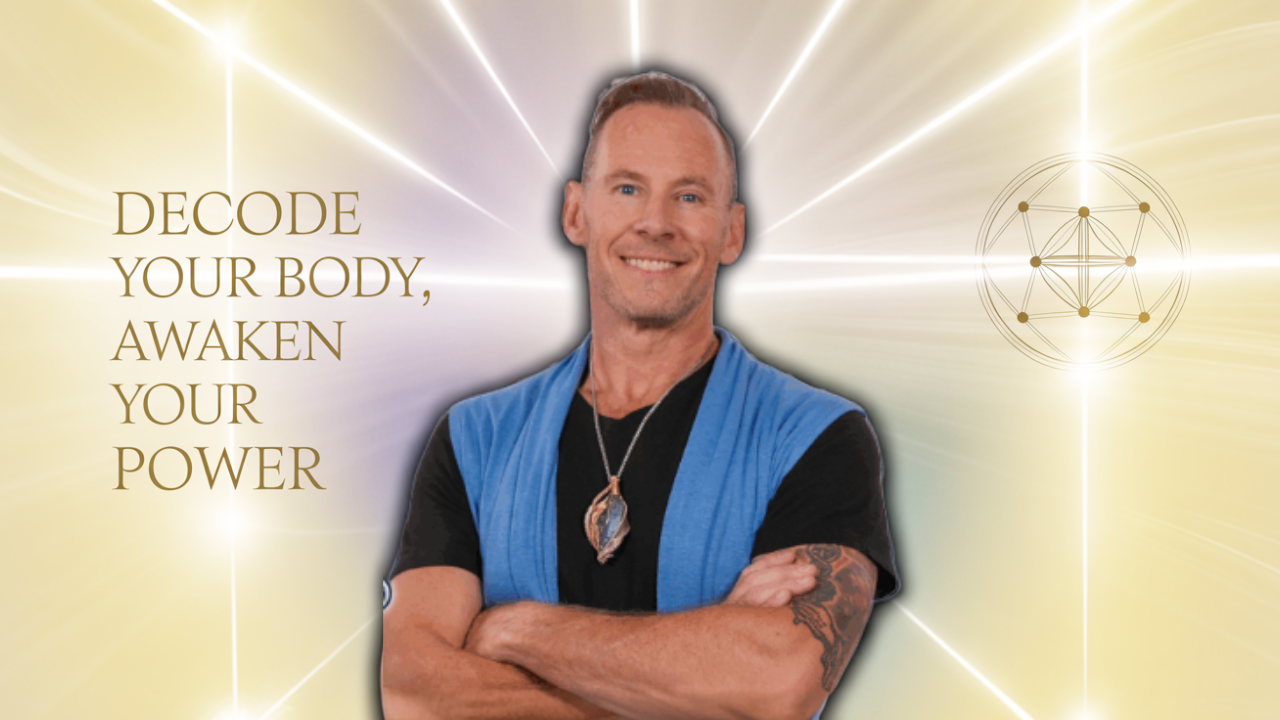
“Healing doesn’t begin when we fight disease—it begins when we remember who we truly are. The moment we align our breath, mind, and spirit, the impossible becomes I’m possible.”
— Nate “Anāez” Zeleznick
In a world where stress, illness, and disconnection have become the norm, few people embody the power of transformation like Nate “Anāez” Zeleznick. After being diagnosed with a brain tumor, Nate didn’t just fight for his health—he completely redefined what it means to heal. Drawing on decades of experience in energy arts, breathwork, and consciousness studies, he turned his journey into a living laboratory for self-discovery and regeneration. What began as a personal awakening evolved into the Integrated Ascension Method (I-AM) and Ascended Living, programs that blend ancient practices with modern science to help people unlock the body’s innate power to heal, restore, and thrive.
In this intimate and thought-provoking interview with Stacey Chillemi, Nate shares how he used breath, energy, and presence to not only shrink his tumor but to awaken a deeper sense of purpose and vitality. From practical breathing techniques to sleep rituals, mindset shifts, and the science of flow, Nate’s insights reveal how anyone can turn pain into purpose—and overwhelm into alignment. His story reminds us that healing isn’t just about surviving; it’s about remembering who we are, why we’re here, and how to live fully in the present moment.
Thank you so much for joining us! Our readers would love to get to know you a bit better. Can you tell us a bit about your backstory?
Absolutely. For most of my life, I’ve been blessed with great health—I rarely got sick, never had any serious injuries, and honestly thought I was almost bulletproof. Then one day, I got an MRI and the doctor told me there was a tumor. That changed everything. Seeing that image and hearing those words lit a fire under me. It forced me to look at who I was and how I was living. I realized that if I wanted to survive and thrive, I couldn’t keep doing things the same way. That’s really when my transformation began—through awareness, breath, and presence. It was the moment I decided to become a new version of myself.
You say transformation starts with identity, not willpower. How does someone become the person who practices?
It really starts with awareness. When you face something that reminds you your time here isn’t infinite, your perspective shifts. You begin to understand that life isn’t about pushing harder—it’s about becoming. I tell people all the time, start by asking: “Who do I want to be?” Then take small actions that align with that identity. It could be as simple as two minutes of breathing, being present before a big meeting, or taking a quiet moment at the end of your day. These small, intentional actions build the foundation of a new identity—one that naturally practices instead of forcing itself to change.
Presence is something you emphasize a lot. What does being ‘here and now’ actually mean?
Presence is the greatest gift we can give ourselves. That’s why it’s called “the present.” We spend so much time caught up in the past—regretting, replaying—or worrying about the future that hasn’t happened yet. But when we’re truly present, we come alive. My favorite way to return to the moment is simple: I ask myself, “Where am I?” and “What time is it?” The answers are always the same—“Here” and “Now.” When you pair that with slow, intentional breathing, your body and mind naturally calm down. It brings you back into alignment with life itself.
Can you share a simple breathing exercise our readers can try?
Absolutely. One of my favorites is a Buddhist-style breath. All you have to do is inhale slowly through your nose, let your belly expand, and fill your lungs completely. Then exhale out through your mouth, relaxing your body as you release the air from the top down. Do it slowly—about five and a half seconds in and five and a half seconds out. I like to think of it like a pendulum—no pauses, just smooth, gentle movement. While you’re doing it, ask yourself those same questions: “Where am I?” “Here.” “What time is it?” “Now.” It’s amazing how quickly it grounds you.
What are some of the mistakes people make when trying breathwork?
The biggest mistake people make is thinking all breathwork is the same. It’s like saying all exercise is the same—riding a bike isn’t the same as swimming. There are different kinds of breathwork for different goals. For example, hyperventilation styles like Wim Hof or holotropic breathing are great for quick state changes, but they lower your carbon dioxide levels too much. That actually makes it harder for oxygen to reach your cells. The style I focus on, intermittent hypoxia, works the opposite way—it raises carbon dioxide so your oxygen can be used efficiently. It’s calmer, more sustainable, and has lasting benefits. The only real mistake you can make is not practicing. You’re breathing anyway—you might as well do it intentionally.
Why is intermittent hypoxia so powerful, and how did it help you personally?
It’s incredibly powerful because it optimizes your body at a cellular level. It activates your mitochondria, helps form new blood vessels, regulates blood pressure, and even creates a natural warmth in the body. You can literally feel your energy radiate from the inside out. For me, this practice was life-changing. It helped shrink my tumor and continues to support my body’s healing. It also activates something called the HIF-1 alpha pathway, which has anti-tumor effects. So yes—it’s been one of the most important parts of my healing journey.
Many people struggle with sleep. What’s something simple they can do to get better rest?
Sleep is a big one. There are a few easy things you can do tonight that will make a big difference. First, avoid eating a couple of hours before bed. Give your body a chance to use its energy for repair, not digestion. Second, switch to red light an hour before sleep. You can just screw in a red LED bulb—it costs a few bucks—and that red light will help your body produce melatonin. Blue and white light, like from your phone or TV, tells your brain to stay awake by stimulating serotonin. Lastly, use breathwork before bed. It helps oxygenate your system, calm your nervous system, and prepare your body for deep, restorative sleep.
For those unfamiliar with red light, how does it work and why is it beneficial?
Red light helps trigger melatonin, which is the hormone that helps you fall asleep. You don’t need any fancy equipment—just a simple red bulb from Amazon will do. Turn it on an hour before bed, read a book, relax, and let your brain start winding down naturally. Think of serotonin as what wakes you up in the morning and melatonin as what tucks you in at night. Red light helps with the latter, preparing your body for rest.
Many people wake up tired and rely on caffeine. How can they get real energy that lasts?
Start with breathwork. The intermittent hypoxia technique gives you lasting, clean energy without caffeine crashes. Do it first thing in the morning—it clears your head and sets you up for the day. Combine that with good nutrition. I personally use a ketogenic approach to fuel my body with healthy fats instead of sugar. I lost 88 pounds in five months, gained 15 pounds of muscle, and even reversed my biological age by 21 years—from 59 to 38 internally. When your body’s oxygen, energy, and fuel are in sync, you feel unstoppable.
How can people learn to listen to their bodies before things go wrong?
Our bodies are always talking to us, but we rarely listen. The signs are there—trouble sleeping, inflammation, mood swings, digestive issues. Those are all signals. Testing helps too. I recommend things like microbiome testing, food sensitivity panels, and DNA analysis to understand what your body needs. For me, I learned I’m allergic to sesame seeds, which I never would’ve guessed. I also use methods from The Body Code, like muscle testing and energy balancing, to ask the body what it needs directly. It’s about tuning in and listening—because your body never lies.
Meditation can be tough for people who can’t quiet their minds. How can they make it easier?
That’s such a great question. Even people who’ve meditated for years struggle to truly quiet their minds. Science shows that even experienced monks only reach deep meditative states for about 5–10 minutes out of an hour. That’s where technology can really help. My friend Dr. Jeffrey Thompson developed something called neuroacoustic sound. It’s a type of sound therapy that balances your nervous system and takes your brain into deeper meditative states than you can usually reach on your own. You just put on headphones, press play, and it does the work. I use his tracks daily—they’re incredibly powerful.
A lot of people have demanding jobs and constant stress. How can they find flow without slowing down?
I use one of Dr. Jeff’s tracks called Beyond. It helps shift your brain into a flow state—the place where everything just clicks. You’re not forcing it, you’re in it. When you’re in flow, you actually get more done in less time and it feels effortless. You don’t have to clear your schedule or move to the mountains; you just have to create the right state in your mind and body. That’s how you go from chaos to alignment.
If readers take only one lesson from this conversation, what should it be?
Remember why you came here. You didn’t come to Earth to just work, stress, and survive. You came here to experience. At any moment, you can ask, “What do I want to experience right now?” Then take a deep breath and bring yourself back to the present moment. That’s where your power lives. We all have challenges—mine just happened to come in the form of a tumor—but we get to decide what meaning we give to our experiences. That’s where transformation happens.
What’s your two-minute state shift that anyone can do?
One minute of slow, conscious breathing with the “Here/Now” questions, followed by one minute of simply noticing—how your body feels, the sounds around you, your breath moving in and out. That’s it. Two minutes to reset your entire nervous system. It’s quick, simple, and effective.
Can you outline a simple daily routine people can start with?
Sure. Morning: ten minutes of breathwork and quiet reflection. Midday: take two minutes to breathe and reset between tasks. Evening: red light, no food a few hours before bed, and a few slow breaths to end your day in peace. It doesn’t have to be complicated. Small, consistent actions are what change everything.
What’s a seven-day experiment people can do to see real results?
For seven days, commit to the morning breathwork, two short state shifts during the day, and red light before bed. Track your sleep, energy, and mood in a notebook. By day four or five, most people notice the difference—they sleep better, have more energy, and feel more present. Let your own experience be the proof.
What would you say to people who are skeptical?
You don’t have to believe me—just test it. Give it one week and see how you feel. Measure your results. If you feel even 10 or 20 percent better, keep going. The smallest bit of progress becomes momentum. And momentum is what creates transformation.
Are there any safety tips people should know before doing breathwork?
Yes—always practice safely. Sit or lie down, never in water or while driving. If you’re pregnant or have heart or lung conditions, talk to your doctor first. And remember, this should never feel like strain. It’s about connection, not competition.
Tell us about the programs and services you offer.
I offer two main programs. The first is the Integrated Ascension Method (I-AM), which focuses on breathwork, meditation, and energy development to unlock human potential. The second is Ascended Living, a six-part system for people dealing with chronic or serious health conditions. It covers Awareness and Mindset, Source through Breath, Center Point Reset, Eat to Thrive, New Frequency Technologies, and Decode Your Body. Both bridge science and spirituality in a way that helps people heal, grow, and live more fully.
What priorities guide you now after everything you’ve been through?
Love, joy, connection, contribution. I realized those are what matter most. My purpose now is to help others rediscover their power and live intentionally. None of us get out of this life alive, but we do get to choose how we live it.
For people juggling demanding careers and families, what’s one simple thing they can do today?
Start with two minutes. After your next meeting, stop and breathe. Ask, “Where am I?” “Here.” “What time is it?” “Now.” It takes no time at all, but it changes how you show up for the rest of your day. The small moments are where big transformation begins.
How can our readers further follow your work online?
They can visit Ascended.Living for free resources and to schedule a one-on-one session with my team. For my Integrated Ascension Method and energy tools, go to IAmAPure.Energy or NateZ360.com to learn more.
Nate, this has been such an inspiring and enlightening conversation. Thank you for sharing your story and giving people such practical ways to reconnect with themselves.
Thank you, Stacey. I’ve really enjoyed this. I appreciate your thoughtful questions and the chance to help others see that everything—no matter how big it seems—is truly figureoutable. It’s been an honor.

