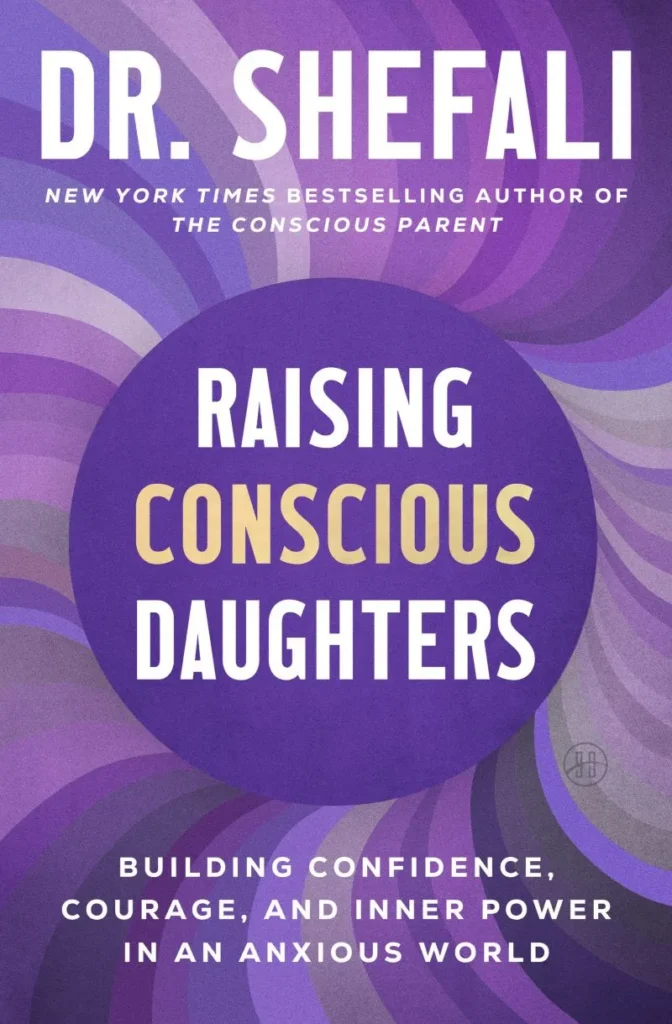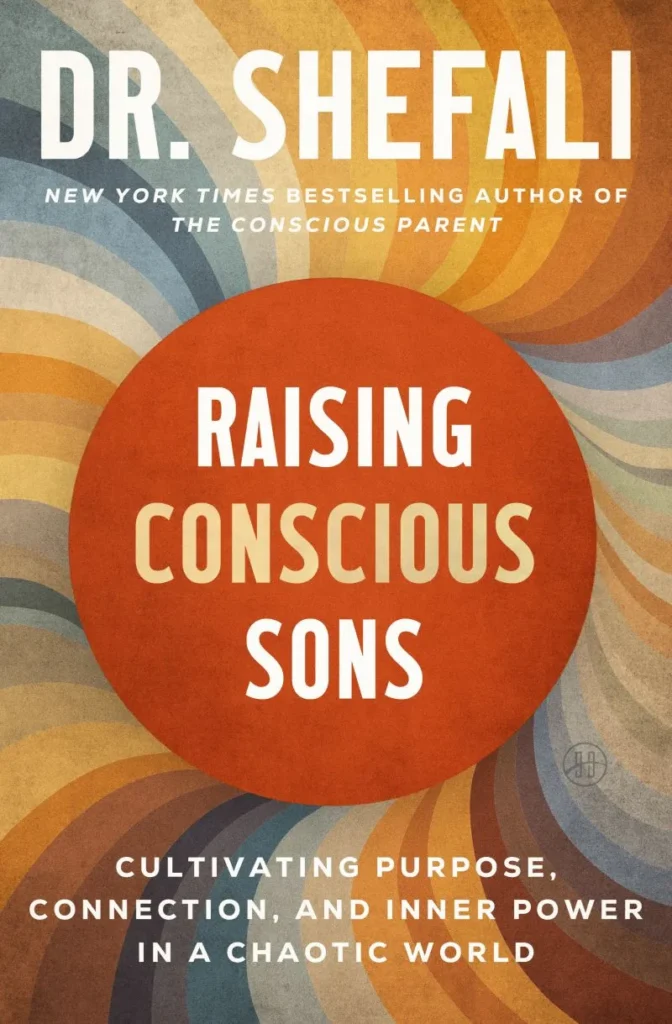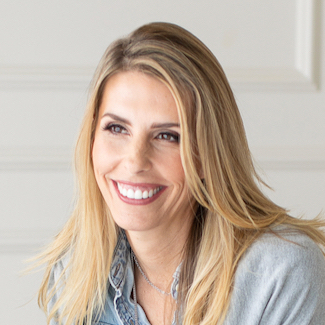

Clinical psychologist, New York Times bestselling author, and founder of the Conscious Parenting movement Dr. Shefali argues that there’s a mismatch at the heart of modern parenting: the world our kids are growing up in has changed faster than the way we parent them. She works with parents every day, and she says what she keeps hearing is discontent and helplessness. So she wrote two books to help parents close that gap.
They arrive as a pair, Raising Conscious Sons and Raising Conscious Daughters. When I asked why she separated them, she explained that she didn’t want to reduce children to categories, but to honor differences between kids without boxing any single child in.
For the full interview, listen to our Evolving with Gratitude podcast episode, available on your favorite podcast platform.
Accept the Child You Have
Among the patterns Dr. Shefali describes, boys may respond well to movement, challenge, and adventure, while girls may be especially attuned to how they’re being perceived. She has a name for that second pattern: the perception prison, that place where a child becomes preoccupied by other people’s read on her. She frames these as observations about tendencies, not verdicts about who any one child has to be.
That distinction was worth pressing on, so I did. I told her I could imagine parents saying, no, no, my son’s not like that, or my daughter’s not like that. Read both books, she told me. Your son may turn up in the daughter’s chapters, and your daughter in the son’s. “It’s not categorical,” she said, “it’s just guidelines.” Children exist on a continuum; the generalizations are a starting point, not a container.
That idea leads to the parenting move at the heart of her work:
Accept the child you have, not the child of your fantasy or the child you wished you had.
—Dr. Shefali
Become the Trusted Adult
One of her ideas about trust ran against the usual advice. We know the familiar version: listen, don’t judge, don’t criticize, keep them safe. But she pointed to something we tend to skip. In her view, part of building trust is showing up as a parent who is self-aware about your own imperfections.
The parent who can say, Oh geez, did I do that?, she suggested, is the parent a child may feel safer coming to. Her argument is that kids don’t need us to perform that we have it all together; they need to see what it looks like to notice, reflect, take responsibility, and keep growing.
Replace Before You Remove
We spent time on technology, and I’ll be honest about where I stand. I don’t think technology is inherently good or bad. It can be used beautifully, and it can be used for harm. I wanted to understand how parents can create thoughtful boundaries without pushing kids toward secrecy.
Dr. Shefali’s most practical suggestion was to replace before you remove. Don’t take screens away cold turkey, she said. Build the wider net first, the movement and the activities and the connection, so that a screen becomes one thing among many rather than the only thing. Keep screens in shared spaces. And when a child breaks an agreement, let the consequence be a way of contributing to someone else, like helping an elderly neighbor with their yard, rather than a punishment. The idea she kept returning to isn’t simply to remove what we don’t want, but to make sure kids have relationships, activities, and experiences worth moving toward.
Help Kids Become More Fully Themselves
When we talked more specifically about daughters and sons, Dr. Shefali emphasized helping each child feel honored for who they are. For girls, she talked about building inner authority, giving them room to use their voice and take up space. For boys, she said the goal isn’t to force them into a mold of what masculinity is supposed to look like, but to let them be true to themselves, and to be honest with them about their bodies, respect, and consent.
When I asked for a couple of things a parent could do right away, her answers were simple and doable. Really listen. Put the phone down, make eye contact, and ask, “Do you want advice or do you want me to just listen?” And separate the action from the child. Not you’re rude, but that came across as rude. Even better, she said, is to name the good intent while you’re at it: I know you don’t mean to be rude, but that came across as rude. You’re correcting the behavior while showing the child you assume they meant well.
I asked what she most wants parents to hear, the thing she’d shout from the rooftops.
“Parents have more power than they think. Their children need them more than they realize.”
The influence is already ours. What matters is that we use it well.
In Bold Gratitude,
Lainie
Connect with and learn from Dr. Shefali:
Website: DrShefali.com
Books: Raising Conscious Sons and Raising Conscious Daughters