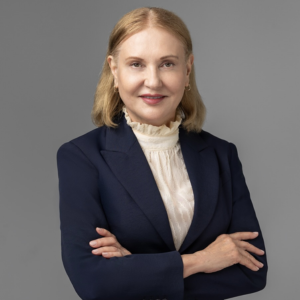

In 2019, the sky over Sydney turned orange. The sun stayed red for days. The air was thick enough that breathing became difficult. Then came the COVID lockdowns and the industry shutdowns, followed by a month of relentless rain and major flooding. Paula Rose Castronova lived through all of it, and she describes the period plainly: she was inwardly distressed, searching for answers, and she truly felt the planet was trying to tell us something. What she did next is the reason this article exists. She did not look away, and she did not try to carry the whole thing. She started asking a different question.
Paula Rose Castronova is a Sustainability Growth Director, speaker, and thought architect whose work sits at the intersection of environmental systems and human wellbeing. After the events in Australia, she turned to education, completing academic study in sustainable and societal business at Cambridge and Harvard, and grounding her approach in the UN Sustainable Development Goals before moving into collaborative work across systems and communities. She is careful to say she is not a clinical expert, and she does not present herself as one. What she brings instead is a rare working knowledge of both sides of this problem: the systems and strategy that explain the scale of the challenge, and the emotional reality of the people expected to respond to it.
Eco-Anxiety Is Not a Diagnosis, It’s a Response
Paula Rose Castronova defines eco-anxiety as the persistent worry, stress, or fear people experience about climate change and environmental decline. She notes that she is not aware of it being a clinical diagnosis, and she is deliberate about that distinction. In her work, it functions as a very real emotional response to a growing awareness of the environmental challenges around us.
The reason it is climbing has less to do with individual fragility than with information volume. As Castronova explains, people are being exposed to more frequent climate-related disasters, more scientific warnings, and constant media coverage, and that flow of information makes environmental issues feel immediate, personal, and difficult to process. It rarely announces itself as anxiety. It shows up as helplessness, guilt, emotional fatigue, doomscrolling, or emotional numbness. It can look like guilt about driving a car or genuine worry about whether to have children. Underneath all of those surface expressions, Castronova finds the same three emotions: fear, sadness, and a sense of loss.
That reframe is the practical takeaway. If you have been treating your reaction as a character problem, you have been working on the wrong thing.
The Difference Between Concern That Moves You and Distress That Stops You
Not all environmental worry is the same, and Paula Rose Castronova draws a clear line between the two versions. Healthy concern motivates people to learn, make sustainable choices, and take positive action. Chronic eco-anxiety does the opposite. It shows up in daily life as persistent distress, sleep problems, difficulty concentrating, or feelings of helplessness, which she notes is not unlike other anxiety issues.
The warning signs she describes are worth knowing: constant worry about environmental issues, feelings of hopelessness or guilt, withdrawal from normal activities, and difficulty enjoying everyday life. Castronova is direct about the limits of her expertise here and about what to do next. If these feelings become persistent or begin affecting your work, your study, or your relationships, she recommends seeking support from a trusted person or a mental health professional.
What separates the two is not how much you care. It is whether the caring is still connected to something you can do.
Why Small Actions May Feel Pointless, But That Instinct Is Wrong
Deforestation, pollution, climate extremes, and biodiversity loss are global problems. Paula Rose Castronova acknowledges that when you are facing challenges of that size, it is easy to believe your individual actions do not matter, and she is honest that she has felt this herself. The thinking follows a predictable pattern: I am too small to make a difference; nothing I do changes anything. From there, she says, we start blaming the systems, the organizations, or each other.
Media plays a measurable role in that spiral. Crises dominate headlines because they attract attention, while positive sustainability stories receive far less coverage, which means most people are consuming a great deal more crisis than solution. Castronova’s counterargument is structural rather than sentimental. Systems are made up of people, and every major social transformation began with individuals changing what they believed, how they behaved, and the conversations they had.
She points to reusable bags, bottles, and coffee cups as the clearest example. A decade ago, reusable water bottles and shopping bags were niche behaviors. Today many cities, businesses, and countries restrict plastic bags and actively encourage alternatives. The same pattern shaped renewable energy, where consumer demand, investor pressure, technological innovation, and policy change combined to remake an industry once considered impossible to shift. Castronova describes this as the Butterfly Effect at work, where small, gradual efforts compound over time. Her warning about impatience is the part most people need: when we expect quick solutions, we can give up just before we see our positive impacts flourish.
“I do not see emotions as weaknesses. I see them as signals.”
~ Paula Rose Castronova
The First Steps: Awareness, Acceptance, and Action
The framework Paula Rose Castronova teaches has three stages. Awareness means recognizing what we are feeling and why, and understanding the environmental and social challenges we face without ignoring or avoiding them. Acceptance means acknowledging those emotions without judgment or resistance, and recognizing that no single person can solve these issues alone. Action means choosing a constructive response that aligns with our values, then taking practical, achievable steps at home, in our communities, or through our workplaces.
The stage where people get stuck is the first one. Castronova puts it in a single sentence: awareness without action can become despair. When problems feel too big, and solutions seem unclear, it is easy to stay informed without ever feeling confident enough to take the next step, and that gap is where frustration and helplessness accumulate.
Guilt is what keeps people frozen there. As Castronova explains, guilt tends to keep people focused on what they have not done rather than what they can do next, and positive action is far more motivating than self-criticism. Her replacement for guilt is specific: choose one meaningful action instead of trying to solve everything at once, focus on progress rather than perfection, and find community rather than carrying the burden alone. She is blunt about what most people need permission to release, which is the belief that they have to be perfect.
Human Sustainability, and Why Burnout Undermines All Our Progress
This is where Paula Rose Castronova’s thinking departs most sharply from conventional environmental messaging. Human sustainability, as she defines it, is about creating a future where people can thrive rather than merely survive. It covers physical and mental wellbeing, relationships, communities, workplaces, and a sense of purpose, and it rests on a practical observation: if people are exhausted, disconnected, or overwhelmed, they are far less able to care for the environment or contribute to solutions.
Burned-out people, she explains, are operating in survival mode, which leaves little energy for creativity, collaboration, or long-term thinking. Lasting sustainability requires people who are healthy, resilient, and able to stay engaged over time, and a movement that does not take human emotional health seriously will struggle to create lasting change. Emotional resilience, in her framing, is not a soft add-on to environmental work. It is a vital part of it.
Castronova extends this into what she calls a relationship crisis. Many environmental challenges stem from disconnection in how we relate to nature, to each other, and to the systems that support us. When that sense of connection and shared responsibility erodes, it becomes easier to exploit resources, ignore inequality, and prioritize short-term gains. Rebuilding those relationships is not separate from the technical work. It is what makes the technical work possible. Leadership matters here too, and Castronova defines it broadly: a schoolteacher, a parent, a small business owner, a CEO, a council member, or a student. We all hold a leadership role for someone.
What to Do This Week Instead of Ruminating
Paula Rose Castronova’s practical guidance starts with a question swap. Instead of asking how do I fix everything, ask what can I influence today. She calls this the shift from control to influence, and it redirects energy toward things that are actually reachable: personal habits, local initiatives, conversations, and the skills you can contribute where they are needed.
Her second recommendation is to limit fear consumption. Staying informed matters, but constant exposure to negative headlines and endless updates leaves people emotionally exhausted and powerless. Castronova stays informed with intention rather than constant exposure, which means choosing trusted sources, setting boundaries, taking regular breaks from negative content, and balancing awareness of problems with coverage of innovation and progress. Her test is a good one to borrow. Ask whether the information you are consuming helps you understand and act, or simply creates fear.
The third is the smallest and the one she returns to most. Choose one action within your control and commit to it. That might be reducing food waste, making a more sustainable purchase, supporting a local business, spending time in nature, joining a local initiative, or starting a conversation. She also names a habit that generalizes well beyond any single choice: pausing before you buy, use, or discard something and asking whether there is a better way.
Caring Is the Starting Point, Not the Problem
The line Paula Rose Castronova keeps coming back to is worth carrying out of this article intact. You are not overwhelmed because you are weak. You are overwhelmed because you care. Feeling the weight of environmental problems is a sign of empathy, awareness, and connection to the world around you, not evidence that something is wrong with you.
Her own turning point came when she stopped asking how to fix everything and started asking what meaningful contribution I can make today. As she puts it, we do not need to carry the whole world to help change it. That is the shift available to anyone reading this, and it costs nothing but a change in the question.
Castronova offers one more thing before she closes, and it is the piece most sustainability conversations leave out entirely: emotional validation. Our feelings are real and worthy of acknowledgment, and recognizing that others share them is what makes us feel less alone. From that connection, hope becomes possible, and empowerment becomes practical. Hope, in Paula Rose Castronova’s definition, is not something we wait for. It is something we create through action.