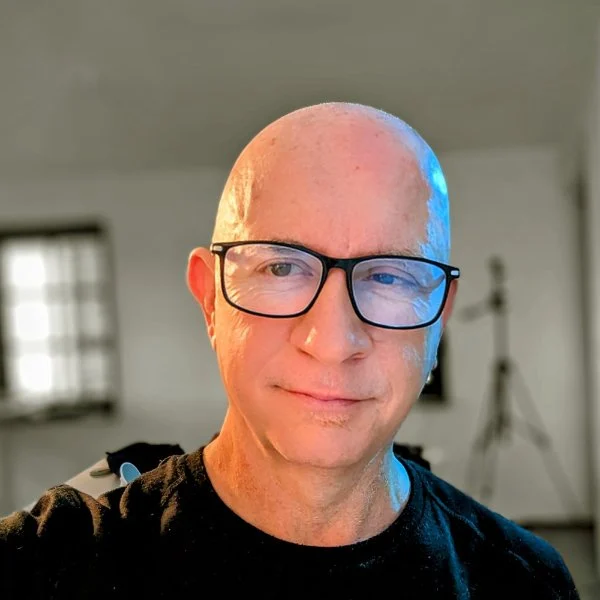
“Freedom isn’t about working less—it’s about designing a life where your work and your happiness can travel together.”
— Jamie Sylvian
In a world where burnout is rising and traditional office life feels increasingly outdated, more professionals are searching for a way to build meaningful careers without sacrificing their freedom. Enter Jamie Sylvian, the founder of Executive Nomad and a pioneer of the high-level, location-independent lifestyle. While the term “digital nomad” often evokes images of twenty-somethings working from beach bars, Jamie represents a different reality—one where seasoned executives, strategists, and consultants can run thriving global businesses from anywhere in the world with nothing more than a laptop, a phone, and the right systems in place. After decades in corporate strategy and communications, Jamie reshaped his entire life to prioritize autonomy, wellness, and adventure, all while continuing to serve blue-chip clients across continents.
In this in-depth conversation, Jamie reveals how he built a borderless business long before remote work became widely accepted. From crafting a sustainable work structure to operating across time zones, managing client relationships, choosing destinations, avoiding burnout, and staying grounded while constantly on the move, Jamie generously shares the systems and mindset that make his lifestyle not only possible, but profitable. Whether you’re dreaming of escaping the corporate grind, craving more flexibility, or simply curious about how a successful consultant operates from Greece one month and Spain the next, this interview offers tangible insights—and a refreshing reminder that freedom and professional excellence can absolutely coexist.
Thank you so much for joining us, Jamie! Our readers would love to get to know you a bit better. Can you tell us a bit about your backstory?
Thank you, Stacey, it’s lovely to be here. I’m originally from London, and for more than 25 years I’ve worked in strategy and communications with blue-chip companies across different sectors and continents. For a long time, I did what most executives do—I was on planes constantly, flying from London to Dublin and back, going into boardrooms, sitting in endless in-person meetings. It was rewarding, but it was also exhausting and increasingly misaligned with the life I wanted. Over time, I realized that the essence of my work wasn’t tied to a physical office. My value came from my experience, my thinking, and my ability to help leaders see their business differently. Once that clicked, I began restructuring everything: where I lived, how I delivered my services, the way I set expectations with clients, and even how I handled taxes and residency. That evolution eventually became what I call the “Executive Nomad” lifestyle—running a serious consulting business entirely online while living and working from wherever I choose.
You describe yourself as an “Executive Nomad.” What does that mean, and how is it different from the typical digital nomad image people have?
When people think “digital nomad,” they often picture someone in their twenties, perched in a beach bar in Bali with a laptop and a mojito, doing freelance work between surf sessions. It’s a fun image, but it doesn’t capture what a lot of seasoned professionals actually want. An Executive Nomad is someone who still operates at a high level—working with executives, companies, and investors—but has uncoupled their income from a fixed location. I run a consulting business that works with blue-chip clients, many of them based in London and other major business hubs, but I am very rarely in the same room with them. My company is registered in one jurisdiction, I live in others, and I’ve structured everything—from contracts to communication—so clients know from day one that our work happens via calls like this. It’s still professional, still high-value; the only real difference is that I might be in Greece, Bulgaria, Spain, or an elephant park café in Thailand while I’m doing it.
In simple terms, what does a typical workday look like for you when you’re on the road?
My days are actually quite structured, even though my lifestyle looks very free. I usually keep it to about two video or phone meetings with clients per day. That gives me enough deep conversation and strategic work without draining my energy or compromising quality. Wednesdays are non-negotiable: I never schedule calls on Wednesdays. That’s my thinking day. I’ll find a nice café, bring a notebook, and spend a few hours reflecting on my business, my clients’ challenges, and what needs to happen next. Overall, I probably work around four very focused hours a day. My work is about giving seasoned leaders a fresh perspective—helping them see options, risks, and opportunities they might miss from inside the company. The rest of the day is logistics, reading, walking, and enjoying wherever I happen to be living at that moment.
With such a transient lifestyle, what are your non-negotiables when it comes to health, focus, and relationships?
The transient nature is both the gift and the challenge of this lifestyle. I might spend a few months in Greece, then move to Bulgaria, then head to Spain. It’s exciting, but it does mean that building very deep local relationships can be tricky because people see you come and go. Over the years, though, I’ve built a global network of friends and fellow travelers. In almost any major city, there’s someone I can message and meet for coffee. For my health and focus, I make sure I move my body every day, I protect my thinking time, and I create routines wherever I land—same café, same gym, same walking route. For relationships, I’m intentional about staying in touch with people I care about, even if I haven’t seen them for a year. One of the joys of this lifestyle is meeting someone after a year apart and picking up like you never left, with new stories from different parts of the world.
What’s a big mistake you made early on in this journey that you’d encourage listeners to avoid?
One big mistake was assuming this lifestyle would be easier than it actually was, especially before technology was where it is today. Years ago, clients genuinely expected you to be physically present. So I’d fly to London for a meeting, then to Dublin three days later, and a huge amount of my time and money went into travel. It was inefficient and unsustainable. Another mistake was not having a clear, consistent offer. I was doing great work, but it wasn’t always packaged in a way that made it easy for clients to understand what they were buying and what results they could expect. Today, I spend longer in each location—one to three months—so I can really settle, test the tech, and get into a rhythm. And my services are clearly defined, which keeps client expectations aligned and makes the whole operation smoother for everyone.
How do you decide what to say “no” to so that your freedom doesn’t turn into chaos?
I always start with a conversation that is purely exploratory—no commitment, no pressure. In that call, I’m asking myself two questions: Can I genuinely help this person or company, and do I actually want to work with them? Even through a screen, you can pick up on energy, values, and whether it’s going to be a good fit. I’m very clear about the parameters of what I offer: what’s included, what’s not, what the communication pattern looks like, and how we’ll measure success. That integrity is important to me, and it also prevents chaos. I’m happy to go above and beyond where it makes sense, but there’s a solid framework underneath it all. And yes, I get paid up front. That one boundary alone eliminates a lot of misalignment and ensures we’re both taking the work seriously.
If someone listening wants to start this kind of lifestyle tomorrow, what’s the minimum viable tech stack you’d recommend—things like project management, storage, and payments?
The first step isn’t actually tech—it’s deciding whether this lifestyle genuinely fits who you are. Many of the people I help are experienced executives coming from corporate environments. They’re burned out, the company has been sold, or they’re nearing retirement, and they’re looking for something different that still uses their experience. Once that decision is made, the tech is surprisingly minimal. I run almost everything on my MacBook and my iPhone. I’m transitioning to Starlink so I can carry my own internet reliability with me, which removes a major variable. For storage and collaboration, I’ve used Google Docs and Google Drive for about 15 years—it’s simple, accessible, and more than enough. Most of my clients are very comfortable with phone calls instead of video, which simplifies things even further. You don’t need complex systems; you need a reliable laptop, a good phone, stable internet, and tools you actually know how to use.
You work across multiple time zones. How do you manage that without dropping balls or getting overwhelmed?
I design my week around time zones intentionally. At the moment, I’m in Europe, which puts me several hours ahead of the East Coast in the U.S. Typically, Mondays and Tuesdays are my Americas days—I take calls with clients in the U.S. and Canada. Wednesdays are reserved for deep work and thinking only. Thursdays and Fridays are for London, Europe, and Asia. That structure helps me protect my energy while giving clients predictable windows. Of course, there’s always a bit of flexibility; they’re running businesses and things come up. But once clients see that I deliver consistently within that framework, they respect it. And an unexpected bonus is that my location becomes a part of our relationship. They might be in a rainy London office, and I’m calling from a sunny café in Spain or overlooking elephants in Thailand. That contrast often brings a smile and makes working together more human and enjoyable.
From your clients’ point of view, what does a great experience look like when you’re eight hours ahead and fully remote?
A great client experience, especially remotely, starts with clarity and honesty. Early on, I ask them: “What is the challenge you want to solve, and what would success look like from your perspective?” Some clients come to me for capital raising, others for acquisitions, integrations, or communications strategy. Once we agree on where we’re trying to go, we define realistic expectations and checkpoints. Executive-level clients understand that things can change, but they appreciate that we’re aligned from the outset. If I don’t think I can deliver on what they want, I won’t take the engagement. Instead, I’ll introduce them to someone in my network who’s better suited for that particular problem. Over time, as we work through two or three projects together, the relationship deepens. They start sharing more about their business, their families, and their lives, and even though I might never have met them in person, there’s genuine trust and connection there.
How does your sales pipeline work from a laptop? How do leads find you and how do you close deals while you’re traveling?
My pipeline is primarily digital, but one of my “secret weapons” is actually very old-school: direct mail. I often reach out to HR executives because they sit at a strategic junction inside organizations. Using tools like Apollo.io or LinkedIn, I’ll identify the right people and then send a physical letter through a service like stnp.com. It lands on their desk in an envelope with a stamp, which is so rare these days that it immediately stands out. From there, we move into conversations via phone or video. Behind the scenes, I use VOIP numbers—a London number for UK clients, a New York number for U.S. clients—so it feels familiar and local to them no matter where I am. I also maintain a virtual business address in London so everything looks consistent and professional. Once we’ve established a relationship and they’ve seen the quality of the work, then sharing that I’m in a ski resort or a Greek city just adds character to the story, rather than causing concern.
What happens when Wi-Fi goes down or travel plans go sideways? What’s your no-drama backup plan?
The key is to avoid being reactive by planning ahead. When I book an Airbnb, I don’t schedule client-facing work the next day. I give myself at least a week to settle in, test the internet, and understand how stable everything is. Wherever I go, I identify a co-working space in advance. I might not sign up immediately, but I know that if my accommodation’s Wi-Fi falters, I have somewhere with strong, reliable internet I can quickly move to. High-end hotels are another option; they usually invest in quality connectivity. Of course, unexpected things do happen—storms, outages, all sorts—but if your track record is reliable and you communicate transparently, clients are usually very understanding. The important thing is never to continually put yourself in situations where you have crucial calls and no backup. They’re paying for your expertise, and part of that is your ability to show up reliably, wherever you are.
How do you choose where to go next—considering time zones, internet, safety, and cost? What’s your filter for locations?
I like to mix environments, but my decisions are quite practical underneath. Being from London, I love cities: the energy, the culture, the cafés. Right now, I’m in a ski resort just as the season kicks off, which is a very different vibe. When it becomes too busy in peak season, I’ll head down to a city in Greece for a few months, then maybe on to Spain where I have family. I also pay attention to seasonality—I like Spain in March and April, for example. My filter is simple: Does it have decent infrastructure, good internet, a level of safety I feel comfortable with, and a cost of living that makes sense for my stage of life and business? Cities tend to meet those criteria, and they make it easy to balance work with exploring and enjoying life.
What daily routines help you stay steady—things like sleep, workouts, meals, and deep work?
The cornerstone of my routine is movement. I’m very committed to hitting 10,000 steps a day. That’s not just about health; it’s a key part of my thinking process. I’ll put on a podcast or an audiobook, walk for an hour or two, and let my mind work through client challenges or my own business ideas. If I have audio-only calls, I might take them from a café mid-walk, which keeps everything relaxed yet productive. When I’m in one place for a while, I usually join a local gym, and in countries I return to often—like Spain—I go back to the same facilities and reconnect with familiar faces. My routine is disciplined but not rigid. If I miss a gym session or two, I don’t panic; I know I’ll get back into rhythm. What matters is having these anchors in place wherever I go.
What’s in your “go bag” so you can be ready to work from anywhere in about ten minutes?
My go bag is surprisingly minimal. I carry my iPhone, my MacBook, and a tiny external camera that’s about an inch square but delivers excellent quality. I plug that little camera into my Mac, fire up my meeting platform, and in a couple of minutes I’m ready for a professional client call from almost anywhere—a café, a co-working space, even an airport lounge. Add a good pair of earphones and a reliable internet connection, and that’s essentially my mobile office. The point is not to have more gadgets; it’s to have a small set of tools that you know work flawlessly so you can switch locations without losing your professional edge.
How do you avoid loneliness and burnout while moving around so much—what role do community, co-working, and time off play in your life?
Community is important, but it looks different when you’re not rooted in one city. I use platforms like Internations (intonations.com) to find events and gatherings in new places—whether I’m heading to Sofia, Athens, or another city. Co-working spaces are also great hubs where you meet people living similar lifestyles and working on interesting projects. At the same time, I’m very comfortable in my own company. I can walk for hours alone, thinking things through, and feel completely content. To avoid burnout, I’m careful about how many calls I take, I protect my no-call Wednesdays, and I give myself permission to step away and explore. That balance between connection and solitude, structure and flexibility, is what keeps me energized rather than exhausted.
When it comes to visas, taxes, and insurance, what high-level principles should people think about before they jump on a plane?
First and foremost, get your insurance right. If you’re living in cities, you’ll usually find good healthcare options, but without proper insurance, a simple issue can become a very expensive problem. Nomad-focused health insurance can be a lifesaver. For visas and residency, many countries operate on 90-day or 180-day rules, and I rarely stay longer than three months in any one place. I plan my year around those limits. The tax side is very country-specific. Americans, for example, deal with global taxation, while some European arrangements are more flexible. Whatever your situation, the principle is the same: stay legal, stay informed, and build a structure that supports your lifestyle rather than undermines it. That often means speaking to professionals and choosing your company jurisdiction and travel patterns carefully.
If there’s an emergency at home and you need to fly back quickly, how do you keep the business running smoothly?
The way I’ve designed my business is intentionally non-reactive. I don’t operate in a space where clients constantly call saying, “We need this fixed in the next 20 minutes.” Instead, we plan two to three weeks ahead. We know what we’re working on, what’s due when, and what’s most important. That gives me flexibility if something unexpected happens. If I need to travel urgently, I can shuffle a few calls, communicate clearly, and keep everything moving without drama. I also tend to avoid clients whose businesses are permanently in crisis mode. In the kind of strategic work I do, constant emergencies usually indicate deeper organizational issues, and that’s not the dynamic I want to live in every day.
Our listeners were promised five concrete actions. What are five things they can do this month to safely test the laptop business lifestyle?
The first action is to get clear on what you can offer. Go to my free app, executivenomad.app, and type in your wins, losses, and lessons from your career. This simple exercise, powered by AI, helps you identify a potential consulting or advisory offer—something that used to take me 90 minutes in a one-to-one call now takes about 90 seconds. Second, give that offer a name. Turn “I once saved my company $12 million on an integration” into a defined service with a clear outcome. Third, identify your first audience in the industry you already know—logistics, healthcare, tech, whatever it is. If you solved a problem once, chances are there are similar companies all over the world with that same problem. Fourth, build a basic outreach system using tools like Apollo.io and LinkedIn to find decision-makers, and start reaching out—digitally and, if you’re willing, with old-school letters. Finally, take a one-month test. Book an Airbnb in a location you’ve always dreamed of, bring your laptop and phone, set up a virtual business address and VOIP number, and run your work from there. Prove to yourself that you can deliver results from another country. That experience alone can be life-changing.
Tell us more about the products and services you provide for people who want to live this Executive Nomad lifestyle.
My core consulting work is still in strategy and communications for established companies—that’s where a lot of my experience lies. But alongside that, I’ve built the Executive Nomad brand to help people who want to step into this lifestyle themselves. I guide them through the practical steps: choosing a business name, framing their offer, understanding tax and residency implications, setting up simple but robust systems, and building a pipeline of clients they can serve from anywhere. Importantly, we’re building a community—people who can support each other, share ideas, and offer advice when someone is out in a new country working with a new client. It’s about more than just travel; it’s about creating a sustainable, fulfilling way of working that supports both your professional goals and your sense of adventure.
How can our readers further follow your work online?
The simplest place to start is www.executivenomad.com, where you can learn more about my consulting work and the Executive Nomad ecosystem. If you’re curious about what you might be able to offer as a consultant or executive nomad yourself, you can go directly to executivenomad.app and plug in your wins, losses, and lessons. The tool will help you generate ideas for possible offers and directions. From there, you can connect with me, explore resources, and start taking your first steps toward building a borderless business and lifestyle.
Jamie, this has been such an inspiring and eye-opening conversation. Thank you for sharing your journey and for showing people that this dream of working from anywhere can actually be a real, sustainable lifestyle.
Jamie: Thank you, Stacey. I really appreciate your thoughtful questions and the space you’ve created today. It’s been a pleasure speaking with you, and I hope our conversation helps more people realize that freedom, fulfillment, and meaningful work can all coexist if they’re willing to take it step by step.