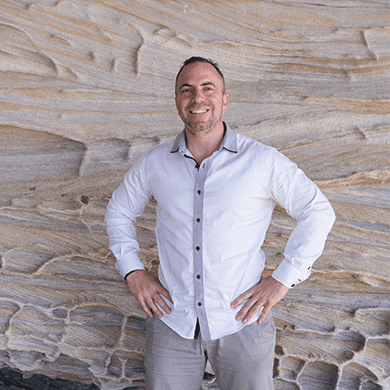

“When movement becomes purposeful, it stops being exercise and starts becoming a pathway to confidence, clarity, and a deeper connection with yourself.”
In a fitness world crowded with quick fixes and superficial trends, Coach Tarek Michael Chouja stands out as a visionary reshaping how we understand health, movement, and human potential. As the co-founder of the renowned Functional Training Institute, Tarek has devoted more than two decades to studying how the body and mind work together—bridging biomechanics, communication, mindfulness, and psychology. His philosophy of purpose-driven movement goes far beyond traditional exercise. It invites people to reconnect with their physical abilities, sharpen their mental focus, and cultivate a deeper relationship with themselves through intentional, integrative training.
In this enlightening interview, Tarek joins Stacey Chillemi to discuss the power of moving with purpose, the art of meaningful coaching, and why cognitive fitness, community, and emotional awareness matter just as much as strength and flexibility. With a rare blend of wisdom, heart, and humility, he breaks down how everyday people—not just athletes—can unlock their confidence, resilience, and vitality through simple yet powerful practices. Whether you’re a seasoned trainer or someone just beginning your wellness journey, this conversation will shift the way you see movement, health, and what’s truly possible for the human body and spirit.
Thank you so much for joining us, Coach Tarek! Our readers would love to get to know you a bit better. Can you tell us a bit about your backstory?
Thank you, Stacey, it’s wonderful to be here. My journey began long before the Functional Training Institute existed—back on the football pitch when I was a young, competitive soccer player. Coaching found me early. At sixteen, I was leading my younger brother’s team while playing myself, and I fell in love with it. I loved understanding tactics, helping others grow, and being a mentor even at a young age. Those early experiences showed me how deeply coaching can shape someone’s confidence, character, and resilience. That journey eventually expanded into personal training, wellness, corporate coaching, and educating professionals around the world.
What originally drew you toward integrated and functional movement instead of traditional gym training?
What drew me in was realizing that people don’t just want to be strong—they want to feel capable. Traditional training has value, but it often isolates muscles and ignores how humans move in everyday life. Integrative movement blends physical mechanics with emotional awareness, intention, and presence. It creates a more meaningful, effective experience where clients become more adaptable, more coordinated, and more in tune with their bodies. That integration is where transformation really happens.
If you had to define integrative movement in a single sentence, how would you describe it?
Integrative movement is purposeful, whole-body training that blends physical skill, mental focus, and clear communication to create sustainable, meaningful change.
How do you tailor your coaching style to different personality types?
Everyone interprets the world differently, so coaching must be individualized. I often use frameworks like DISC—not to box people in, but to understand how they receive information. Some people thrive with direct, concise cues. Others need reassurance or deeper explanations. Some are introspective; some are energetic and bold. My role is to meet them where they are. By adjusting tone, pacing, and communication style, I can create an environment where they feel supported, understood, and empowered.
You often talk about “the language of coaching.” What does that look like in practice?
The language of coaching is about using words to bring movement to life. Internal cues—like “brace your core” or “keep a tall spine”—are useful for building foundational awareness. External cues use metaphor or imagery—“tear the floor apart with your feet” or “draw yourself into the ground”—and they help create effortless concentration. When external cues land, the movement becomes fluid and intuitive. Over time, I speak less and observe more, letting the client embody the movement fully.
You’ve mentioned moments of self-doubt early in your career. How did you work through that?
Self-doubt is part of being human. I questioned myself often—especially when asked to speak or teach. What helped me move through that was embracing the link between confidence and competence. I studied relentlessly, applied what I learned, reflected, refined, and repeated. That ongoing cycle of learning and action built a deep, quiet confidence. And even now, I remain a student. That humility keeps me growing.
What’s one belief about mobility or functional training that you wish people would let go of?
I’d let go of the belief that machines or isolated exercises are “bad.” Isolation work has its place, particularly when someone needs to strengthen a specific area before progressing to full-body patterns. Another myth is that strength training is only for men or athletes. Strength is a human requirement—kids, older adults, women, beginners—everyone benefits from it. Fitness isn’t about choosing sides; it’s about choosing what works for the individual.
You see cognitive fitness and dual-task training becoming a major trend. What does that look like?
Dual-task training challenges the body and brain at the same time. For example, I might call out colors, numbers, or directions that correspond to movements, and the client must respond quickly. This improves reaction time, processing speed, coordination, and cognitive resilience. With growing research on brain health and preventing neurodegenerative diseases, cognitive-based training will become mainstream. I expect to see it in most gyms in the next decade.
For everyday aches like stiff necks or lower backs, how do you determine whether someone needs mobility, strength, or recovery?
I begin by examining the entire kinetic chain. Using a joint-by-joint approach, I assess which joints require mobility and which require stability. I watch how someone moves—squats, walks, hinges—and look for compensations or asymmetries. That assessment continues throughout training. Every repetition and warm-up is feedback. Based on what I observe and what the client feels, I determine whether the priority is strengthening, improving range, or focusing on recovery and nervous system regulation.
You mentioned the RAMP protocol. Can you break that down?
RAMP stands for Raise, Activate, Mobilize, Potentiate. Raise increases physical and mental readiness. Activate turns on the muscles needed for that session. Mobilize encourages controlled joint range. Potentiate prepares the neuromuscular system for high-quality work. It’s a structured way to transition the body from everyday life into focused movement.
Recovery is essential but often overlooked. What does healthy recovery look like to you?
Recovery begins in the session and continues throughout daily life. After training, even five minutes of breath work or gentle stretching shifts the body into a calmer parasympathetic state. Outside the gym, I follow morning rituals: breath work, stretching, and prayer. I avoid my phone for the first hour of the day unless there’s an emergency. Recovery is listening to your body—honoring when it needs rest and when it’s ready to push. That self-awareness supports longevity.
Can you share a client transformation where integrated breath and movement made a breakthrough?
Christine is one of my favorite stories. She entered our studio shy, withdrawn, and lacking confidence. Through conversations and gentle one-on-one sessions, we built trust. Over six months, she grew stronger, more coordinated, and more confident. Eventually, she joined group classes and discovered the power of community. One month, she paused training to travel. We later received a postcard of her standing triumphantly at Machu Picchu, thanking us for helping her fulfill her dream. That transformation was not only physical—it was emotional and spiritual.
You’ve written a book called Purpose Driven Movement. What inspired it, and what can readers expect?
The book began in 2014, went dormant, and kept calling me back. Eventually I finished it, and we self-published in 2019 before partnering with Morgan James Publishers in New York. It outlines the Functional Training Institute’s four pillars: assessing with purpose, moving with purpose, coaching with purpose, and programming with purpose. It’s filled with frameworks, diagrams, practical tools, and systems that help both professionals and enthusiasts understand meaningful, integrative movement.
How can your book support trainers, health practitioners, or enthusiasts in elevating their practice?
Trainers can use it to build structured, personalized programs. Health practitioners can use it to bridge the gap between rehabilitation and performance. Enthusiasts can use it to make informed training decisions and understand the “why” behind effective movement. The heart of the book is intention. When people train with purpose, they become more engaged, more consistent, and more fulfilled.
For someone intimidated by the gym, what would you say to encourage them?
I’d say you’re braver than you think—you’ve already taken the hardest step by acknowledging you want to start. Movement is not a punishment; it’s a lifelong companion. Start small, at your pace. Find an environment where you feel safe and supported. If one space doesn’t feel right, it simply means you haven’t found your place yet. Let movement be exploration, not pressure.
You emphasize community in fitness. Why is the social element so meaningful?
Community is incredibly powerful. At Primal Energy Fitness, members formed friendships and planned social outings together. The gym became a place to belong, not just to train. Community boosts consistency, supports mental health, and makes movement enjoyable. When training becomes a shared experience, it becomes sustainable.
You describe your work as a calling rather than a career. What does transitioning from career to calling look like?
A calling often starts as a whisper—something that feels meaningful and energizing. I began the Functional Training Institute as a hobby. It grew because it felt aligned with who I was. Transitioning into a calling may begin with part-time coaching, volunteering, or simply following what lights you up. When impact and fulfillment meet, that’s when a calling takes shape.
For fitness and wellness professionals, what are the most important skills for long-term success?
Technical mastery, communication, and continuous refinement. Understand the body deeply. Learn how to cue, listen, and adapt. And commit to lifelong learning. Certifications are great, but application is everything. Combine these skills with genuine care, and your career will evolve into something meaningful.
You offer several courses through the Functional Training Institute. Can you share more about them?
Two key pathways are the Master Functional Trainer and the Movement Restoration Coach. The Master Functional Trainer covers integrated assessment, movement, coaching, and programming. The Movement Restoration Coach pathway dives into recovery, movement preparation, assessments, and correctives. Our courses are accredited with ACE, NASM, and others, and they are designed to be immediately applicable for professionals and enthusiasts.
How can our readers further follow your work online?
The best place to start is functionaltraininginstitute.com, where you can explore courses and download a free digital copy of Purpose Driven Movement. You can also connect with me on LinkedIn under Tarek Michael Chouja—I’m always happy to chat, answer questions, and support anyone interested in this field.
Tarek, this has been such an insightful and inspiring conversation. Thank you for sharing your wisdom and your heart with us today.
Thank you, Stacey. I truly appreciate your thoughtful questions and the work you’re doing. It’s been a pleasure, and I look forward to speaking with you again.