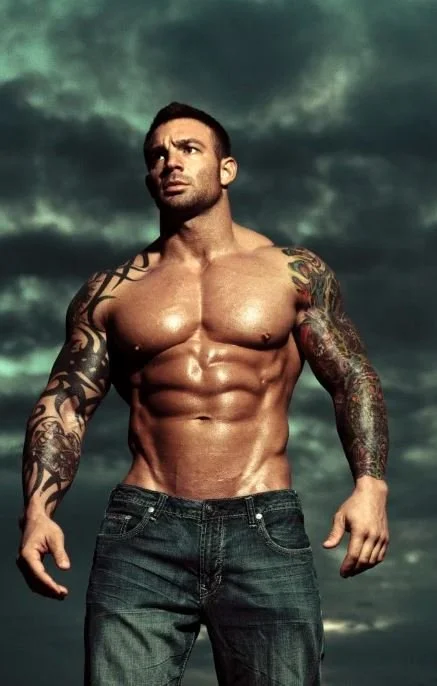
“True strength isn’t about how much weight you can lift—it’s about how deeply you can connect with yourself. When you align your body, mind, and spirit, every rep becomes a prayer, and every challenge becomes an invitation to awaken.”
— Nahum Justin Vizakis
In a world where fitness often focuses solely on the physical, Nahum Justin Vizakis—better known as The Spiritual Bodybuilder—is redefining what strength truly means. A former EOD bomb technician turned transformational coach and author, Nahum’s path from war zones to wellness studios is a story of profound awakening. His new book, The Biohacker’s Guide to Spiritual Bodybuilding, explores the intersection of body, mind, and spirit, revealing how physical training can become a sacred gateway to healing, self-awareness, and personal evolution. Through his journey from PTSD and prescription dependency to emotional mastery and spiritual clarity, he’s become a voice of truth in an industry obsessed with perfection.
In this deeply inspiring conversation with Stacey Chillemi, Nahum shares how inner transformation mirrors physical growth—and how true power comes from presence, not performance. He opens up about learning to listen to his body after years of pushing it beyond limits, his experiences with plant medicine and energy healing, and why fitness must include compassion and consciousness to be sustainable. His message bridges the worlds of biohacking, spirituality, and embodied wisdom, offering readers a refreshing reminder that the strongest muscle you can build is your connection to your own soul.
Thank you so much for joining us, Nahum! Our readers would love to get to know you a bit better. Can you tell us a bit about your backstory?
Absolutely—thank you for having me. I grew up in Massachusetts and joined the military at 19, where I tried out for EOD, the bomb-disposal unit in special operations. My first mission in Iraq in 2009 put mortality right in my hands—literally. That “oh wow, life is real” moment cracked me open. Around that same time, I competed in my first bodybuilding show on base—Mr. Taji ’09—so my path into iron and inner work really unfolded together from the beginning.
What unfolded for you when you returned home from deployment?
I brought back rough experiences and symptoms of PTSD. The medical route stacked 16–17 prescriptions on me, and I felt like a hollowed-out version of myself. In a desperate moment, I dropped everything cold turkey—not something I recommend—and went back to the weights. Training became my transmutation chamber. I channeled anger, fear, and grief into movement, rebuilt structure through diet and routine, and learned the art of letting go of what I couldn’t control.
When did spirituality begin to integrate with your fitness journey?
Massage school in 2014 flipped a switch. The first lesson was to slow down and enter “beingness,” which contradicted my military conditioning. After a month of bodywork, I experienced a profound somatic emotional release—years of stored tension and emotion unwinding through the fascia. That moment recalibrated my perception. Bodywork, breath, and later indigenous medicines like ayahuasca helped me meet myself with honesty and compassion.
You identify as an empath. How did embracing sensitivity change the way you train and live?
I realized much of my “control” was a shield against feeling—overtraining, stimulants, harsh self-judgment. Sensitivity became guidance. Instead of bulldozing through pain, I listened to what it was pointing to. Training turned into a dialogue with my nervous system—breath-led, present, and respectful of my body’s signals.
You’re candid about past steroid use. What perspective do you hold now?
Years of abuse left me unable to produce testosterone, so I’m on hormone replacement—but within physiological ranges. Energetically, blasting anabolics hardens the root and solar plexus, starves the heart of receiving, pinches the throat, and jams intuition. Tools are tools; they amplify intent. Choose them from self-love, informed data, and respect for your energetic system.
Social media glamorizes extreme physiques. What’s often hidden behind the highlight reel?
A lot of pain. Perfection-chasing can become a mask for dysregulated hormones, burnout, and unprocessed wounds. External validation is a bottomless cup. Without inner peace, aesthetic milestones feel like moving goalposts.
Your new book just launched—what called you to write The Biohacker’s Guide to Spiritual Bodybuilding?
Hard lessons and a desire to save others time and pain. I’ve seen friends in the bodybuilding world pass away or suffer preventable damage. The book connects habits, hormones, emotions, and energy so readers can see their blind spots, shift mindset, and build health-forward, spirit-aligned practices.
How do you distinguish healthy from unhealthy bodybuilding?
Unhealthy is output at any cost: ego lifting, stimulant crutches, extreme cycles, ignoring labs, and clout-chasing. Healthy is training as meditation: breath-guided tempo, mind–muscle connection, mobility and fascia care, periodic labs, nervous-system-aware programming, and sleep as a non-negotiable.
Biohacking is everywhere. What’s the principle you use to choose wisely?
Ask: “What state am I in as I choose this?” Ice baths, peptides, and gadgets can heal or harm. From emptiness or ego, they become addictions. From clarity and love, they’re amplifiers of well-being.
Many creators must film in the gym. How do you balance content with presence?
Batch it. Dedicate one day to film lifts, B-roll, meals, and voiceovers. Edit and schedule afterward. Keep the rest of your sessions sacred—phones away, breath in, attention on the body. That one structure preserves both craft and content.
Walk us through your current training and nutrition rhythm.
It’s intuitive and responsive. After deep ceremonial work with clients, my body wants fruit—hydration and grounding. My foundation looks like eggs, chicken, steak, rice, and vegetables two to four times a day. Some days I fast because my body clearly says “pause.” The point isn’t rigidity; it’s relationship. Diagnostics tailor the details.
Speaking of diagnostics, how should readers personalize their diet?
Testing beats ideology. I know thriving fruitarians, vegans, and carnivores. We all carry different microbiomes, toxic loads, and stress profiles. Use labs to find intolerances, deficiencies, and hormone patterns—then let your body’s feedback refine the plan.
A lot of people are “waking up” and feel disoriented. What’s step one?
Pause and reduce inputs. Notice how people, places, and habits feel now. Move toward what nourishes; step away from what drains. Speak the hard truth when regulated. You’re shifting from survival (doing) to presence (being). Your nervous system needs time to rewire, and slowing down is part of the protocol.
You describe fitness as a hero’s journey. How does that play out?
Many begin from heartbreak or insecurity and chase validation. Life eventually humbles you—injury, illness, or burnout—and you learn to love the one body you have. Training evolves from punishment to reverence, from “prove” to “honor.” That arc mirrors the call, the ordeal, and the return with wisdom.
What message do you have for young lifters considering PEDs?
If you’re under 25, your bones, brain, and hormones are still developing. PEDs can warp identity and physiology—sometimes permanently. Compete naturally first, master sleep and food, learn your body, and build real strength you can keep.
Where does detoxification fit into modern health?
Given environmental and pharmaceutical exposures, some detox belongs in every year: fasting, grounding, parasite protocols, coffee enemas, sauna, and—when appropriate—medicine work like Kambo or other indigenous modalities. Support drainage, go stepwise, and get guidance.
You shifted from “life is hard” to “life can flow.” How did that change your training?
Letting go of grind-as-identity changed everything. I don’t need four-plate squats to feel worthy. I prioritize fascia, breath, stability, and longevity. I strengthen structural tissues, move pain-free, and keep energy for fatherhood, purpose, and play.
How can readers find movement they’ll actually sustain?
Follow what feels alive—jiu-jitsu, yoga, hiking, weights—whatever lights you up. If you dread it, you’ll quit or get hurt. Choose the practice you love enough to repeat, then elevate it with breath, tempo, and presence.
What does “radical responsibility” look like in the gym and in life?
Step back and ask, “How am I creating this result?” Own the pattern, then change the input. My book maps the spiritual and emotional correspondences to training choices so you can address root causes, not just symptoms.
Who do you work with, and what transformations are you seeing?
Anyone genuinely committed to growth—veterans with PTSD/TBI, creators, and more gifted teens learning to steward their empathy. We dismantle distraction, refine relationships and habits, regulate the nervous system, and align training with purpose. The output is calmer decisions, clearer energy, and healthier bodies that last.
How can our readers further follow your work online?
You can find everything I’m doing at spiritualbodybuilder.com—that’s where you can dive deeper into the concepts from my new book, The Biohacker’s Guide to Spiritual Bodybuilding, and order a copy directly or through Amazon. If you’re interested in working with me personally, whether it’s coaching, plant medicine ceremonies, energy work, or body optimization programs, head over to optimizinghuman.com. That’s where I share my current offerings, upcoming retreats, and ways to connect one-on-one. You can also follow me on social media @TheSpiritualBodybuilder for daily guidance, motivational insights, and tools to help you bridge physical training with spiritual evolution.
Nahum, this was such a powerful and eye-opening conversation. I truly appreciate how openly you shared your story—the struggles, the breakthroughs, and the wisdom you’ve gained along the way. It’s rare to hear someone bridge the physical and the spiritual so authentically, and I know your message will deeply resonate with our readers who are searching for that same balance of strength and inner peace. Thank you for bringing such depth, vulnerability, and insight to this discussion.
Thank you, Stacey. I’m really grateful for the opportunity to share my journey and connect with your audience. These kinds of conversations are what help people remember that transformation is possible on every level—body, mind, and spirit.