

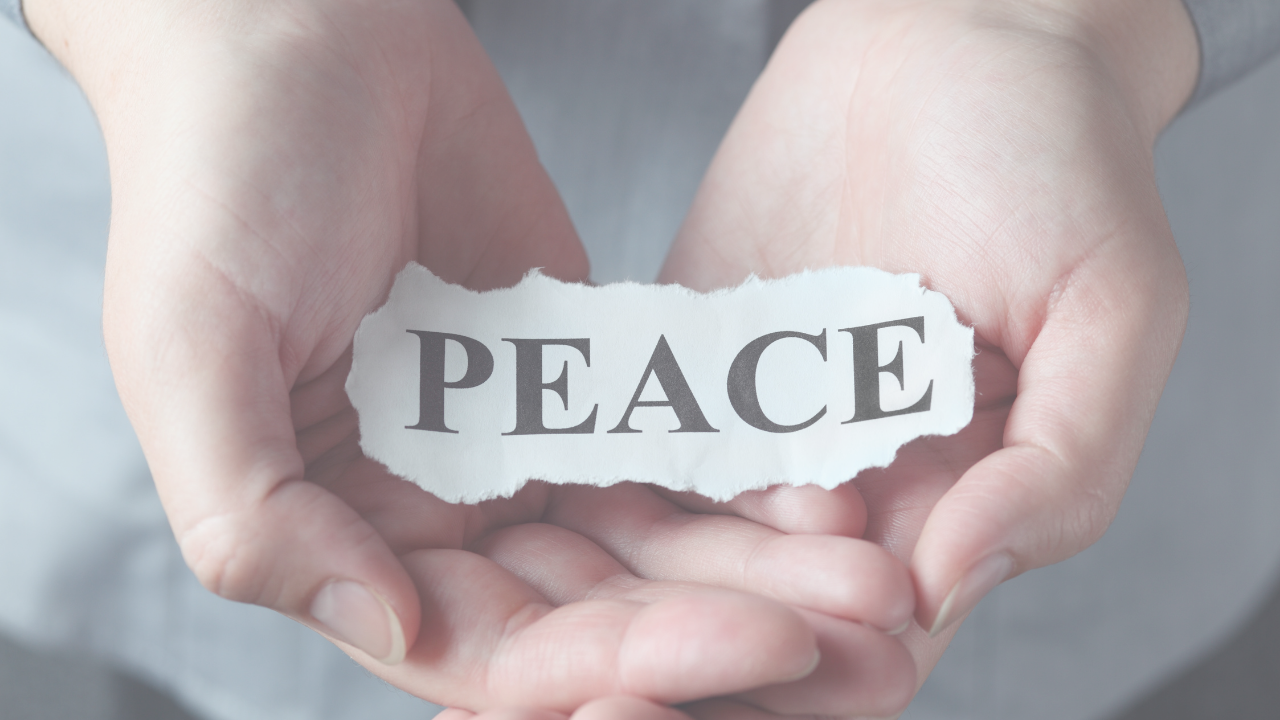
There is a peace that comes on the other side of surrender… when you stop fighting what is already here and allow yourself to be supported.
– Michelle Dosanjh-Johal
For many people, stress is synonymous with breakdown—something to be avoided, minimized, or endured until it passes. But for educator and writer Michelle Dosanjh-Johal, stress became something else entirely: a teacher, a signal, and eventually a source of strength.
Her understanding of stress did not come from theory. It emerged from years of navigating profound uncertainty while caring for her children through serious medical and mental health challenges—experiences that reshaped how she relates to resilience, surrender, and emotional survival.
A Moment That Changed Everything
To understand the depth of stress Michelle has carried, she begins with a memory from Maui. Sitting on a beach with her nine-year-old daughter, she explained that autism exists on a wide spectrum—and that her daughter had just been diagnosed with high-functioning autism. Her daughter’s response was simple and hopeful: “Oh, I guess I have the good kind then.”
That optimism would be tested repeatedly. By age 11, Michelle’s daughter was diagnosed with a rare health disorder affecting one in 2,500 girls. By 15, she required open-heart surgery. At the same time, Michelle’s son—already diagnosed with autism—was diagnosed with a serious mood disorder. Later, Michelle’s daughter would require multiple blood transfusions and prolonged hospitalization.
“There were so many nights of the soul,” Michelle recalls. “The one thing that pulled me out again and again was the love I had for my children.”
When Control Disappears
The most destabilizing chapter arrived in December 2023, when Michelle’s daughter woke up as if she were a different person—angry, disoriented, and eventually suicidal. Medical explanations were uncertain. Treatments didn’t work. Hospitalizations repeated.
During one emergency room visit, her daughter was placed in a stark, prison-like room for safety—gray concrete walls, a steel toilet, a mattress on the floor. Michelle sat beside her, exhausted and overwhelmed, unsure if her child would survive.
It was there, she says, that anger finally gave way to surrender.
“I stopped fighting what was happening and accepted what was,” she explains. “I surrendered it. And in that surrender, I found a moment of peace.”
That moment did not resolve the crisis—but it shifted something internally. Michelle describes it as reclaiming her power, not by fixing the situation, but by meeting it fully present.
Rethinking Resilience
Michelle is careful not to romanticize resilience. For her, resilience is not about pushing through endlessly or staying positive at all costs. Instead, she defines it as the strength of mind—the capacity to respond thoughtfully even when circumstances are unchangeable.
She draws a clear distinction between mental illness, which her children navigate, and mental strength, which can be cultivated. “Resilience,” she says, “is something we can build—especially when we’re not the ones whose minds are ill.”
Over time, Michelle began noticing that people often asked how she was “still standing.” Reflecting on that question led her to recognize that no single strategy carried her through—it was the accumulation of many small practices, drawn from education, emotional awareness, and lived experience.
Survival Mode Requires Compassion, Not Optimization
One of Michelle’s most grounded insights is about survival mode. When life becomes overwhelming, she explains, productivity frameworks and self-improvement strategies often fail.
“Survival mode is like being in a boat with leaks,” she says. “You’re not trying to go anywhere—you’re just trying to stay afloat.”
In those moments, she believes the most important task is finding an anchor. For her, that anchor was love—the love for her children that made self-harm or collapse impossible. For others, it may be hope, faith, or a future they’re holding onto.
“During a crisis,” she says, “that’s not the time to do everything. That time comes later.”
Why Suppressed Emotions Don’t Disappear
Michelle is candid about emotional processing—or the lack of it—during acute medical crises. There were periods when staying focused meant postponing emotional reflection. But she emphasizes that delayed processing is not the same as denial.
Later, through writing, conversation, and therapy, she allowed emotions to surface safely. She points to a consistent pattern: unexpressed emotion does not vanish—it often manifests physically.
“Pent-up emotion becomes illness in the body,” she says. “Research shows this again and again.”
Writing, particularly poetry, became one of the ways she metabolized grief and fear. What began as brief morning writing sessions eventually grew into a body of work—and the fulfillment of a childhood dream she had long set aside.
Turning Pain Into Meaning
Michelle does not frame creativity as a solution, but as a channel. Art, movement, conversation, and expression allow emotional energy to move rather than stagnate.
“Everybody has a gift,” she says. “It doesn’t have to be poetry. But everyone has a way to transform pain into something constructive.”
She believes that when people reconnect with the things they loved as children—before productivity and expectation took over—they often rediscover a sense of agency during stress.
Stress as Information, Not an Enemy
Over time, Michelle came to see stress not as something to eliminate, but as something to listen to. Stress, she says, carries information about limits, needs, and unprocessed emotion.
Her approach centers on three core principles that emerged organically from her experience:
- Feeling and expressing emotions, rather than suppressing them
- Accepting and surrendering what cannot be changed
- Transforming experience through mindset and meaning
This shift, she believes, is what allows stress to become a source of strength rather than erosion.
Living With Uncertainty—Without Losing Hope
Today, Michelle is clear that resilience does not mean the challenges have ended. Her family continues to navigate medical uncertainty and ongoing care. What has changed is her relationship to the experience itself.
“Life comes in waves,” she says. “There are dark moments—but there are always stars.”
For Michelle, resilience is no longer just about endurance. It is about remaining human, open, and grounded—especially when certainty is unavailable.
In that sense, stress is no longer something to outrun. It is something to understand, integrate, and, at times, learn from.
