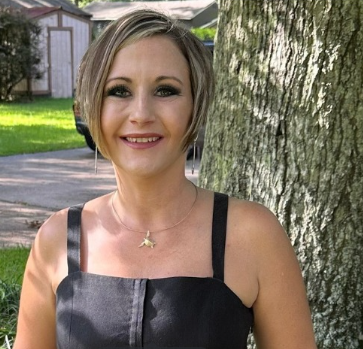

“Resilience doesn’t mean you weren’t broken—it means you chose to rebuild and keep going.”
There are moments in life when adversity feels so overwhelming that it doesn’t just challenge you—it reshapes you. You may look fine on the outside, continuing with your responsibilities, but internally feel disconnected, uncertain, or lost.
In a powerful conversation with Stacey Chillemi, resilience advocate Adrienne Caldwell shared a deeply honest perspective: healing is not linear, identity is not fixed, and strength is often built in the moments we feel most broken.
Her journey—and the insights she shares through her work—highlight a universal truth: while we cannot always control what happens to us, we can learn to rebuild how we see ourselves, how we respond, and how we move forward.
Healing Requires Honesty—Not Perfection
One of the most striking aspects of Caldwell’s journey is her commitment to radical honesty. Rather than presenting a polished version of healing, she openly acknowledges the mistakes, coping mechanisms, and difficult choices that were part of her path.
This reflects an important principle in emotional healing: self-awareness must come before self-transformation.
Avoiding or minimizing the truth can delay healing, while acknowledging it—even when uncomfortable—creates space for growth.
Practical application:
- Notice where you may be avoiding difficult truths about your habits or patterns
- Practice self-reflection without judgment
- Replace shame with curiosity: “What is this behavior trying to protect me from?”
The Mind and Body Store Trauma Together
Caldwell emphasized a powerful reality: when revisiting trauma—even through writing or reflection—the body can respond as if the event is happening in real time.
This aligns with neuroscience research showing that trauma is stored not just cognitively, but physically, activating the nervous system when recalled.
What this means:
- Emotional triggers are not “overreactions”—they are nervous system responses
- Healing must involve both mental and physical awareness
- Processing takes time because the body must relearn safety
Actionable strategies:
- Practice grounding techniques (deep breathing, sensory awareness)
- Take breaks during emotional processing
- Pair reflection with self-soothing activities (walking, stretching, music)
Rebuilding Identity After It’s Been Stripped Away
Through her experiences—including the loss of career identity due to chronic illness—Caldwell was forced to redefine her sense of self beyond external roles and achievements.
Her journey reflects a key developmental concept: identity reconstruction after disruption.
When life removes the roles we once relied on, we are given an opportunity—though often painful—to rebuild from a more authentic foundation.
A framework to rebuild identity:
- Release old labels (what you did, what happened to you)
- Reconnect with core values (who you choose to be)
- Reinforce through action (how you show up daily)
Example:
Instead of defining yourself as:
- “Someone who failed”
Shift to:
- “Someone who is committed to growth and integrity”
The Cost of Silence—and the Power of Expression
Caldwell’s work also emphasizes the impact of silence. Keeping experiences hidden can create emotional isolation, limiting the ability to form meaningful relationships.
On the other hand, expression—whether through conversation, writing, or creative outlets—can help process and integrate those experiences.
Her decision to document her story in Unbroken: Life Outside the Lines reflects a broader therapeutic principle: narrative processing—the act of organizing and expressing one’s story to make sense of it.
Why this matters:
- Telling your story helps your brain process unresolved experiences
- Expression reduces emotional intensity over time
- It allows you to move from “living the trauma” to “understanding it”
Actionable takeaway:
You don’t need to publish your story to benefit from it—start with:
- Journaling your experiences
- Writing letters you don’t send
- Speaking with a trusted person or professional
Resilience Is Built Through Repetition, Not Strength Alone
Caldwell challenges the idea that resilience is something you either have or don’t. Instead, it is something developed through repeated experiences of falling and getting back up.
This aligns with research on behavioral resilience, which shows that consistent effort over time builds psychological strength.
Think of resilience as a muscle:
- It strengthens with use
- It grows through challenge
- It requires recovery and rest
Daily resilience practices:
- Reflect on one challenge you overcame each day
- Celebrate small wins, not just major milestones
- Practice self-compassion after setbacks
From Numbness to Feeling Again
A powerful theme in Caldwell’s story is the transition from emotional numbness to feeling again. While numbness can serve as protection, long-term disconnection can limit both pain and joy.
Healing often requires re-engaging with emotions—gradually and safely.
Signs of emotional numbness:
- Feeling disconnected from yourself or others
- Lack of emotional highs or lows
- Difficulty identifying feelings
Steps to reconnect:
- Label emotions throughout the day (“I feel frustrated,” “I feel calm”)
- Engage in activities that spark small emotional responses
- Allow yourself to feel without immediately trying to fix or suppress it
Finding Meaning Through Contribution
Caldwell’s desire to help others reflects a key principle of post-traumatic growth: meaning often emerges through contribution.
When people use their experiences to support others, they often experience increased purpose, connection, and resilience.
Her work—including sharing both personal experiences and documented perspectives—illustrates how storytelling can serve not only as personal healing, but as a tool for education and awareness.
How to apply this:
- Ask: “How can my experience help someone else?”
- Share insights, not just outcomes
- Focus on connection, not validation
You Have More Control Than You Think
One of the most empowering takeaways from Caldwell’s perspective is this: even in difficult circumstances, you still have influence over your mindset and response.
While we cannot control every situation, we can develop control over how we interpret and navigate it.
A simple mindset shift:
Instead of:
- “This is happening to me”
Try:
- “How can I respond to this in a way that supports my growth?”
This shift moves you from a passive to an active role in your own life.
Final Reflection: Healing Is a Choice You Make Repeatedly
Rebuilding your life after adversity is not about one defining moment—it’s about a series of choices made over time.
Caldwell’s journey reminds us that healing is not about becoming someone entirely new. It’s about uncovering who you are beneath the pain, the labels, and the past.
Actionable Summary
If you are working to rebuild after adversity, begin with these steps:
- Be honest with yourself without judgment
- Acknowledge mind-body connection in emotional healing
- Redefine your identity beyond roles and achievements
- Express your story in safe, intentional ways
- Build resilience daily through small actions
- Reconnect with your emotions gradually
- Find meaning through helping others
- Shift your mindset toward growth and possibility
Healing doesn’t require perfection—it requires willingness. And with each step forward, no matter how small, you are proving that your story is still being written.