

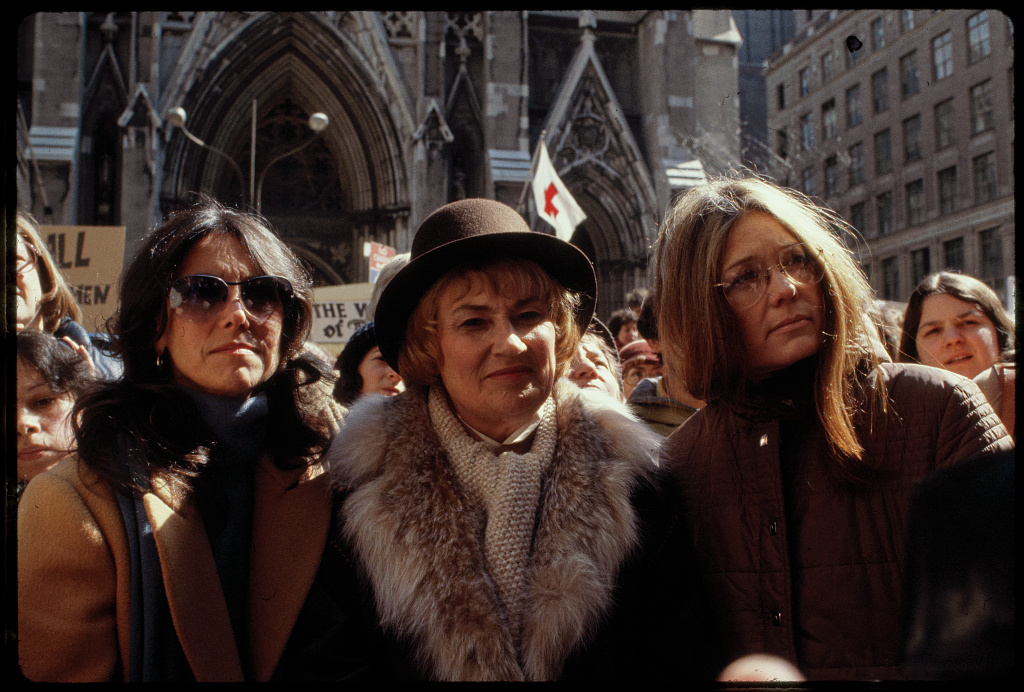
The announcement of Gloria Steinem’s death described what I believe may be one of the most beautiful things that can ever be said about a leader: “Gloria’s greatest gift was her ability to listen to others, to make others feel seen and heard.”
Her words, actions and examples gave people permission to become more fully themselves. To me, that is the essence of Sawubona Leadership. Sawubona is a Zulu greeting that means, at its heart, “I see you.” Not the title you hold. Not the box society has placed you in. Not who I need or expect you to be. I see YOU. Your gifts. Your potential. Your humanity. And perhaps even possibilities within you that you cannot yet see for yourself. Gloria Steinem was that kind of leader. And I believe we desperately need more leaders like her today.
WHEN WE CAN NO LONGER HEAR ONE ANOTHER
We live in a world increasingly divided by politics, generations, gender, race, beliefs and ideology. Too often, we listen not with openness and curiosity, but to formulate our rebuttal. We judge before we understand. We label before we listen. Gloria’s leadership reminds us that we can fight passionately for what we believe in without losing our humanity.
Her friend and fellow activist Abigail Disney said after her death, “Everything Gloria did was rooted in kindness.” Think about that. Here was a woman who spent more than six decades confronting discrimination, inequality and deeply entrenched systems of power. She endured ridicule, hostility and attacks. Yet those who knew her keep returning to the same words: Kindness. Curiosity. Generosity. Listening.
Those aren’t “soft” leadership skills. They are among the hardest—and most necessary—leadership capabilities we can develop. Because leadership isn’t simply about getting people to follow us. It’s about creating the conditions in which other people can discover who they are and what they have to contribute.
GLORIA HELPED ME SEE WHAT WAS POSSIBLE
As an Asian American woman, Gloria Steinem had an impact on my life long before I ever thought about becoming an executive coach or developing Sawubona Leadership. I knew her primarily through what I read about her and through watching the example she set. And that example mattered. Because growing up, I didn’t always experience a world that told me, You can become anything you want to become.
I was bullied for being Japanese. Then, after college, I entered the entertainment industry—an overwhelmingly male-dominated world at the time. I wanted to direct. And again and again, doors closed. It wasn’t because I wasn’t capable. I earned a grant from the American Film Institute’s Director Workshop for Women. My film, Solo, went to film festivals and won awards. Kathleen Kennedy, then working with Steven Spielberg, invited me to meet with her because she loved my film. I had done everything I thought I was supposed to do. And still, I couldn’t get hired as a director. Finally, a friend who was a highly successful male executive producer and writer told me something I will never forget: It was simply easier to get hired as a first-time male director than as a woman. I was furious. But somewhere in that discouragement were the examples of people like Gloria Steinem—and my father. People who had been told NO and refused to accept that someone else’s inability to see their potential determined what was possible.
SOMETIMES “NO” MEANS THEY DON’T KNOW
Gloria wanted to write about serious issues and politics early in her journalism career, yet like so many women of her generation, she was often steered toward subjects considered appropriate for women. Eventually, she found another way. She joined the editorial board of New York magazine. Her writing became increasingly political. She became a leading voice for women’s equality, helped found the National Women’s Political Caucus and co-founded Ms. magazine.
Ironically, public speaking terrified her. But when editors wouldn’t give her the opportunities to write about the women’s movement, she went out and spoke about it instead. She once described speaking publicly as her “nightmare.” She did it anyway.
My father understood that kind of determination. When he wanted to become a doctor, he was told: Forget it. No one will come to you because you’re Japanese. He didn’t accept that either. He became a Doctor of Dentistry, an orthodontist—and a very successful one.
Their lives taught me something I carried into my own: Sometimes “NO” simply means people don’t KNOW what you’re capable of yet. Don’t let someone else’s limited vision become the boundary of your life.
WHEN ONE DOOR CLOSED, I FOUND ANOTHER WAY TO MAKE A DIFERENCE.
I wanted to make films because I believed in the power of story to change people’s lives. When that door eventually closed, I couldn’t have known that another was opening. My path ultimately led me through my own transformation and into executive coaching. Instead of telling stories on a screen that might change people’s lives, I began working directly with human beings to help them transform their own lives—and their leadership. Looking back, I can see a thread connecting those worlds. Helping people see what they cannot yet see in themselves.
And that is another reason Gloria’s leadership speaks so deeply to me. She didn’t simply tell women who they should become. She helped create a world in which women could discover that for themselves.
THE LEADER DOESN’T HAVE TO BE THE CENTER
One of the qualities I most admire about Gloria’s leadership was that, despite becoming an international symbol of the women’s movement, she continually pointed beyond herself. She understood that meaningful change is never created by one heroic leader. It happens through community. Through movements. Through people discovering their own voices and then helping others discover theirs.
At the Women’s March in 2017, she reminded hundreds of thousands of people that we are linked—and that being together changes us. That belief in human connection ran throughout her life. She spent decades traveling to campuses, community centers, rallies and gatherings, meeting people face-to-face. She even hosted talking circles in her own home. She believed something that feels especially relevant in our increasingly virtual world: Empathy requires presence.
Technology gives us extraordinary ways to communicate. Remote work and Zoom have connected people across continents. But communication isn’t always connection. There are things we experience when we sit across from another human being—the energy in the room, the hesitation before someone speaks, the emotion in their eyes, what their body communicates before their words ever do—that cannot be fully captured through a screen. As leaders, we cannot allow efficiency to replace humanity. Sometimes we simply need to be with one another. To listen. To receive. To see.
LEADERSHIP IS HELPING PEOPLE KNOW WHO THEY ARE
Perhaps the words from Gloria that moved me most as I read the remembrances of her life were about younger generations. After spending decades becoming one of the most recognizable leaders of the women’s movement, Gloria didn’t say the next generation needed to know more about her. She said: “The primary thing is not that they know who I am, but that they know who THEY are.” What an extraordinary definition of leadership. And how relevant it is to today’s workplace.
We are living through a profound generational shift in leadership. Younger generations aren’t simply asking, How do I fit into this organization? They’re asking: Do you see me? Do you value what I uniquely bring? Can I be myself here? Can I grow here? Does my work have meaning? Can I make a difference? They don’t want leaders who mold them into replicas of the generations that came before them. They need leaders who help them discover and develop the gifts that are uniquely theirs. That is Sawubona Leadership. And that was Gloria’s leadership.
SHE OPENED THE DOOR. WHAT WILL WE DO WITH IT?
Gloria Steinem helped lay a path that millions of women—including me—were able to walk. As Oprah Winfrey so powerfully reflected after Gloria’s death, women who enter a room believing they belong there, demand equal respect and believe their dreams are theirs to pursue are living, in some measure, within the progress Gloria helped create. I am one of those women. And I don’t take that gift lightly. Because every generation inherits both progress and responsibility.
Gloria lived long enough to see extraordinary changes that once seemed impossible. She also lived long enough to see some of those gains challenged. That is the nature of meaningful change. It is never finished. One generation pushes open the door. The next must make sure it doesn’t close. And then we must open it wider for those coming behind us. Gloria did that with fierce courage. But she also did it with something equally powerful: Kindness. Compassion. Curiosity. Connection. Humanity.
That may be the part of her leadership we need most right now. We don’t need to agree on everything to see the humanity in one another. We don’t have to abandon our convictions to become curious about someone else’s experience. And we don’t have to diminish ourselves to make room for someone else to shine. Real leadership expands the room. Thank You, Gloria.
There’s a quote often attributed to E.E. Cummings that has stayed with me for years:
“To be nobody-but-yourself in a world which is doing its best, night and day, to make you everybody else means to fight the hardest battle which any human being can fight; and never stop fighting.”
Gloria, you never stopped fighting. You fought for women. You fought against discrimination. You fought for equality. But perhaps one of your greatest gifts was that you helped millions of us believe we had the right to become who we were born to be. I was one of them. And today, as a woman, an Asian American, an executive coach and someone who has devoted my life to helping leaders see and bring out the best in others, I realize how much I stand on the shoulders of people like you—and my father—who refused to allow the limitations of their time to determine the possibilities of the generations that followed.
So now it is our turn. Not to become another Gloria Steinem. She wouldn’t have wanted that. Our responsibility is to discover who WE are, use the gifts that are uniquely ours, and have the courage to make the difference that only we can make. And as leaders, perhaps our greatest responsibility is to do the same for others: To see them. To hear them. To believe in them. And to help them see what is possible within themselves.
Sawubona. I see you.
Thank you, Gloria, for seeing us. And for helping so many of us finally see ourselves.