
As a recovering screenwriter and current psychotherapist who has written books and taught workshops on authenticity for 15 years, I was blown away by the new film “Group: The Schopenhauer Effect.” It is a genuine masterpiece, the type of film destined to garner the highest acclaim in Cannes, at Sundance, and wherever culturally astute people still regard cinema as art.
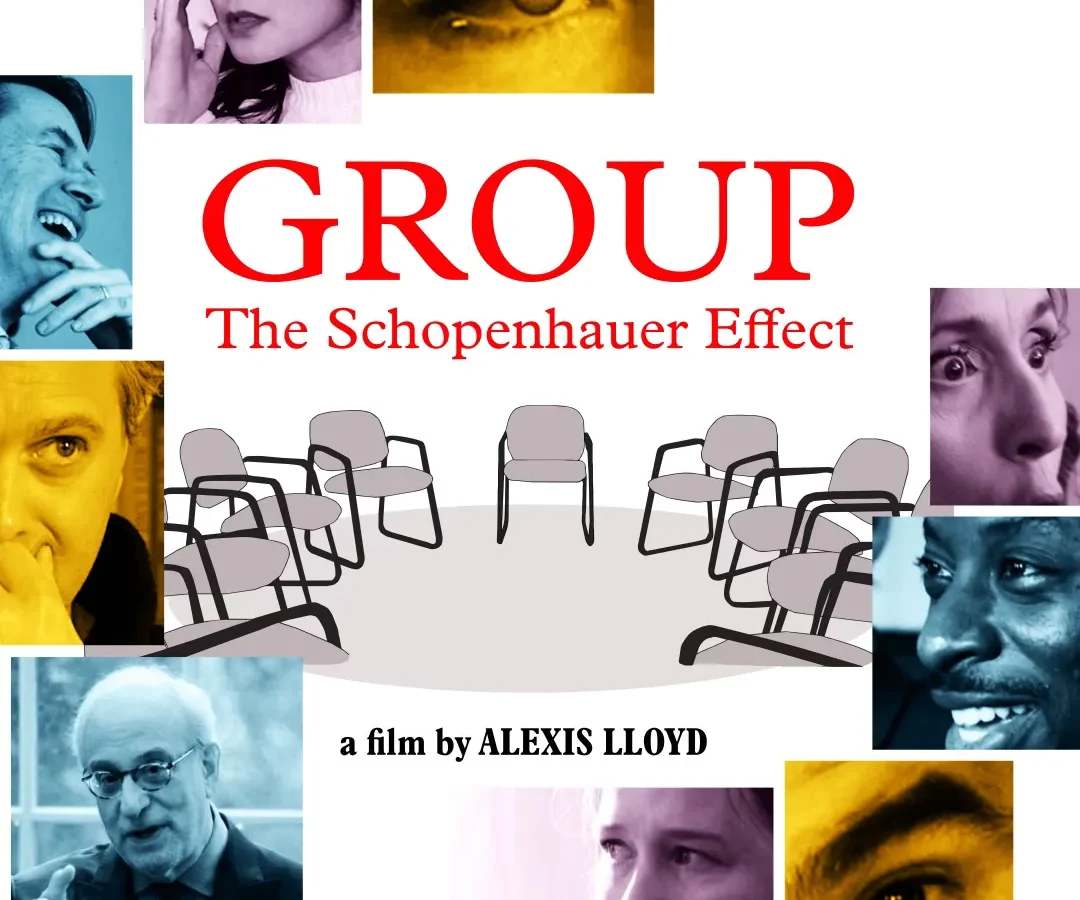
Inspired by Irvin Yalom’s “The Schopenhauer Cure” and created in the same spirit as Mike Leigh’s “Naked,” Alexis Lloyd assembled a group of actors and worked with them to develop characters who interact entirely within the crucible of a group therapy setting. However, this is no conventional scripted ensemble piece: under the patronage of real-life group therapist Dr. Elliot Zeisel, the actors often did not know what the others would say, which created an element of risk that gives the film a startling aliveness.
Like the way Larry David sets up (usually awkward and uncomfortable) scenarios in “Curb Your Enthusiasm,” with the help of Dr. Zeisel, Lloyd masterfully orchestrates psychological “situations” between actors and then allows the situations to unravel as they would in real-life. Captured by “Borat” cinematographer Luke Geissbuhler, the interactions feel as if they are unfolding in real time with the uncanny intensity of a documentary. I was so unnerved by some of the interactions that I found myself choking up in one moment and guffawing in the next. The safe container that Dr. Zeisel creates allows for emotional erraticism and eroticism that can only occur in group therapy. This film does not merely depict human behavior; it stages volatile conditions under which people reveal their true selves.
“Group” treats therapy not as a schematic device but as a space of raw, pure, unfiltered emotions. I have never seen a film that understands so profoundly how a safe therapeutic container is created and how fragile that container can (and must) be in order to allow people to feel sufficiently comfortable to become authentic. Dr. Zeisel uses remarkably precise and open language to inspire and provoke Pam, Manny, Rebecca, Frank, Tilda, Stuart, and Karina to explore uncharted terrain. His diction is deliberate, his listening is purposeful, and his timing is impeccable. He knows exactly when a gentle nudge may open a door that a different temperament would slam shut. Watching him work, one feels less like one is observing a therapy session and more like one is watching maestro conduct a chamber orchestra.
What gives the film its richness is the depth of all the characters, each of whom arrives bearing contradictions and hypocrisies that are not conveniently resolved. These fellow humans are complex, self-aware, generous, wounded, and surprisingly brave. That complexity never feels manufactured; rather, it feels honest and fresh. The acting throughout is stellar, but several scenes stand out with particular force: Tilda clumsily confessing her crush on another group member and Pam telling Manny, in front of everyone, that it is not his baby. Those moments are riveting not only because they are dramatic, but because they are precisely calibrated to expose the emotional stakes of the group dynamic.
“Group” reveals authenticity to be something elusive, difficult, charged, contingent, and fleeting. Again, like “Naked,” the performances have the texture of something uncovered rather than written. In eighteen years as a psychotherapist, I thought I had heard nearly everything imaginable; and yet there were times in “Group” that made me feel like a voyeur.
“Group: The Schopenhauer Effect” feels more like a documentary about a psychological experiment than a film about therapy — with just enough exquisitely placed plot twists to turn up the heat and distill pure emotions. Alexis Lloyd has made a work of staggering psychological insight, a love letter to both filmmaking and psychology, and an artwork that trusts the process and evolution of our comportment, our “humanity.”
This is a film every therapist — as well as anyone who needs a refresher on what it means be a loving and authentic human — should see.