

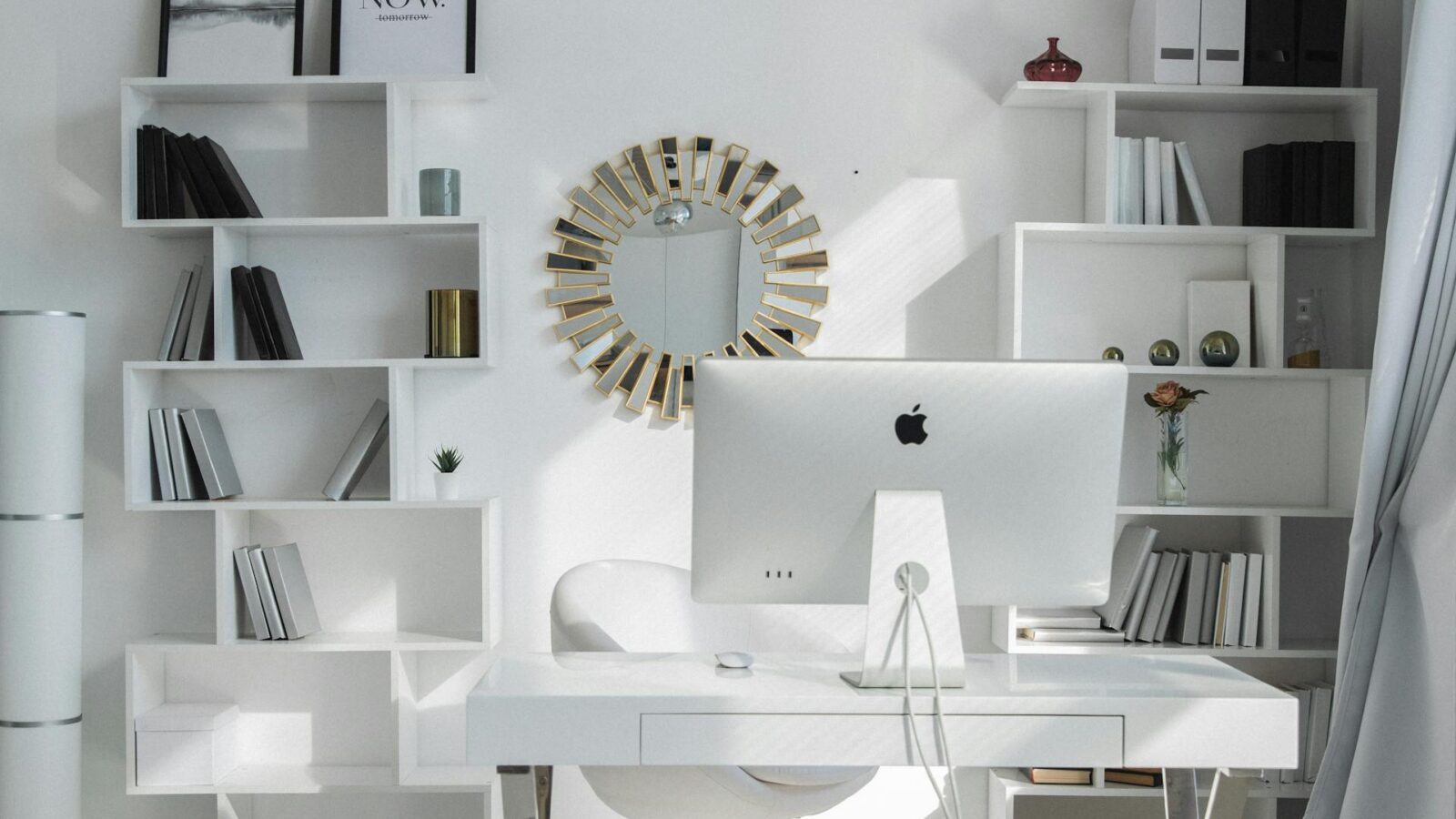
You’ve heard the term “you are what you eat,” right? What about “you are where you work”? It doesn’t roll off the tongue quite as easily, but over time, I’ve come to realize that where I spend my time is just as important as how healthy my diet is.
Your environment plays a huge role in shaping who you are. It also impacts who you become over time. This includes where you work. You spend a lot of time at work. On average, one-third of your life is spent at your desk (or whatever your work station looks like). That’s 90,000 hours on average that you spend in your work environment, letting it influence your energy, focus, and productivity.
What Does Work “Environment” Mean?
Writing for Hillsdale College’s Career Services, author Colleen Coleman boils a “work environment” down to “both the physical and social characteristics of a workplace.” That means your workspace includes its physical attributes as well as the people that fill it.
Both are extremely important. The space you inhabit for a third of your life and the carousel of people you share it with have a huge effect on you as a person and as a worker.
How Your Environment Impacts Work
Your work environment can affect your productivity in nearly every way. Take lighting as an example. The way your office or workspace is lit can impact your mood. One study found that high-quality LED lighting improved more than just general well-being. Along with being more wakeful and in better moods, employees had an 8.3% bump in visual and cognitive performance while engaged in work tasks.
The way your office is laid out also matters (this is where the social part comes in). If you work from home a lot, your work environment might be isolating. That has an effect. Studies have found that isolation can not just give you the blues. The absence of physical interaction with other human beings in a structured social environment can make you feel more detached and emotionally strained — both of which have a direct impact on your job performance.
The Little Things Matter, Too
I like to peek below the big picture to see what it is that makes a difference beyond basic things like “get better lighting” or “improve your air quality.”
For instance, take the “in-office vs. remote” work example above. I know I’m not alone in feeling like just because you’re in a room with others doesn’t mean you’ll naturally be more productive. I saw a study that found scientists monitored the brain activity of workers in open-plan offices. They found that if someone can hear a single nearby conversation, it can make them as much as 66% less productive.
Water is another biggie. I was feeling sluggish one afternoon, and I realized I hadn’t had a sip of water since I woke up. I did a little digging and found that if you have as little as a 3-4% drop in body hydration, research shows it can lead to a 25% reduction in work performance.
Accessibility and quality of the water you drink matter, too. Rich “Raz” Razgaitis, CEO and Co-founder of FloWater, points out, “The water you drink every day isn’t just water; it’s often a chemical cocktail. And when people reach for bottled water to escape that, they’re unknowingly adding microplastics into their bodies. On average, we’re consuming a credit card’s worth of plastic every single week. That’s not acceptable, and it’s exactly why the way we think about drinking water has to change.” High-quality water options encourage health-conscious employees to stay hydrated without compromising on their stance toward chemicals and microplastics.
Using Environmental Analysis as a Springboard for Efficiency
Everyone wants to talk about efficiency, but often we focus on pushing our minds and bodies. We practice the Pomodoro technique or drink more caffeine.
Before you push yourself to increase your output, consider whether your work environment is supporting you or holding you back. Look for little things, like staying hydrated or getting better light. Those are the little changes that can boost your productivity without sacrificing your health in the process.