

………many leaders are saying the same thing to their teams:
“Stop resisting the change.”
But the real challenge is deeper. The issue is not the technology. The issue is leadership. AI is transforming what leadership requires.
For decades, leaders in finance have been rewarded for their analytical intelligence. The ability to think clearly, solve problems, and deliver the right answer have defined success. But as AI performs analytical work faster and more accurately than humans, the role of leaders is shifting.
Leadership is becoming less about delivering answers and more about guiding people through uncertainty. That requires capabilities most professionals were never trained to develop.
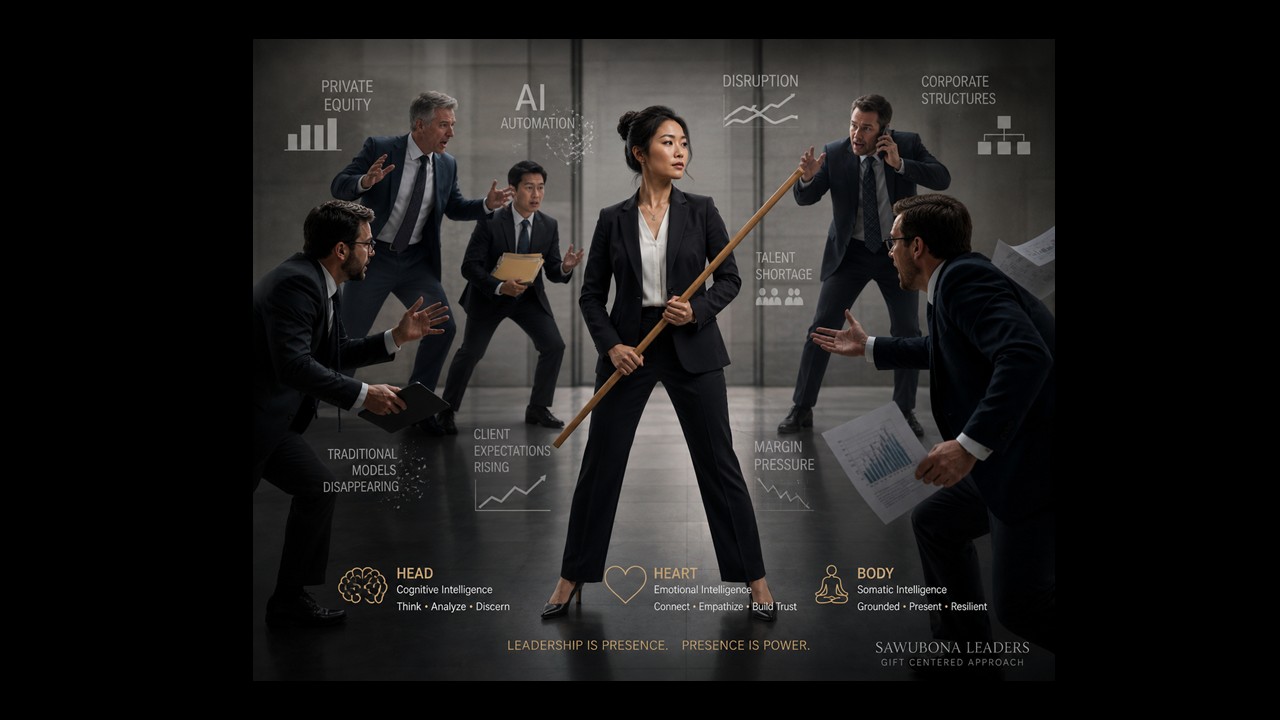
Great leaders operate from three forms of intelligence:
• Cognitive intelligence – the ability to think and analyze
• Emotional intelligence – the ability to connect, understand, and build trust
• Somatic intelligence – the ability to stay grounded and present under pressure
Most leaders rely almost entirely on the first. But when leaders develop all three, something powerful happens. They become stabilizing forces inside their organizations during times of change.
I saw this transformation in one of my clients. I’ll call her Judy. Judy came to me with a goal of becoming a partner in her firm. Her boss did not see her as partner material. She was technically excellent. But the leadership presence expected of partners was missing.
As we worked together, Judy began strengthening capabilities beyond technical expertise. She developed her emotional intelligence and her ability to remain grounded and steady under pressure. During tax season, her team began noticing the difference.
One colleague told me, “When Judy’s around, everything feels calmer and more productive.”
That calm presence became one of her greatest leadership strengths.
Her intuition and awareness also sharpened. One day while reviewing a tax return for a major client that had already been approved by two partners, something didn’t feel right. She trusted that instinct and went back through the client files. In the process she discovered a document that had been overlooked. That discovery saved the client thousands of dollars.
But the real transformation was in how Judy led her team. She began coaching her people in the same way she had been coached. She built trust and confidence within her group. So, when a major software transition was introduced into the firm, her team did not resist the change. They supported it. They trusted her.
The same leader, who was once not considered partner material is now a senior partner in a national firm. Today even the partners who once doubted her seek her advice and guidance.
As AI reshapes the accounting profession, technical expertise alone will not define leadership. The leaders who succeed will be those who can create trust, stability, and clarity when the environment around them is uncertain. Those capabilities come from developing the full capacity of a leader: mind, heart, and body.
And those are the capabilities……… that technology will NEVER replace.