

By Sunita Sehmi
In today’s high-pressure workplaces, mental health is no longer a side issue — it’s a defining challenge of our time. Few people have done more to address it than Dr Patrick Légeron, one of France’s leading psychiatrists and a pioneer in workplace well-being.
A former consulting practitioner at Sainte-Anne Hospital in Paris, Dr Légeron saw firsthand how stress and toxic work environments can erode both performance and humanity. In 1989, he founded Stimulus, France’s first consulting firm dedicated exclusively to psychological health at work — long before “mental health at work” became part of the global conversation. Dr Patrick Légeron examines the mechanisms of stress, that common word everyone uses without really knowing what it means, loaded with negative connotations, ‘even though it is an essential function for life.’ he talks to us about the father of stress, a Hungarian-born researcher, Hans Selye.
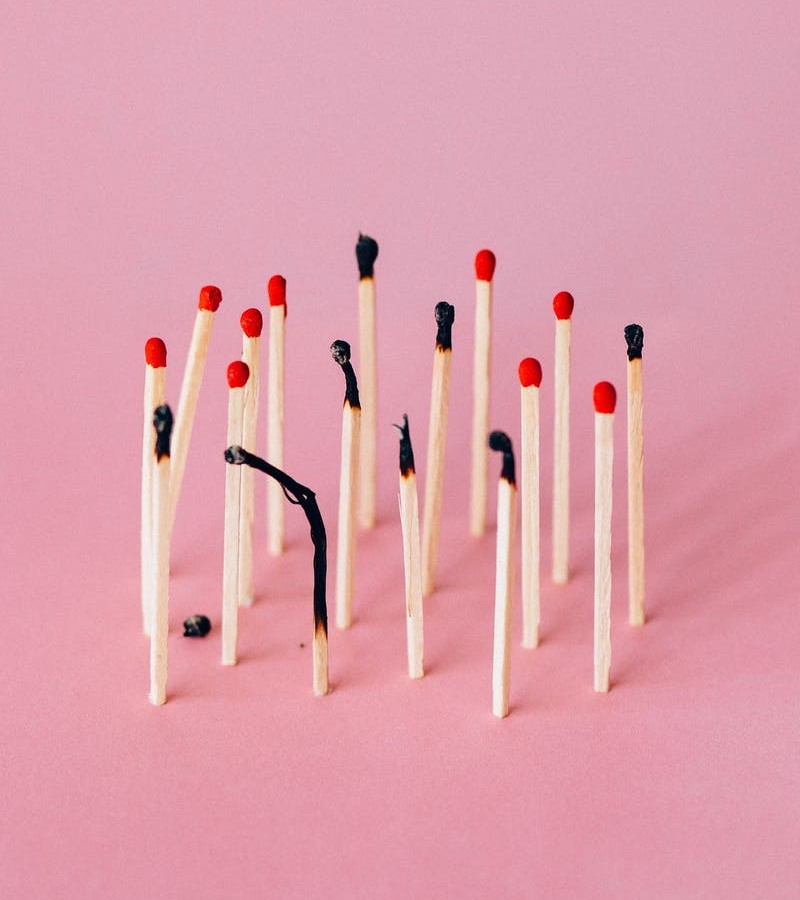
Burnout refers to a psychological, emotional, and physiological state resulting from the accumulation of various professional stressors—also called psychosocial risks (workload, lack of autonomy, recognition, or meaning, low social support, etc.)—to which personal factors (overinvestment, work addiction) may be added.
His influence extends beyond the corporate world. Dr Légeron co-authored two landmark national reports: the 2008 Report on Psychosocial Risks (Rapport Nasse-Légeron) for the French Ministry of Labour and the 2016 Report on Burnout for the National Academy of Medicine. He also teaches at Sciences Po Paris and the University Hospitals of Geneva, shaping how future leaders approach well-being and performance.
His books — Le stress au travail, un enjeu de santé and La peur des autres (co-authored with Christophe André) — have redefined how France talks about stress, anxiety, and emotional health at work.
The Cost of Modern Management
Burnout has become the silent epidemic of the modern workplace. In France alone, hundreds of thousands of employees are affected. Studies show that six out of ten workers identify their manager as a significant source of stress.
“The training of managers, team leaders, and operational supervisors on how to manage occupational health and safety also appears to be very unsatisfactory for our country in this survey.”
Writer Paul-Antoine Martin captures this reality in his searing memoir, Le Clan des seigneurs. His story — of dedication, breakdown, and recovery — lays bare how toxic management, emotional neglect, and systemic hypocrisy can destroy human potential. But it also shows how awareness and compassion can lead to healing.
Behind every statistic on burnout lies a story like his — a story of effort, exhaustion, and ultimately, resilience.
A Way Forward
Both Dr Légeron and Martin remind us of a powerful truth that burnout is preventable. Burnout has been particularly studied in professional settings over the past 30 years, but it can also occur in other contexts, such as women’s homes.
“Women pay a heavy price; they are the most affected by stress: double workdays, lower salaries than men, lack of legitimacy and recognition. ‘There is no gender equality at work,’
Real change starts with awareness, empathy, and courage — from leaders, colleagues, and institutions alike. Organisations must create environments that encourage openness, psychological safety, and respect.
For leaders, that means understanding that empathy is not an option — it’s a responsibility. For individuals, it means recognising our limits and seeking balance before we reach a breaking point.
When we prioritise people as much as performance, we don’t just prevent burnout — we create conditions where everyone can truly thrive. In the future, the companies most likely to succeed will be those that help individuals cope with stress and that know how to organise the workplace so that it better suits human abilities and aspirations. As for us, let us act so that work becomes a place for building ourselves, not for destroying ourselves.
It’s time to move beyond survival — and build workplaces grounded in meaning, respect, and humanity.