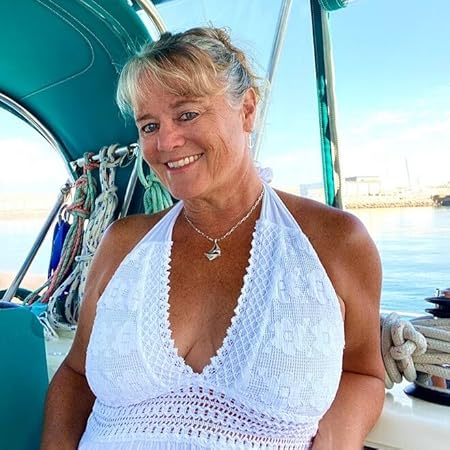
“Fear didn’t disappear — it became the compass that showed me just how strong I really was.”
The last thing Alison Gieschen packed before leaving her old life behind was probably something practical. A tool, a chart, a rope. What she didn’t pack, because you can’t, was no guarantee that things would go well. That’s the part the adventure brochures never mention.
Alison and her husband had spent years accumulating a life that looked, from the outside, exactly right. Horse farm. House. Grown children. A steady rhythm of days. She ran an equestrian program and taught. He managed the land. The kind of existence that most people would call full, and a few would call finished.
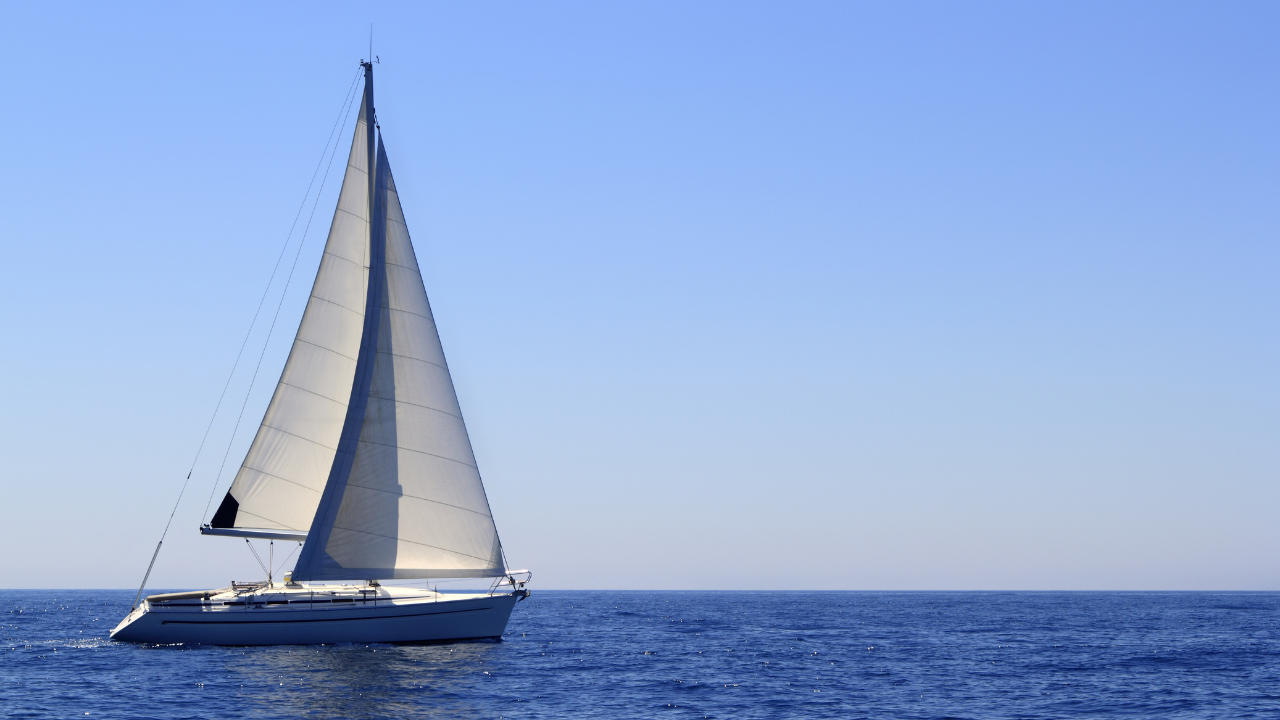
When their youngest got married, they sold all of it. Every acre, every animal, every piece of furniture. They bought a sailboat and pointed it at the horizon.
That was eight years ago. They’ve been to more than fifty countries. They’ve survived a hurricane. They got stranded in Ireland for two years when the pandemic shut the world down. They are, as of this writing, waiting in the Marquesas Islands for an engine part that has been in transit longer than some friendships last. And Alison will tell you, without a trace of performance in her voice, that she wouldn’t change a single thing.
The Storm She Didn’t See Coming
The first ocean crossing nearly ended it all. Not the boat. The dream.
They were somewhere in the Atlantic when two weather systems converged around them. The waves built to twenty feet, breaking and crashing over the deck in the dark. Alison went below and lay in her bunk, white-knuckled, waiting for it to stop. Her husband stayed at the helm. The boat held. They made it.
What followed the storm was, in some ways, harder than the storm itself. Every time the weather turned, every time the forecast looked worse than expected, Alison felt the fear return. Not as a memory. As a physical thing, the kind that sits in your chest and asks, reasonably, what exactly you think you’re doing out here.
She called her mentor, a sailor who had ridden out multiple hurricanes at sea and had the weathered calm to prove it. She told him what she’d experienced. She told him she wasn’t sure she could keep going.
He didn’t tell her to toughen up. He didn’t minimize what she’d felt. He said: Your boat was fine. Your husband was fine. You are still out there. Most people who go through what you went through sell the boat and never sail again.
That distinction, between the people who stop and the people who don’t, is something Alison has turned over many times since. It wasn’t that she wasn’t afraid. It was that she stayed anyway, and every time she did, the fear shifted from something that stopped her to something that told her where she actually was.
Prepared, Not Reckless
There is a version of Alison’s story that gets told as though she and her husband simply woke up one morning, said to hell with it, and cast off into open water. That version is tidier and more romantic, and it is entirely wrong.
Before they left, they spent years doing the unglamorous work of becoming competent. Boat shows. Seminars. Engine mechanics. Storm sailing clinics, including a ten-day offshore passage designed specifically to expose them to the conditions they feared most, while they were still close enough to land that the stakes weren’t fatal.
“You don’t jump into it and say, I’ll learn as I go along,” Alison says. “For us, that would have killed us.”
This is the part of bold decisions that rarely makes it into the inspiring version. The preparation isn’t glamorous and it doesn’t make a good Instagram post. But it is the thing that makes the leap survivable. Alison’s courage wasn’t the absence of fear. It was built out of competence, earned one uncomfortable lesson at a time.
Who She Was, Who She Became
Ask Alison what surprised her most about eight years at sea, and she doesn’t talk about the places. She talks about herself.
Her entire previous life was organized around other people’s needs. Teaching, caregiving, managing, and feeding. From the moment she woke up to the moment she went to bed, she was in service to something or someone else. It was a good life, a meaningful one. It was just not, it turned out, the only life she had in her.
“I’ve changed who I am basically,” she says. “From a person of service to a person that’s having adventures and enjoying my life.”
She says this not as a confession but as a discovery, the way you’d describe finding a room in a house you’ve lived in for years. The creative streak she’d always had found new outlets: she writes children’s books about ocean life now, composes music inspired by the manta rays that circle the boat at night, and documents their travels for readers around the world. The subject matter changed entirely. The essential Alison didn’t.
What the sea gave her, she says, wasn’t a new identity. It was room to finish growing into the one she’d always had.
The Unexpected Gift of Being Stuck
They have been stranded five different times in five different countries. Really stranded, not just delayed. Waiting on parts or weather or, for two entire years, a global crisis that had no timeline and no clear end.
What Alison describes developing during those stretches isn’t resignation. It’s something more active than that. “We’ve learned that we’re exactly where we need to be when we need to be there,” she says. What she means is that every single delay led somewhere the original schedule would have bypassed. A community discovered, a friendship formed, a landscape seen only because the engine failed at exactly that latitude.
You could call this making the best of things. But that phrase suggests that the best is less than what was originally wanted. Alison seems to mean something different: that the delays were often better than the plan, and that she learned to hold her itinerary loosely enough to actually see what was in front of her.
Everything She Owns Fits in One Bag
The horse farm is gone. The house is gone. The furniture, the accumulated objects of four decades of living. Gone. Everything Alison owns today fits in a single bag, and she wants you to know that the word she uses for this is not loss.
The word she uses is liberation.
This takes some people by surprise. Most of us take it as given that more is better: more space, more things, more options, more security. Alison’s years at sea dismantled that assumption quietly and completely. Her days are now organized around natural rhythms: sunrise, sunset, dolphins appearing off the bow, a bird landing on her hand in the middle of the Pacific, manta rays turning slow circles in the moonlit water beneath the hull.
These are not consolation prizes. For Alison, they are the whole point.
The Only Regret
Alison Gieschen is not here to tell you to sell your house or buy a boat. She is not recruiting. What she does say, with the particular conviction of someone who has been genuinely afraid and kept going anyway, is this:
“If you have a dream and you’re really serious about it, don’t let fear stop you. If you don’t follow it, you’ll regret it the rest of your life.”
She has had enough conversations with people, in harbors and ports and the random human intersections that long voyages produce, to know what the alternative looks like. The ones who sold the boat too soon. The ones who never left. The ones who say they’ll go someday, still.
The ocean, she will tell you gently, is not going anywhere. But someday has a way of quietly running out.