


Rebels don’t just avoid technologies that are designed to addict them. They also seek out opportunities for real friendship, freedom, and fun. Why? Because they know that the more they fill their lives with real friendship, freedom, and fun, the more amazing they will feel—and the less they’ll want to spend time on screens.
Friendship
Humans need friends in order to be happy and healthy. In fact, researchers have found that feeling disconnected from other people can be just as bad for your health as smoking cigarettes.
Tech companies would like you to believe that you can satisfy your need for friendship with their products. And sure, smartphones, social media, and video games can help people connect. But as the generation above yours learned the hard way, a lot of what the companies try to pass off as “friendship” is actually fake.
Real Friends Versus Fake Friends
A real friend is someone who knows and cares about you—the real you. They make you feel good when you’re together, cheer you up when you’re feeling down, and stick with you when things are tough. You trust each other and laugh together. You’re able to talk about things that go beyond whatever is trending online.
A fake friend, on the other hand, is someone who doesn’t know or care about the real you, who makes you feel insecure or anxious, or who disappears in hard moments. A follower is not the same thing as a friend. Neither is an AI chatbot, because a real friend has to . . . actually exist.
Freedom
The technology wizards want you and your friends to think that getting a smartphone is a sign of freedom and independence. But do smartphones really make people more free?
Real Freedom Versus Fake Freedom
Real freedom is when you feel like you’re in charge of your life and you feel comfortable being yourself. It allows you to follow your curiosity, try new things, take risks, mess up, and figure things out—without always worrying that people will judge or shame you.
Fake freedom is when you think you’re free, but someone—or something—else is controlling your choices. (Like, for example, an influencer or tech wizard.) You may find yourself feeling pressured to do things that you don’t want to do, acting in ways that don’t reflect who you truly are, or not doing things because you’re worried about being laughed at or judged.
That’s why rebels make a point to regularly try doing things on their own, without the internet or a device. For example, can you learn a new skill from a person instead of a video? Can you entertain yourself for an hour after school or make it through an awkward or boring moment without reaching for a screen?
Fun
Tech companies love to say that their products are fun. But there’s a huge difference between the real fun you have when you do things in real life (especially with friends), and the fake “fun” that tends to happen when you spend time alone on screens.
Real Fun Versus Fake Fun
Real fun makes you feel great while it’s happening, and it leaves you happy, full of energy, and with vivid memories. It usually happens when people are doing things together in real life—it almost never happens when people are online and alone. (This is true even for introverts: people who usually enjoy being alone or in small groups.) It also doesn’t happen when you do something just so that you can post it online. When people have real fun, their guard is down, and they’re being their truest, most authentic selves. Real fun fills you up, and leaves you feeling great.
Fake fun, on the other hand, is the feeling you get from doing things that companies (or other people) tell you are fun, but that don’t leave you feeling happy and full of energy. Fake fun often feels exciting at first, like a sugar rush, but it leaves you unsatisfied. (It’s often a sign that you’re being brain hacked.) People rarely remember fake fun once it’s over.
For most people, the top sources of fake fun in their lives are social media, playing video games alone, and binge-watching TV or online videos (especially short ones). Sure, stuff you see online might entertain you or make you laugh. But if you tried to remember the reels you watched yesterday, you’d probably have trouble. They all become one big blur of distraction.
Do Things That Matter
In addition to friendship, freedom, and fun, there’s another ingredient that makes people feel amazing: doing things that matter. Think about something that made you feel helpful or proud, like doing a favor for a neighbor or teaching your little brother how to tie his shoes. The more you do things that help other people, strengthen your relationships, or make the world better, the more amazing you will feel.
So how, exactly, do rebels fill their lives with real friendship, freedom, and fun?
They train their brains to be in discover mode, and they do lots of things with other people in real life.
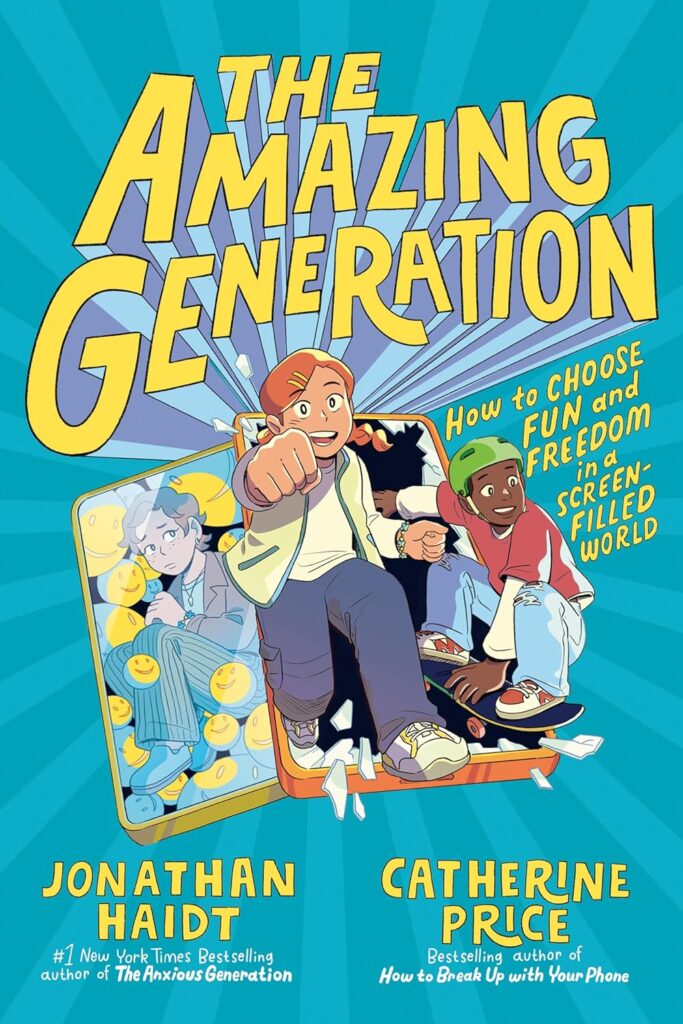
by Jonathan Haidt (Author), Catherine Price (Author) Rocky Pond Books, December 30, 2025.