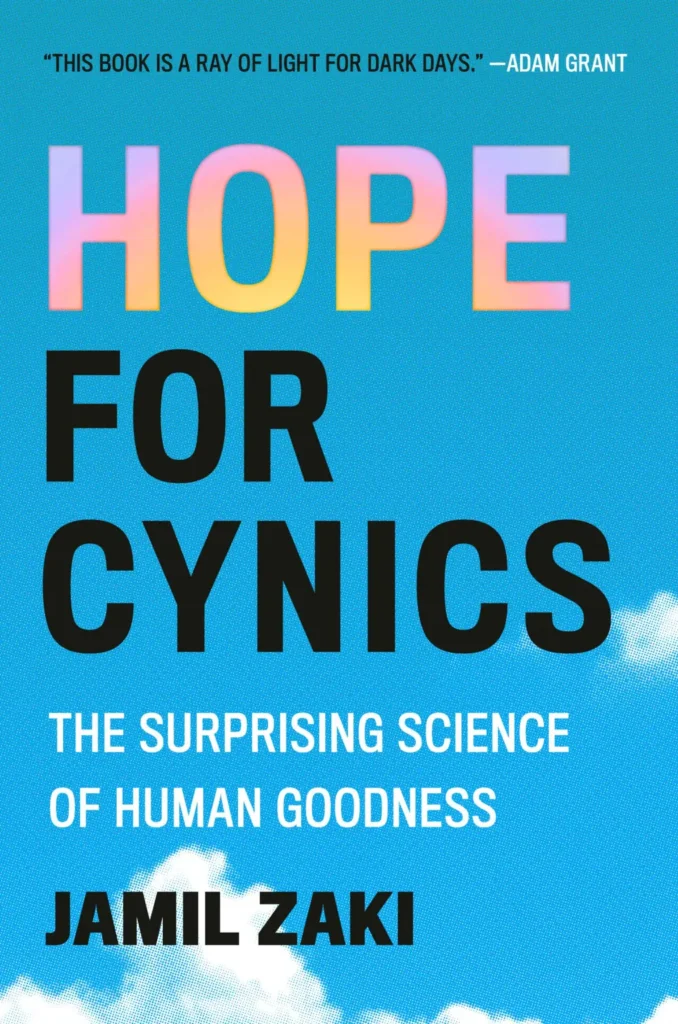
What if we’ve been wearing “soot-colored glasses,” convinced that people are worse than they really are?
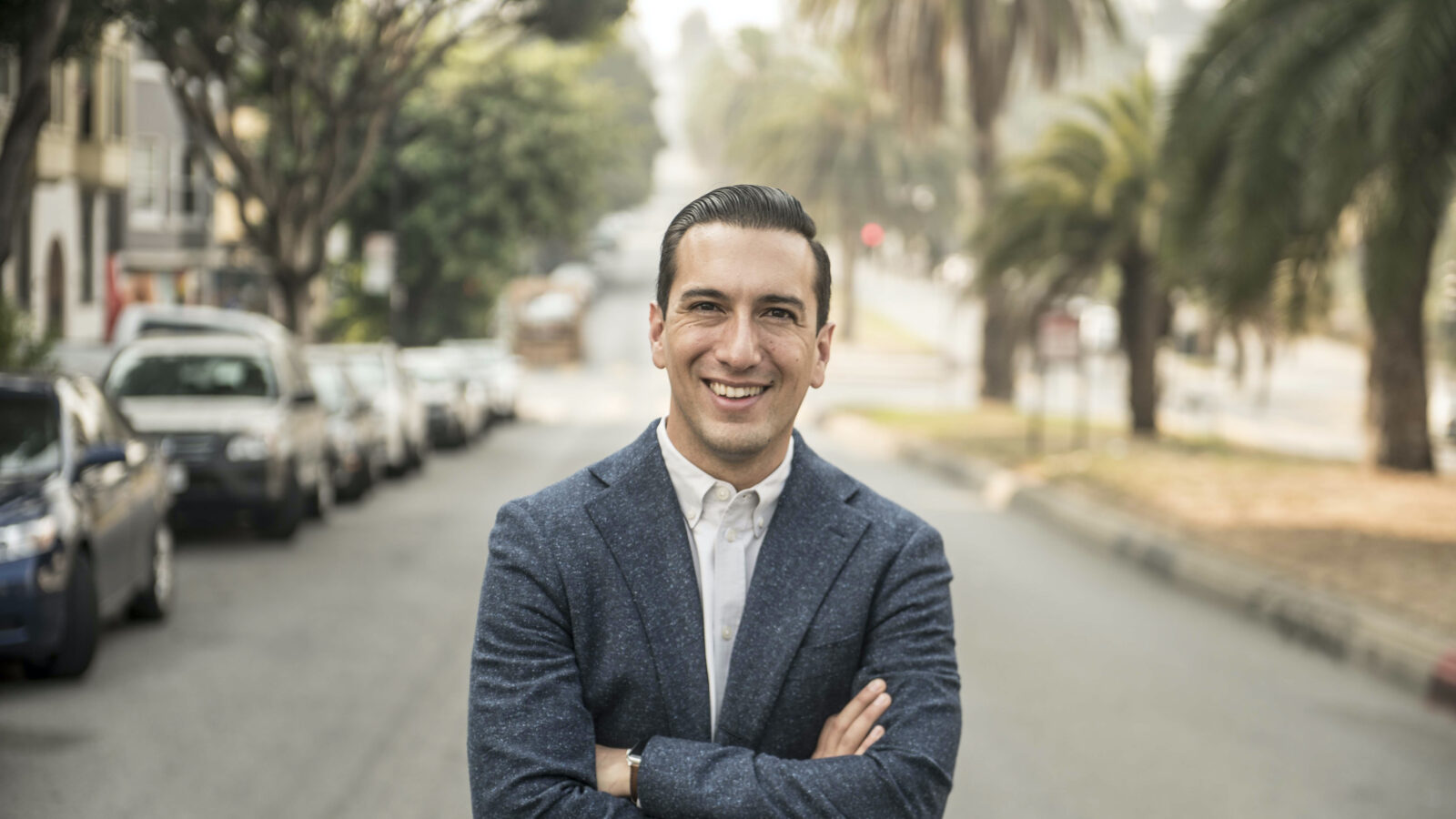
Dr. Jamil Zaki is a professor of psychology at Stanford University and director of the Stanford Social Neuroscience Lab. He studies empathy, kindness, and social connection, and has written for outlets including The New York Times and The Atlantic.
In our conversation, Zaki shared why he wrote his latest book, what cynicism really costs us, and how we can practice “hopeful skepticism” to live healthier, more connected lives.
For the full interview, listen to our Evolving with Gratitude podcast episode. Also available on your favorite podcast platform.
Why Hope for Cynics
“I wrote Hope for Cynics because I needed it personally,” Zaki admitted. “I would talk about, study, write about human goodness, but I myself was pretty cynical. I tended to have a hard time trusting people, and I found it quite easy to see the worst side of them.”
That realization pushed him to explore cynicism as more than a personal struggle. “I quickly discovered what a massive problem our loss of faith in each other is, and further found that there is a lot of solutions to better seeing the good in each other. And I thought that those solutions would be important to bring to as many people as I could.”
The Myths of Cynicism
Zaki defines cynicism as “a theory that in general people are selfish, greedy, and dishonest.” And while many imagine cynicism as clever, he warns it’s often the opposite.
We call this the cynical genius illusion because it’s an illusion. It turns out that in fact, cynics do less well on cognitive tests, and they’re worse at spotting who’s lying and who’s telling the truth.
—Jamil Zaki
He also noted the steep costs: “Cynical individuals tend to be more depressed and stressed. They tend to have more heart disease, cellular inflammation. Cynics die younger than non‑cynics.”
Hope, Optimism, and Agency
Many assume optimism is the opposite of cynicism, but Zaki draws a sharper distinction: “Optimism, just like cynicism, is an assumption.” A cynic is “confident… that people are bad and things will get worse.” An optimist is “way too confident that the future is going to go well. And because they know the future is going to go well, they don’t have to do anything about it.”
Hope, he explained, is different.
Hope is the idea that things could turn out better than they are, but that we have no idea. And in that uncertainty, our actions matter.
—Jamil Zaki
“Optimism and cynicism share complacency… and really, it’s agency that matters in not just wishing for things to turn out better, but trying to actually be part of a positive change in the world and in our lives.”
Practicing Hopeful Skepticism
One of Zaki’s most memorable terms is hopeful skepticism. He describes it as “being open to evidence, thinking like a scientist, while also being aware that my default mode is too negative. When I think about people, there’s this bias that I have and if I get over that bias I might actually not just learn more about people, but I might realize that there are pleasant surprises everywhere.”
Practical ways to cultivate hopeful skepticism include:
- Fact-check your feelings: “It’s very easy for the cynic inside us… to assert some big claim about people and oftentimes you learn you’re feeling that way, not for any good reason.”
- Take small leaps of faith: “It’s really hard to learn whether you can trust somebody without trusting them a little bit first.”
- Try positive gossip: At his family dinners, each person shares one act of human goodness they witnessed that day. “When you know you’re going to share something, you detect it more… positive gossip primes you in the opposite direction and can use your attention for good.”
From Cynicism to Connection
Cynicism often grows out of past pain, but Zaki urges us not to let it control our future: “If you’ve been betrayed and your response is to say, I’m not going to trust people in the future, you lose chances to build healthy and meaningful connections for collaboration and friendship and love.”
Instead, he encourages leaning into humility and uncertainty: “Not knowing is a fundamentally uncomfortable state, but it is the state in which learning and growth occur.”
Choosing Hope
As we closed our conversation, Zaki reflected on Viktor Frankl’s idea of “tragic optimism,” faith in humanity that doesn’t ignore pain. “Acknowledging the goodness in people is absolutely critical if we want to make a dent in all the suffering in the world because we need to see the good in others in order to assemble all of that good into social movements and into group collective projects to improve our mental health, to improve our lives, to improve our relationships, and to improve our culture.”
His message is clear: cultivating hope isn’t about ignoring hardship, it’s about choosing to notice and nurture the good in ourselves and in others. Let’s each look for one act of human goodness today and share it, spreading the kind of positive gossip that builds collective hope.
In Bold Gratitude,
Lainie
Connect with and learn from Jamil Zaki:
- Website: Jamil-Zaki.com
- Books: Hope for Cynics: The Surprising Science of Human Goodness & The War for Kindness: Building Empathy in a Fractured World
- LinkedIn: Jamil Zaki
- TED Talk: Jamil Zaki on TED