What does it mean to live in frame with who we actually are?
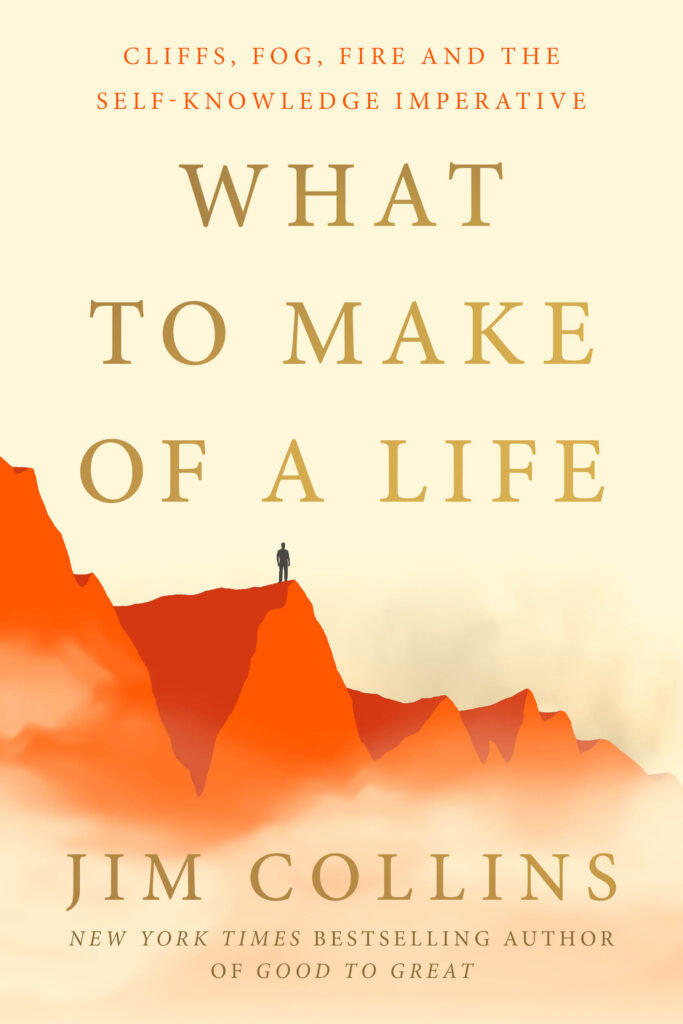
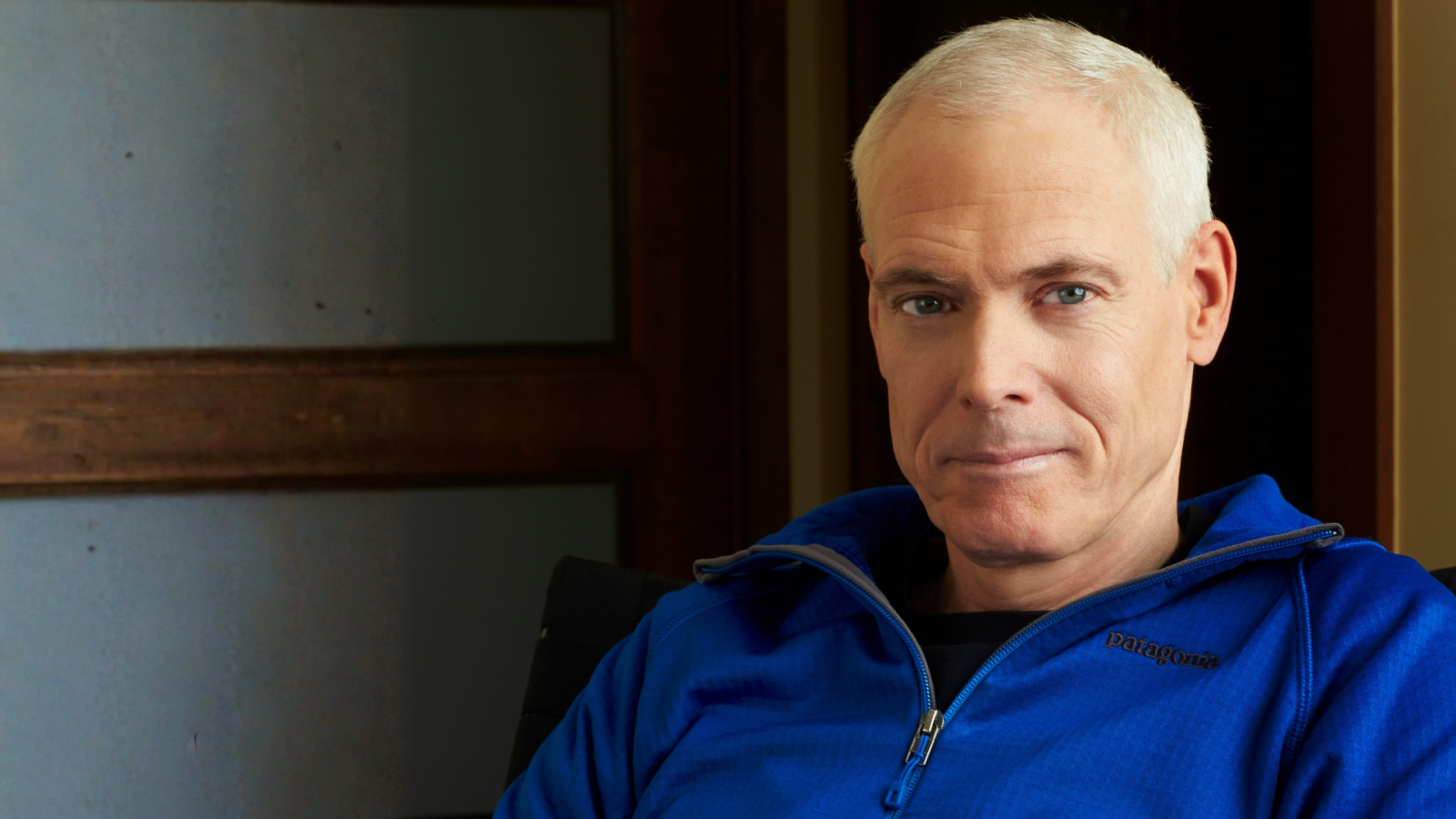
That idea became a through line of my conversation with Jim Collins about his new book, What to Make of a Life: Cliffs, Fog, Fire and the Self-Knowledge Imperative. Collins has published multiple international bestsellers that have sold more than eleven million copies worldwide, including the perennial favorite Good to Great.
His new book is the result of a decade of research into the lives of remarkable people studied in matched pairs, people who faced similar life-altering cliff events and then made different choices coming out of them.
The result is not what most readers might expect. As Collins puts it, “It’s not a self-help book. It’s a self-knowledge book.”
For the full interview, listen to our Evolving with Gratitude podcast episode, available on your favorite podcast platform.
Encodings: What Is Already Within Us
Jim describes encodings as “durable capacities” that reside within us, “awaiting discovery through the experiences of life.” They are intrinsic, not strengths we develop through training.
Encodings are introduced through the matched pair of Barbara McClintock and Grace Hopper, two pioneering women in science in the early 20th century, both facing the same cliff: they could not continue their work within the confines of a traditional university.
Both found a different way. Both were encoded for what they did. But how they did it could not have been more different. McClintock worked alone in her maize fields. The day she won the Nobel Prize, they couldn’t even reach her by phone because she didn’t have one. Hopper worked through institutions and teams, advancing computing through the Navy and through the people she organized around her.
The critical thing isn’t that I have to find what I’m better at relative to all other people in the world. The critical question is to discover what I’m more encoded for relative to other ways I could spend time.
—Jim Collins
Everyone has encodings, and most of us have more than we will ever discover in a lifetime. The question is to notice what clicks. Collins describes being in frame as a window onto a constellation of encodings. The same person can be in frame in one season of life and out of frame in another.
The Bug Book: Studying Ourselves Without Judgment
Jim discovered his own encodings through a practice he calls the bug book. In his twenties, lost in the fog of youth, his mentor Rochelle Myers encouraged him to observe himself without judgment, or as Jim puts it, to study himself like a bug. He carried a composition notebook and observed. One day he was asked to make sense of the early days of network computing for his team. The frame shifted. He realized he was encoded to take something complex and make it clear enough to teach.
He still keeps a version of the practice. Every night he logs the day in a spreadsheet, tracks his creative hours, and gives the day a subjective score from minus two to plus two. Over time, the patterns surface.
For those of us who want to study our own lives more carefully, the starting point is simple:
- Observe with curiosity.
Note what energized us, what drained us, what clicked. Resist the urge to judge. - Look for the lightning, not the average.
Pay closest attention to the moments that lit us up. - Make small, iterative choices.
Move in the direction of more of what works.
An important nuance: being in frame does not mean every moment feels effortless. Collins names this the Stress and Drudgery Tax. The tax is not paid outside the work we are encoded for. It is paid inside it. Jimmy Page got nervous before every show. I.M. Pei could not sleep before unveiling new designs, and when he designed the Louvre Pyramid, people spat at his feet in the streets. The tax, Jim says, “just comes with the game.”
Leadership: Right People, Right Seats
This is where What to Make of a Life meets Good to Great. Collins offered an evolution of one of his most quoted ideas, “first who, then what.” The shorthand has always been about getting the right people on the bus. Through the lens of this research, he adds another layer.
It’s really about the seats. Ultimately the right people in seats that put them in frame with their encodings.
—Jim Collins
He shared a story from his own team. One person was performing like a hundred-watt light bulb in their seat. Jim moved them to a different seat, one that fit their encodings, and they became a lightning bolt. Same person. Different frame.
Collins is also clear that there is no recipe book for leadership. Our leadership encodings are different from anyone else’s. The artistry of getting people to want to do what must be done has to be expressed in our own voice.
Why We’re Just Getting Started
One of the most hopeful things Jim shared in our conversation was this: “When you hit 60, you finish your warmup.”
His research found that some of the most creative and impactful work in the lives he studied came well past the midpoint. Late in life, the people he studied still had their encodings. Many kept discovering new ones. Their cumulative experience kept growing.
You do not need to accept the idea that your younger self will tower over your older self.
—Jim Collins
Of course, being warmed up doesn’t mean the path is clear. There will be unforeseen cliffs, and fog often rolls in after a cliff. Collins’ answer for moving through the fog is what he calls “simplex stepping.” We don’t have to sit and wait for full clarity, and we don’t have to make a bold leap when we cannot see the path.
When the fog is thick, “simplex stepping” gives us a way to move without pretending we can see the whole path:
- Resist the urge to make a sweeping plan.
In the fog, big leaps can become new cliffs. - Identify the next visible step.
Just one. - Take it. Reset. Look again.
Repeat until the fog lifts.
We don’t have to know where we are going to start moving.
So here is the question for all of us: What encodings have we already discovered, and which ones are still waiting for the right frame?
In Bold Gratitude,
Lainie
Connect with and learn from Jim Collins:
Website: JimCollins.com
Book: What to Make of a Life: Cliffs, Fog, Fire and the Self-Knowledge Imperative