

I take a lot of these concepts that I study in my research that I wrote about in my book, that I teach in my university and MBA classes. I also distill it into a program for K-12 students that live in underprivileged and immigrant communities. It’s really meant to help them learn these skills that will give them an edge. It’s a way that I have been able to take this research and apply it and understand it in one audience, but also be able to generalize it and bring it to another audience.
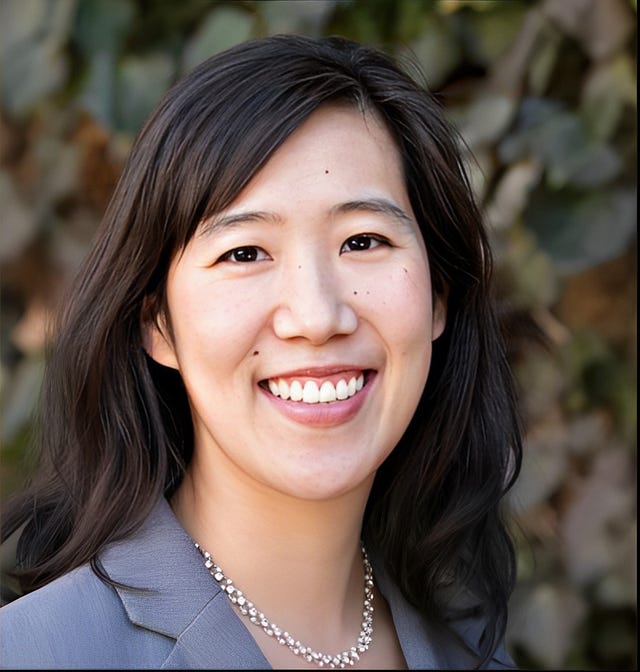
As part ofmy series about “individuals and organizations making an important social impact”, I had the pleasure of interviewing Laura Huang at the World of Business Ideas (WOBI) Forum in New York City, New York. Laura Huang is an associate professor of business administration in the Organizational Behavior Unit. Prior to joining HBS, she was an assistant professor of management at the Wharton School, University of Pennsylvania. Professor Huang’s research examines early-stage entrepreneurship, and the role of interpersonal relationships and implicit factors in the investment decisions of financiers such as angel investors and VCs.
Thank you for joining us in this interview series, Laura. Our readers would love to “get to know you” a bit better. Can you tell us a bit about your ‘backstory’?
I’m Laura Huang. I am the author of a book entitled Edge: Turning Adversity into Advantage. I do research on perceptions, attribution, signals, gut feel, intuition and how these factors impact our decisions and our success and how our intuitive sort of notions really impact our path forward. I am a professor at Harvard Business School where I teach courses on leadership and entrepreneurship.
What’s the most impactful initiative you’ve led that you’re particularly proud of?
I think there’s sort of two initiatives that go together. I think a lot of work that culminated in my first book was around these notions about how we all have stereotypes that are bestowed upon us and people have perceptions that they place upon us which leads to biases. It leads to disparities in all sorts of organizations in terms of who gets promoted, who gets raises, who gets funding for their ventures, and who gets picked for certain projects. That research was really around how do we take these stereotypes, these perceptions, these barriers, these constraints that others bestow upon us and flip them in our favor? How can we turn them into an Advantage? And so I started a nonprofit which is called Project Amplify about how we can empower and amplify. That’s where the word amplify comes from, where I take a lot of these concepts that I study in my research that I wrote about in my book, that I teach in my university and MBA classes. I also distill it into a program for K-12 students that live in underprivileged and immigrant communities. It’s really meant to help them learn these skills that will give them an edge. It’s a way that I have been able to take this research and apply it and understand it in one audience, but also be able to generalize it and bring it to another audience.
Can you share with our readers, how have you used your success to bring goodness to the world?
I hope I do that on a daily basis. At one point before I became a professor I was thinking that a lot of my interactions with people would be a one-on-one type of thing and hopefully you know, when we impact somebody one-on-one, we are able to pass our message along or pass our energy on, but I have this incredible opportunity now that when I have a classroom of 90 students, that if each of them is able to take some of that energy or some of these insights and each of them passes it on to just one person, now we have been able to influence 90 times. So I think the law of numbers is how to think about quantifying the unquantifiable. That’s what I do in my research, but also taking that quantifiable nature of work and impact and really exponentially taking that forward.
Thank you so much for your time and for sharing your expertise, Laura.