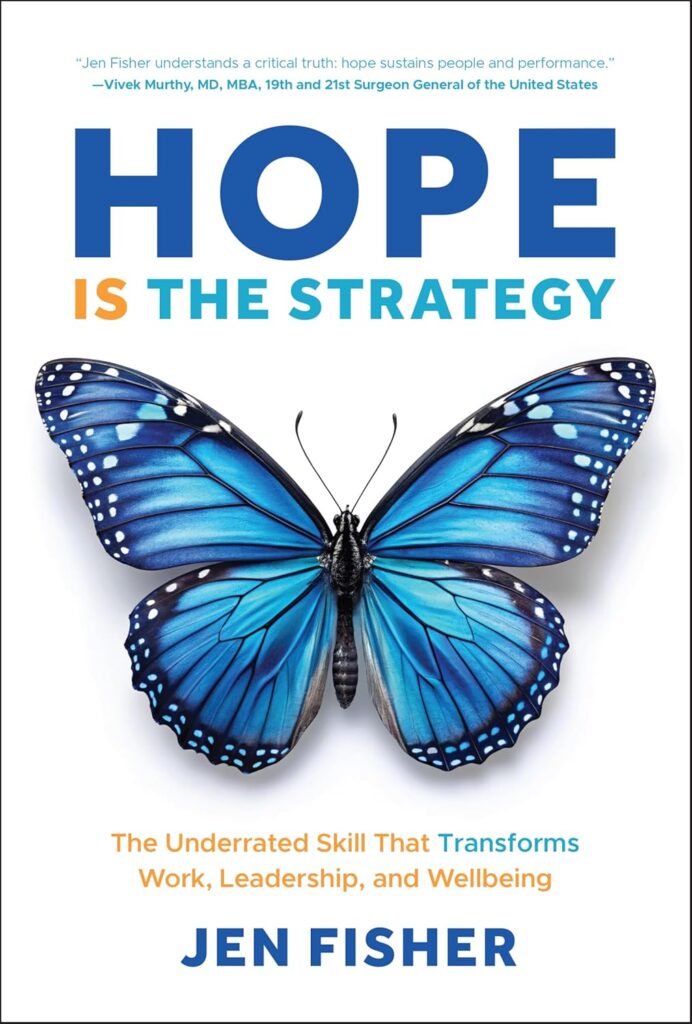

In my new book Hope Is the Strategy, I challenge leaders to reimagine how we build sustainable, human-centered workplaces. In the following excerpt, I explore what it means to lead with “the whole truth”—a practice that demands both courage and compassion, and one that’s essential for creating organizations where people can truly thrive.
For too long, workplace culture has rewarded leaders who project unwavering confidence and maintain a polished facade of certainty. But after experiencing my own burnout and recovery, I discovered that the most transformative leaders aren’t those who have all the answers; they’re the ones brave enough to admit when they don’t, honest enough to acknowledge both progress and problems, and committed enough to speak difficult truths in service of collective growth.
True honesty takes strength. It requires moving beyond the comfortable narratives that circulate in many organizations—those shared assumptions and the selective storytelling that might ease short-term tensions but gradually erode performance and trust. It means acknowledging opportunities and obstacles with equal clarity and compassion. Leading with truth requires seeing reality as it is, not as we wish it to be, while still maintaining faith in what’s possible (insert hope here) when we face that reality together.
This approach stands in stark contrast to two common leadership failures: toxic positivity that denies legitimate problems, and cynical negativity that can’t recognize genuine progress. Both distort reality in ways that prevent effective action. Leading with the whole truth requires the emotional flexibility to hold contradictions—to acknowledge that an initiative can be both promising in its concept and flawed in its execution, and that a team can be both talented and underperforming.
It also requires acknowledging uncertainty. In a business world that often rewards confident declarations, saying “I don’t know” or “I’m not sure” can feel risky. Yet pretending to certainty where none exists undermines credibility and closes off valuable exploration. I love the leadership style of former Xerox CEO Anne Mulcahy, who was known as “the Master of I Don’t Know” because she readily admitted when she lacked answers rather than offering false confidence.
This truthfulness must extend to feedback as well. Too often, leaders withhold constructive criticism out of discomfort or conflict avoidance, depriving team members of information they need to improve. This reflects a misunderstanding of kindness. True kindness isn’t about sparing someone momentary discomfort; it’s about caring enough to give them what they need to grow and succeed. As Brené Brown powerfully reminds us in Dare to Lead, “Clear is kind.” Clarity in communication, even when difficult, is an act of genuine care and respect for the other person.
Leading with the whole truth means delivering difficult messages with compassion and thoughtfulness—but delivering them nonetheless. It recognizes that withholding necessary feedback doesn’t protect people; it abandons them to patterns that will ultimately limit their potential. The momentary comfort of avoidance creates much larger long-term problems, both for individuals who miss opportunities to develop and for organizations that suffer from unaddressed issues. Real kindness requires the courage to speak truth in service of growth, not the false comfort of silence that masquerades as protection but actually demonstrates a lack of investment in others’ success.
In practice, this forthright leadership style manifests in both communication habits and decision-making processes. Truth-centered leaders begin meetings by establishing what’s known, what’s assumed, and what remains uncertain, creating clarity that prevents wasted effort based on misunderstandings or false premises. They explicitly invite dissenting viewpoints, asking not just “Does anyone disagree?” but “What are we missing?” or “Who sees this differently?” These leaders model appropriate vulnerability, acknowledging mistakes promptly rather than hoping no one will notice.
I witnessed this transformation firsthand in a meeting I’ll never forget. After a major initiative failed to deliver expected results, my boss opened the review meeting by stating, “I made a significant error in how I structured this project, and I want to start by explaining what I got wrong so we can learn from it.”
I sat there stunned. In my previous roles, I’d always seen leaders deflect blame, create elaborate justifications, or subtly point fingers at team members. I had internalized those same habits, believing vulnerability would undermine my authority. But suddenly, the tension in the room visibly dissolved. People who had braced for blame games suddenly leaned forward, engaged and thoughtful.
When a colleague later whispered, “That was the moment I truly decided to trust him,” it resonated deeply with me. I realized I’d watched a masterclass in creating psychological safety through radical honesty. That meeting prompted a shift in my own leadership approach. The fear I’d always carried—that admitting mistakes would diminish my standing—was replaced by the understanding that truthfulness creates the foundation for genuine trust and collaborative problem-solving.
In decision-making, truth-centered leadership means giving equal attention to data that contradicts preferred narratives rather than cherry-picking supportive evidence. It means establishing processes where critical information flows unimpeded, even when uncomfortable.
I know firsthand the emotional challenge of honoring frankness and being an open-minded leader who listens when someone challenges the status quo. When a junior team member once questioned a strategy I’d spent months developing, my internal reaction was defensiveness. I felt a flush of irritation and had to consciously remind myself: This is exactly what we need. The discomfort I felt in that moment was the growing pain of an organization becoming healthier.
Leading with the whole truth means synchronizing words and actions. When one company I know of faced significant financial challenges, the CEO didn’t just announce cost-cutting measures—he began by eliminating executive bonuses and reducing his own salary before asking others to make sacrifices. This consistency between message and behavior is the foundation of credibility in truth-centered leadership.
The emotional courage this requires cannot be overstated. It means acknowledging what you can and cannot control and taking responsibility for what has gone wrong even when it would be easier to deflect or rationalize. In my experience, these moments of vulnerable truth-telling are often remembered years later as defining leadership moments—not because they were polished or perfect, but precisely because they were authentic acknowledgments of our shared humanity and challenges.
We as humans hesitate to fully embrace truth-centered leadership—and our fears aren’t irrational. Psychologically, acknowledging difficult truths makes us vulnerable in ways that feel threatening. Admitting mistakes challenges our self-image as competent individuals. Recognizing problems without immediate solutions creates cognitive discomfort.
Facing organizational limitations reminds us that much remains beyond our control, triggering anxiety about our ability to succeed. Leaders who highlight problems may be labeled “not team players” or “too negative.” Those who admit uncertainty might be perceived as weak or indecisive in cultures that equate confidence with competence.
Social dynamics further complicate truth-telling. Sharing difficult information can disrupt relationships and trigger defensive responses. We worry about demoralizing our teams with too much reality or appearing disloyal to our organizations by acknowledging flaws. The human tendency toward conflict avoidance is powerful, especially in professional contexts where relationships affect career trajectories.
Many organizational cultures simply haven’t built the capacity to handle truth productively. It requires a few key things to work at all:
- Psychological safety. It takes the personal risk out of truth-telling.
- Effective problem-solving processes. Otherwise, acknowledging issues creates anxiety without resolution.
- Leadership development that teaches constructive approaches to difficult conversations. It ensures that well-meaning attempts at honesty won’t devolve into blame and defensiveness.
Organizational deficiencies create rational reasons for caution around radical honesty, even as we advocate for truth-telling. It’s possible to believe in its transformative power while understanding why it remains rare. Leaders find themselves caught between organizational rhetoric about “open communication” and systems that subtly punish those who deliver unwelcome news. Teams develop elaborate workarounds to avoid confronting difficult truths, and information flows become distorted to protect career trajectories rather than serve organizational needs.
Transforming this reality requires commitment at both organizational and individual levels. It’s not about being fearless—it’s about feeling the fear and choosing truth anyway, building the muscle of courage through repeated practice. Organizations must create structures that reward honesty rather than comfort, while individuals gradually develop the skills to speak and hear truth with compassion. Through this parallel development, what once felt impossibly vulnerable gradually becomes the natural way we engage with each other across the organization.