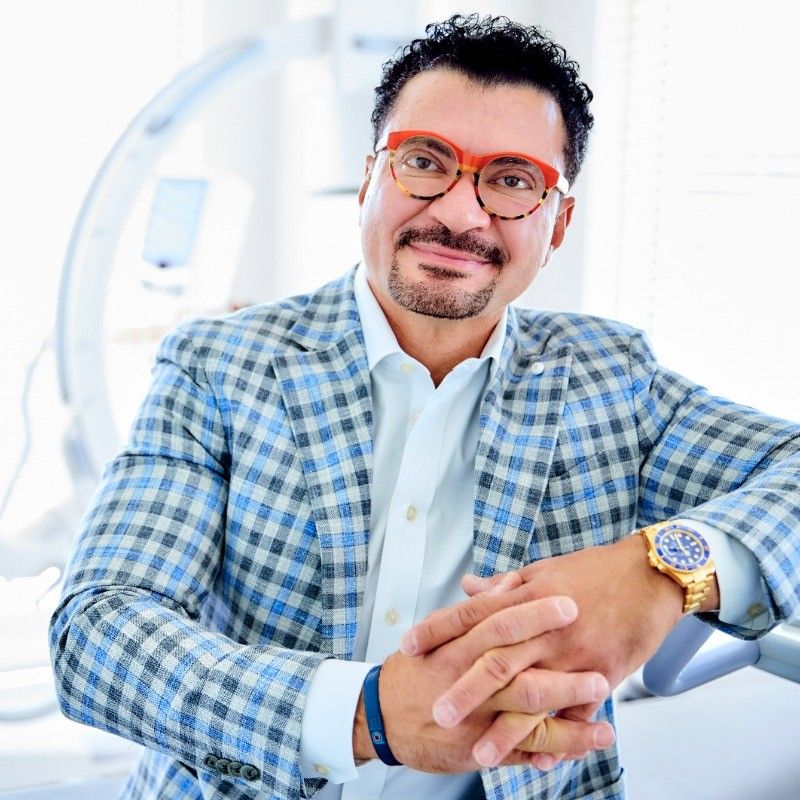
Imagine if you go out in the world tomorrow and everybody is relaxed… Wouldn’t it be nice?

– Dr. Hany Demian

Feeling stuck in fight‑or‑flight? Meet your Vagus nerve, AKA the “chill nerve.” In this conversation for The Advisor, Stacey Chillemi welcomes Dr. Hany Demian—visionary physician and co‑founder of Pain Care Clinics—for a clear, grounded tour of the vagus nerve, the body’s “rest, digest, and chill” pathway. Speaking from an integrative, patient‑centered lens, he explains why our best ideas and healing emerge in recovery states, not in the grind. From his playful “it’s summer, go outside” reminder to the power of a ten‑second pause before replying to a heated email, he keeps the science human, actionable, and hopeful.

Readers will learn what the vagus nerve is, how stress stalls digestion, why its symptoms can mimic cardiac, respiratory, or GI problems, and everyday activations such as humming, breathwork, meditation, Tai Chi, cold or hot exposure, or any routine that reliably calms you. Dr. Demian also outlines clinical options, from implantable and wearable stimulators to an ultrasound‑guided procedure he performs in the clinic, a twice‑yearly protocol to help the body remember “calm” as a baseline, and early peptide work showing encouraging responses. Most encouraging: with steady practice, the vagus nerve can be retrained in about twelve weeks, shifting fight‑or‑flight back to the exception and restoring a healthier baseline.


Thank you so much for joining us! Our readers would love to get to know you a bit better. Can you tell us a bit about your backstory?

I’ve been described as a visionary in modern medicine, and I’m the co-founder of Pain Care Clinics, with diverse and extensive experience across the medical field. I focus on busting common health myths people see online every day. Earlier in life, I thought I performed best under pressure… cramming for exams at the last minute while my mother worried. Over time, I learned my most creative ideas arrive when I’m rested and calm, not when I’m grinding. I’m driven by a clear mission to reduce pain and suffering and help people reach their full potential, and that begins with restoring calm to the system. I take a patient‑centered, integrative approach that favors evidence‑based, non‑surgical options and regenerative medicine when appropriate. That perspective aligns my clinical work with a larger purpose of healing rather than simply masking symptoms.

Why do you lean into that playful “summer out-of-office” energy?

We grind all year, and summer is short. The body isn’t meant to run from early morning to late night without true downtime. If a lighthearted “it’s summer… go outside” message nudges someone to put the phone down and breathe, that’s exactly the reset their nervous system needs. I want people to feel permission to relax and be present. That playful reminder also reinforces what we’ll discuss about the vagus nerve; the body heals best when the parasympathetic, “chill” state is active. Treating the nervous system with respect is not a luxury; it’s part of effective, modern care. Even brief, intentional pauses can reset the day and change outcomes.

Do the best ideas actually come under pressure?

No, the creative brain shines when you’re resting, not when your heart is racing and your breathing is shallow. You don’t force ideas; you find them when the mind is unpressured and spacious. In a calm state, patterns connect and solutions show up. That’s been true in my own life; I once crammed right before exams and paid for it in stress, only to discover that rest produces better thinking. Calm widens perception, which is essential for both patients and clinicians. It’s a habit anyone can practice. If someone thinks they’re brilliant under pressure, I encourage them to notice how much better their ideas become after real rest.

What is your rule for responding when emotions run hot, like the “angry email” moment?

Pause. Ten seconds of silence in conversation changes the energy, and waiting longer before you reply gives you control. Let the heat settle, gather your thoughts, and if possible wait until morning to respond. That simple pause is often the difference between regret and a clear, constructive outcome. That moment of composure often communicates leadership and gives you the upper hand without saying a word. It protects relationships while preserving your health. In medicine and in life, restraint is a form of wisdom.

What exactly is the vagus nerve?

It’s one of the longest cranial nerves, traveling from the brain through the neck into the chest and abdomen. Functionally, it’s the core of the parasympathetic system; the “rest, digest, and chill” side that counterbalances fight-or-flight. When the vagus activates, heart rate slows, breathing deepens, and digestion turns on. It’s a two-way information superhighway linking the brain and organs. It also influences pain, mood, stress, inflammation, and the immune system, which is why getting it right has such broad effects. When this “chill nerve” is active, the entire physiology tilts toward recovery. That’s the terrain where healing becomes possible.

Does fight-or-flight really shut down digestion?

Yes. Under stress, energy is diverted to survival—heart and lungs—so stomach movement slows and food “sits.” People then feel indigestion, bloating, and even constipation. That’s why stressed states so often show up in the gut. In a true fight‑or‑flight moment, you don’t feel hungry because the body is reallocating resources to survive. That’s adaptive in emergencies and harmful when it becomes a daily lifestyle. Re‑engaging the vagus brings digestion back online.

Why is vagus-related dysfunction tricky to identify?

Because symptoms are nonspecific and mimic other conditions. A racing heart looks cardiac; shallow breathing looks like asthma; indigestion points to gastrointestinal issues. Many practitioners don’t initially connect these dots to the vagus. When you do, you can often address multiple issues with one underlying approach. Many people go in circles for years, even across multiple countries and specialties, because each silo sees only one organ system. A vagal lens allows us to step back and look for a unifying pattern. It’s a systems problem that calls for a systems view.

Do symptoms vary from person to person?

Dramatically. One person may have headaches and anxiety; another might have a very fast, or even unusually slow, heart rate. Breathing and digestive changes differ as well. That variability is exactly why careful, system-level thinking matters. The same nerve can present as tachycardia in one person and bradycardia in another, depending on how it’s firing. That variability is exactly why personalization is essential. Listening carefully often reveals the common thread.

What daily practices can activate the vagus nerve?

Anything that genuinely moves you into “chill.” Cold exposure, mindfulness, meditation, Tai Chi, and breathing exercises are classics. Singing, humming, warm or cold baths, time with family, even something simple like cleaning your car… if it truly calms you, it counts. The key is to pick what you’ll actually do consistently. The goal is to activate the parasympathetic state in a way that feels natural to you, whether that’s humming, Tai Chi, or a quiet walk. Even watching a movie or spending time with grandkids can be therapeutic if it predictably calms you. Make calm behavior repeatable, and the body learns.

What clinical options exist to stimulate the vagus nerve?

There are implanted devices, pacemaker-like systems placed on the left chest that connect to the vagus, designed to send pulses and train the nerve. There are also external wearables for the ear or neck. These approaches encourage the vagus to be more active and help the body relearn a calm baseline. They’re part of a broader toolkit that complements lifestyle practices. I also prefer, whenever possible, to help the body heal from within before leaning on medication, while acknowledging there is a place for pharmaceuticals. External ear or neck devices that deliver gentle impulses can be a bridge to retraining. The common goal is to restore a calm baseline that the body recognizes.

What procedure do you perform in the clinic?

Under ultrasound guidance, we target the vagus with a needle and a small amount of local anesthetic. Patients often calm visibly; panic eases, and resting heart rate drops before they leave. In the following days, heart rate, breathing, and digestion tend to normalize. It’s a focused way to help the system remember how to rest and digest. Patients often report anxiety and panic settling, and you can watch the resting heart rate trend down in real time before discharge. Over the next few days, breathing deepens and digestion resumes as the body reorients to safety. It’s precise work guided by ultrasound, and a small change can create a large effect.

Have you developed a treatment cadence?

Yes. We typically repeat the procedure twice a year for at least two years. Over that time, organs send steady “calm” signals back to the brain, and the nervous system relearns that rest-and-digest is the baseline while fight-or-flight becomes the exception. The goal is long-term stability rather than a quick fix. Over months, the organs keep sending “it’s safe” signals back up to the brain, and the nervous system adopts that as its new normal. Fight‑or‑flight becomes the exception rather than the rule. That stability is what most people are actually seeking when they say they want to feel better.

What are you exploring with peptides?

We’re trying two peptides with about fifty patients and seeing roughly seventy percent respond so far. They’re amino acids, like the ones people already know from nutrition, and the aim is to encourage a calmer vagal tone. I’m pushing to improve that response rate, because “good” isn’t good enough. The hope is a simple, safe option that helps nudge the system toward balance. We currently see about a seventy‑percent response across roughly fifty patients; that’s encouraging, but I’m pushing for better because patients deserve better. These are amino acids, think proteins, so the safety profile is favorable. The aim is a simple, natural adjunct that supports a calmer vagal tone.

How do you view the body’s ability to heal?

The body can heal itself when given the right conditions. Even in large, stressful cities, we’re seeing encouraging results. Cool the system down, and you open new possibilities. Restoring a calm baseline is foundational for what’s possible next. Even in noisy, high‑stress cities, we’re seeing promising changes when people cool the system down. My next curiosity is understanding how much healing can occur when stress stays chronically high, and what thresholds tip the balance. The past few years have only strengthened my conviction that calm is a catalyst for recovery.

How do you approach challenging cases?

One patient at a time, with persistence. I take difficult cases personally and tell patients we’ll keep trying; if the right treatment isn’t here today, we’ll look again tomorrow. That trust and time together matter. I don’t let go. I’ve taken on cases that colleagues thought were too complex, because I take it personally when someone is suffering. Patients sense that commitment and tend to meet it with trust. If the right option isn’t available today, we keep looking together.

Will AI really replace doctors?

No. AI is a useful tool, but it can’t replace the human connection. You can’t code the moment you look into a patient’s eyes, offer hope, and hear the unasked questions. That human judgment and presence remain essential. Robotics and algorithms can assist, but they won’t look a patient in the eye and convey hope when a treatment hasn’t worked yet. They won’t notice the unasked question on someone’s face. Medicine is technical and human; we need both.

Can the vagus nerve, AKA the “chill nerve,” be trained over time?

Absolutely. The body adapts quickly, and memory is everywhere… not just in muscles, but in digestion and even smell. The vagus carries signals both ways, so calmer organs can retrain the brain. With consistent practices and balance, resting heart rate improves, mood steadies, and calm becomes the norm. Memory is everywhere—muscle, digestion, even smell—so the body can leverage those pathways to reinforce safety. Over time, signals from the organs retrain brain centers, and the new baseline sticks. That’s when you notice resting heart rate and mood settling for good.

Should we teach children to “chill” as part of daily life?

Yes. Even just a few minutes each morning… dimming the lights, closing the eyes, and focusing on breathing can set a lifelong pattern. If calm becomes familiar early, we change the trajectory of stress and mental health. It’s simple, but powerful. Imagine if schools taught five quiet minutes of breathing each morning; we’d change trajectories for anxiety and resilience. Normalizing calm early could reduce inflammatory and autoimmune expressions later in life. It’s a small habit with compounding returns.

How quickly can someone begin to reset their baseline?

Faster than most expect. Give it about twelve weeks of consistent “chill” training, and the nervous system starts to remodel. Fight-or-flight shifts from default to exception. That’s a hopeful timeline for anyone ready to begin. We were created for calm as the default, with fight‑or‑flight reserved for true emergencies. Somewhere along the way, many of us flipped the ratio. Twelve consistent weeks can flip it back.

What does your own “chill” practice look like lately?

I recently looked at my wearable and saw only five minutes of stress all day, even while traveling, because I decided nothing would ruin my day. Closing my eyes and letting go changed the physiology in real time. It’s a reminder that choices show up in the data. Calm is a trainable state. Choosing not to let a travel day ruin your physiology is simple, not easy… and it works. Data from a wearable is just the mirror; the real lever is mindset. That’s empowering for patients who want to participate in their own recovery.

What are your average weekend plans?

Sun, water, and rest… either at the beach or pool. No work, no phone, no emails. Just a real reset. That’s how I model the message. It also keeps me aligned with the same counsel I give to patients. When I say “no phone,” I mean it, because uninterrupted rest is part of the prescription. The nervous system notices the difference.

What’s your message to readers who want to start today?

Step outside and put the phone down. Give your system a real break and begin training the “chill nerve.” Even a calm weekend can start to move your baseline. Small, consistent choices add up. Calm weekends compound into calmer weeks, and that momentum is how baselines shift. Training the “chill nerve” is less about perfection and more about repeatability. Start small, and keep going.

How can our readers further follow your work online?

Start by visiting my website to learn more about my approach and ongoing work. For day‑to‑day insights and patient‑friendly education, follow along on Instagram at @drhanydemian. For professional updates and longer reflections on clinical practice and leadership, connect with me on LinkedIn. I’m grateful for every person who chooses to engage with this work… your attention and questions help shape the conversation around healing and health.

Thank you for sharing your insights and your calm, practical wisdom! This was a wonderful learning experience.

Thank you for having me. It was a pleasure, and I hope everyone learns to chill every now and again in such a fast-paced world!

Dr. Hany Demian is a visionary physician and the co‑founder of Pain Care Clinics, known for blending modern medicine with a clear, human approach. Drawing on diverse, extensive experience, he favors helping the body heal from within… prioritizing parasympathetic recovery, precise interventions, and practical education. In clinic, he performs ultrasound‑guided vagus nerve stimulation and follows a twice‑yearly protocol to help patients restore “calm” as baseline, while also piloting peptide‑based approaches that have shown encouraging early responses. His one‑patient‑at‑a‑time ethic and persistence with challenging cases make complex science feel actionable and hopeful.

Author(s)

  • A renowned 20 Times Best-Selling Author, Speaker, Coach & Podcaster

    The Advisor With Stacey Chillemi

    Introducing an extraordinary individual, a renowned speaker, an esteemed coach, a captivating podcaster, and a remarkable 20-time best-selling author! With such an impressive record of accomplishments, it comes as no surprise that she has been recognized as one of the Top 10 Entrepreneurs of 2023 by Apple News and featured in a prominent story on Grit Daily. But that's not all! This dynamic individual has garnered attention across major media outlets, including ABC, NBC, CBS, Psychology Today, Insider, Business Insider, and Yahoo News, accumulating an astonishing 17 million views! Furthermore, she has graced the stage of the Dr. Oz Show not once but five times, collaborated with influential figures like Ariana Huffington, and made captivating appearances on numerous TV shows, news segments, podcasts, and radio programs. Originally launching her career at NBC, where she contributed to Dateline, News 4, and The Morning Show, this inspiring professional redirected her boundless talents and capabilities toward becoming a full-time speaker and writer. With an unwavering passion for empowering both men and women to conquer their challenges and rise to the pinnacle of success, our speaker, coach, podcaster, and author invites you to unearth your true potential. Embrace the opportunity to be motivated by Stacey Chillemi's invaluable insights and strategies for living life on your own terms. Join this esteemed speaker today and allow yourself to be inspired to take that first transformative step toward lasting success! Welcome to a world of possibilities where you can thrive with Stacey Chillemi as your guide.