


Imagine if you go out in the world tomorrow and everybody is relaxed… Wouldn’t it be nice?
– Dr. Hany Demian
Modern life trains the nervous system to stay “on.” Even when nothing is actively wrong, many people live with the physiological signature of threat: shallow breathing, restless sleep, digestive discomfort, irritability, and a mind that can’t fully stand down.
In a recent conversation on The Advisor, physician Dr. Hany Demian discussed a framework that is gaining mainstream attention in both medicine and mental health: vagal tone—a shorthand for how effectively the vagus nerve supports the body’s ability to shift from stress response into recovery.
The vagus nerve is one of the body’s major communication routes between the brain and internal organs. It is often described as part of the parasympathetic nervous system, which supports “rest and digest” functions: slowing heart rate, deepening breathing, and helping digestion and immune processes run more smoothly. When the nervous system is stuck in sympathetic activation—what many people refer to as fight-or-flight—those recovery functions can downshift, sometimes in ways that are easy to misread.
Why stress can show up in the gut, the chest, or the breath
One reason vagus-related dysfunction is easy to miss is that its symptoms can resemble a range of unrelated conditions. A racing heart can feel “cardiac.” Shortness of breath may resemble asthma. Digestive slowdown can look like a primary gastrointestinal problem.
Dr. Demian emphasized that this doesn’t mean symptoms should be dismissed as “just stress.” It means the nervous system can influence multiple organ systems at once—and in some cases, a systems-level lens helps clinicians and patients ask better questions: What changes when the body feels safe? What worsens when stress becomes chronic?
Importantly, overlapping symptoms still deserve appropriate medical evaluation. But when acute danger has passed, and the body remains dysregulated, the vagus nerve offers a useful organizing concept for what people are experiencing.
A calmer state is not a personality trait
A central theme of the conversation was that calm is not simply “who you are.” It’s a physiological state with inputs and patterns—some inherited, some learned, many reinforced by the environment.
Dr. Demian noted that many people believe they do their best thinking under pressure. Yet in practice, creativity and clear decision-making tend to show up more reliably when the nervous system is regulated—when the mind has room to connect ideas rather than defend against imagined threats. In that sense, recovery is not laziness; it is the condition that allows higher-order thinking.
He offered a practical example: before responding to a heated email or tense conversation, take a brief pause—sometimes just ten seconds—to let the stress response crest and soften. The goal isn’t silence as a strategy; it’s a moment of regulation that reduces the likelihood of reactive choices.
What “vagus nerve activation” looks like in real life
A common misconception is that vagal regulation requires a specialized routine. Dr. Demian framed it differently: vagus-supportive practices are simply the things that reliably move the body into a calmer state.
That can include well-known practices such as slow breathing, meditation, and tai chi. It can also include humming or singing, spending time in nature, connecting with family, or any repeatable ritual that helps the body downshift. The most effective practice is often the one a person will do consistently.
From an editorial standpoint, it helps to be precise here: these practices are not cures for complex medical conditions. But they can support regulation, and regulation can influence how symptoms are experienced—especially when stress has become a persistent baseline.
When clinicians consider devices and procedures
The conversation also touched on medical interventions sometimes used in vagus-related care, including implanted or wearable stimulation devices that deliver gentle impulses to influence vagal pathways. Dr. Demian described ultrasound-guided, clinic-based approaches he uses in his practice, and he spoke about emerging areas of interest—while acknowledging that medicine evolves through cautious study, iteration, and patient-by-patient learning.
For Thrive’s purposes, it’s important to keep the takeaway grounded: the most broadly applicable support for vagal tone remains behavioral and lifestyle-based—sleep, stress reduction, movement, breath, and routines that make calm repeatable. Clinical interventions may be appropriate in certain contexts, but readers should discuss symptoms and treatment options with a qualified clinician who can assess their specific situation.
A hopeful idea: the nervous system learns what you practice
Perhaps the most encouraging thread in the conversation was the idea that the nervous system is adaptable. The body “remembers” states through repetition—stress can become automatic, and so can recovery.
Dr. Demian described this as a kind of retraining: when the body repeatedly experiences safety cues—slower breathing, lowered arousal, restorative rest—calm can become easier to access over time. Not because life becomes perfect, but because the body becomes more skilled at returning to baseline.
This is where the vagus nerve concept resonates: it offers a map for why stress affects so many systems at once—and why small, consistent practices can have an outsized impact on day-to-day functioning.
Starting small: “calm” as a daily skill
One of the simplest messages from the conversation was also the most practical: step outside more often, put the phone down periodically, and treat recovery as non-negotiable—especially during seasons when life naturally offers more daylight and outdoor time.
For readers who feel chronically dysregulated, the goal is not to force calm. It’s to create repeated, credible signals of safety—so the nervous system can stop acting like every day is an emergency.
If symptoms are persistent, severe, or frightening—especially chest pain, significant shortness of breath, fainting, or sudden changes in heart rhythm—seek medical evaluation promptly. Nervous system education can be supportive, but it is not a substitute for medical care.
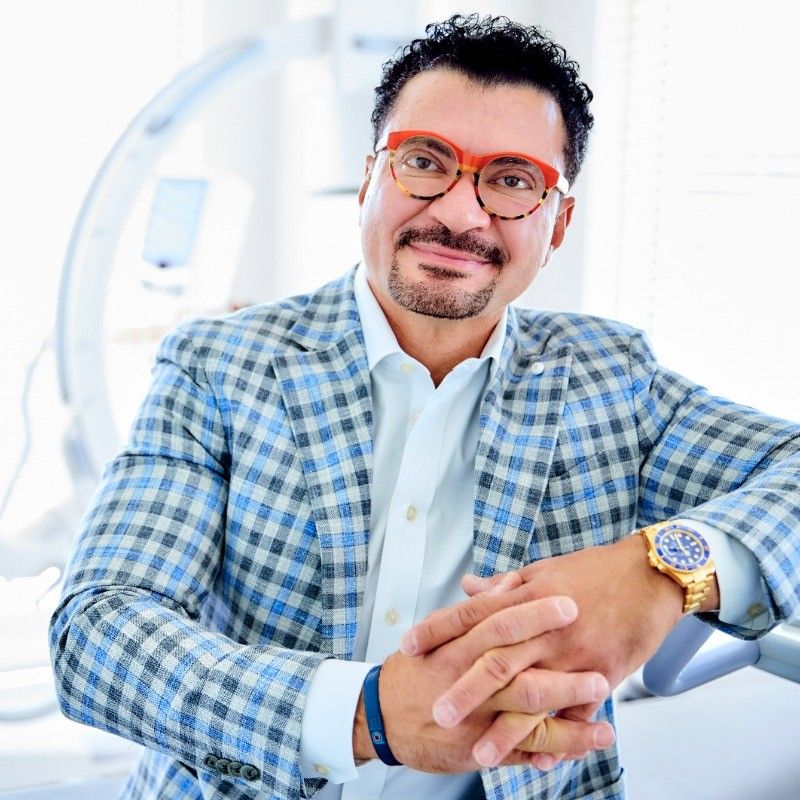
Dr. Hany Demian is a physician whose work focuses on helping patients understand the role of the nervous system in stress, recovery, and chronic symptoms. He emphasizes a patient-centered approach that combines clinical evaluation with practical education, aiming to make complex physiology more understandable and usable in everyday life.