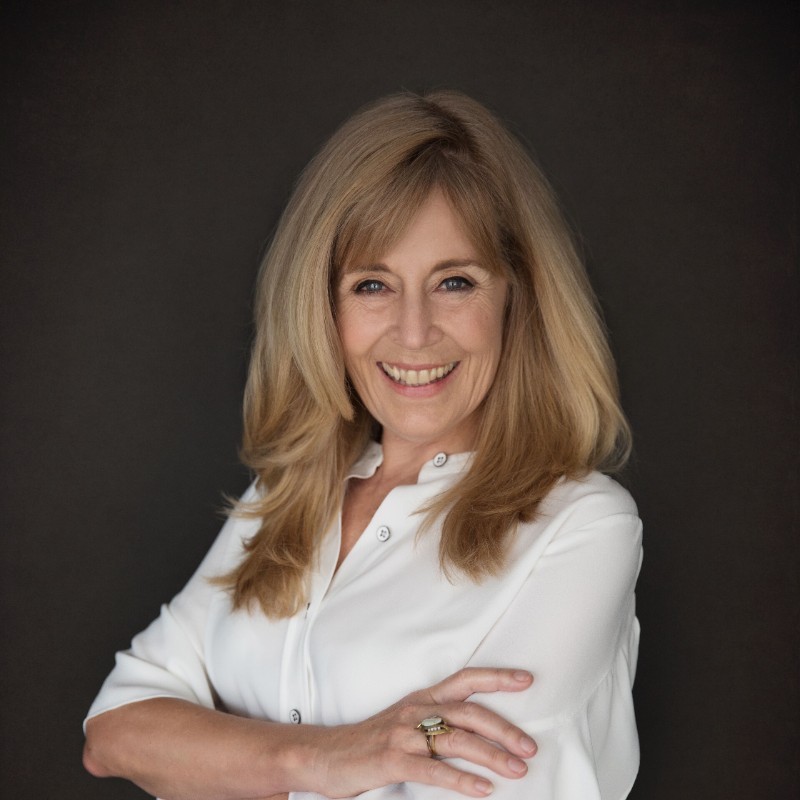

You never get to change somebody else, but you can always work on yourself.
– Carole Hodges
Some years can change your life in a single season. For Carole Hodges, bankruptcy, divorce, and the unimaginable loss of her eldest daughter to suicide arrived within one year—followed, years later, by a house fire that took nearly everything. Instead of letting catastrophe define her, she chose to breathe, rebuild, and become the calm in the chaos. Today, the transformational coach and author of The Menopause Millionaire: Keys to Prosperity and Meaning in the Second Half of Your Life helps women in midlife reconnect to purpose, prosperity, and the quiet inner authority that already lives within them.
In this conversation, we explore how grief becomes a teacher, why language shapes reality, and how faith, presence, and “dream‑building” can turn setbacks into a compass. Carole shares the “pass‑the‑Kleenex” support that sustains a heart, the moment she noticed the blue sky again, and the practical wisdom that carried her from dating after divorce to meeting her husband—from palm‑tree filled “beautiful places” to a life review after the fire. Consider this your lighthouse moment: a gentle beam toward resilience, clarity, and a life you would love. Let’s begin.
Thank you so much for joining us! Our readers would love to get to know you a bit better. Can you tell us a bit about your backstory?
My backstory is a series of life earthquakes that arrived almost at once—bankruptcy, a divorce, and the devastating loss of my eldest daughter to suicide. I kept moving because I had to; I even started a new job two weeks after her funeral so I wouldn’t be defined by tragedy in every room I entered. For years, I spoke very little about it, which gave me the space to rebuild the basics of my life and remember that I am more than what happened to me. Later, another shock came when our home was destroyed in a fire, and once again I chose to meet loss with presence, faith, and a commitment to rebuild—not just the house, but my inner light as well.
Was transformational coaching a byproduct of those experiences, or something you always knew you’d do?
It emerged from living through the challenges and noticing what truly helped me heal. I realized that by midlife, everyone carries something heavy, and growth is shaped by how we meet those moments, not by pretending they didn’t happen. At first, I focused only on putting one foot in front of the other; the impulse to guide others arrived after I’d earned perspective the hard way. Eventually, it became clear that my best work was helping women reconnect with themselves and design lives they genuinely love from the inside out.
You’ve referenced a pivotal insight from the Landmark Forum. What changed for you there?
Three unrelated people urged me to attend, which I took as a nudge to listen. A core teaching I absorbed was that we often “create” our lives with the words we attach to events… especially when we layer on emotional narratives that keep us stuck. On the third day, I stood up and stated only the facts of what had happened; even that simple shift felt like a doorway swinging open. I saw that I didn’t need to be defined by catastrophe, and that the language I chose could either trap me in the past or open me to possibility.
You chose not to share your story for years. What did that silence make possible?
Silence gave me room to build without being introduced to my losses. In a new role where no one knew my history, I could establish daily routines, build relationships, and demonstrate competence free of pity or labels. That said, the experience still lingered within me, and I had to meet it on my own timeline rather than anyone else’s. The quiet season was less about denial and more about preserving the dignity to author a new chapter.
What did grief look like in everyday life?
Two years after my daughter’s death, I stepped outside, looked up, and noticed the blue sky and clouds as if for the first time—realizing I hadn’t truly “seen” them in years. Grief can narrow your field of vision, making life seem like it’s only about what’s directly in front of you. It doesn’t demand that you plunge into it constantly; it asks that you honor your own pace as you move through it. Presence returns in small, sacred glimpses, and each glimpse is a sign that a little more of you has come back online.
What did “support” look like when words weren’t enough?
My community and church held me in a way that required very few words. I call it the “pass the Kleenex” time: no explanations, no over-processing—just people who understood and sat beside me. That kind of simple witnessing is a gift when you’re too tender for big conversations but still need company. It reminded me that support doesn’t always look like solutions; sometimes it seems like being quietly seen.
Your daughter lived with bipolar disorder, and access to care was difficult. How did you navigate that reality?
She often said she wanted to end her life, and that constant fear eclipsed nearly everything else we were facing. Her psychiatrist wanted to see her twice a week, but as the only earner working temp jobs, we could afford only a fraction of that care. Even when the crisis escalated and police were involved, short-term interventions couldn’t resolve the deeper pattern. We did what we could with what we had, and I’ve never forgotten how complex and layered mental health realities can be for families.
How did these experiences reshape your view of midlife?
They taught me that midlife isn’t a smooth, prewritten script… It’s a human adventure full of plot twists. I went from assuming things would “breeze along” to understanding that challenges are invitations to grow roots and wings at the same time. The key is to name what’s real, feel what you feel, and then choose your next honest step. Perfection isn’t required; presence is.
What’s a lesson you learned about relationships that many of us need?
You don’t get to change other people, even when you love them. I could have blamed my ex-husband for many things, but I was there the whole time, and the only person I could actually change was me. Taking ownership of my part wasn’t about shame; it was about freedom. That shift, from trying to fix others to transforming myself, changed the trajectory of every relationship afterward.
You spent 15 years single after a long marriage. What did that season teach you?
At first, I defined dating by what I didn’t want, which is like pointing to a single dot on a blank page and saying, “not that.” After plenty of “no, not this; no, not that,” I learned to create from the inside out—designing the life and partnership I desired and walking toward them. Along the way, two men told me I was “too optimistic,” which I chose to wear as a compliment rather than a flaw. Clarity, self-knowledge, and optimism became my compass, and they served me far better than any checklist ever could.
Faith and surrender are threads in your story. How did that lead to meeting your husband?
I had an honest conversation with God: “If I’m meant to be with someone, please put him right in front of me.” Soon after, a dinner plan with a friend fell through, and a man I’d seen around asked if I’d like to have dinner. It unfolded slowly and naturally from there, but the timing felt unmistakable when I became clear and surrendered the how; life met me with precisely the who.
You’ve said you always live in “beautiful places.” How has that belief shown up?
When we had 90 days to move after a housing shake-up, I visited a client’s lovely guest house and casually asked her to keep an eye out for me. She turned and said, “How would you like to live here?”… and it worked out. Surrounded by palm trees, I’ve felt as if angels were rustling overhead, reminding me that beauty can be a daily practice, not a once-in-a-while event. The stories we tell ourselves become the lenses through which we live, and believing in beauty keeps revealing more beauty.
Take us to the night of the fire. What happened, and what surprised you?
We were watching TV when we smelled something electrical, and a puff of smoke led us to flames in the workshop. By the time the fire department arrived, the flames were above the roof, and we were told to step aside… There was nothing left for us to do. My husband said, “We’ve just lost everything,” and yet a deep calm came over both of us. That calm became a quiet guidance over the following months, inviting us to stop, listen, and choose what truly mattered.
You’ve called the aftermath a kind of “life review.” What did you discover?
For insurance, we had to list every single thing we owned, treasures and junk alike, which forced razor-sharp clarity about what counts. Living away for 15 months, I earned another certification and discovered simpler “dream-building” ways to think about fear and forward motion. Clearing became easier when so much was already charred; goodbyes sometimes arrive in the form of relief. Even in the ashes, there were graces, openings that made the next chapter more intentional, lighter, and truer.
Earlier in life, you did local musicals despite intense fear. Why does that matter now?
At auditions, my hands shook so much that my children signed me in because I couldn’t hold the pen. Looking back, those moments instilled courage into my bones; they taught me to act in the face of fear rather than wait for it to pass. Every step onto a stage was one more rehearsal for stepping into the unknowns of the future. The dots connect in hindsight; you see how early trembling prepared you to stand steady when life quaked.
What core philosophy guides your coaching?
Your answers are already inside you, and my role is to help you hear them. I don’t push people to sprint in a direction that isn’t theirs; I support them in listening for their own inner authority. On a practical level, that looks like pausing, breathing, connecting with spirit, and asking, “What truly matters today?” Then we take the next aligned step and let consistent alignment do the heavy lifting.
You’ll be joining us for a podcast series. What themes can listeners expect?
Resilience, and what I call the unity of wisdom. Whether the voice comes from a coach or a spiritual teacher, it’s often pointing to one core truth through different lenses. The key is to hear the version that resonates with you and to act on it in your actual life. We’ll explore how to bring these ideas to life—right in the midst of work, family, and change.
Tell us about your book, The Menopause Millionaire: Keys to Prosperity and Meaning in the Second Half of Your Life.
I wrote the book after gaining distance from early losses so that I could speak from a perspective rather than from an open wound. It weaves together midlife transitions—relationships that evolve, dating after divorce, and the courage to reimagine who you are—with practical awareness around money and risk. As a former financial executive, I emphasize the importance of paying attention to planning without dispensing financial advice. I also highlight simple health practices—eating well, moving your body, and clearing mental clutter—because vitality is a habit and “old” is a label we don’t have to wear.
If you could leave readers with a straightforward practice today, what would it be?
Take a deep breath. Be in this exact moment. Ask yourself what life you would love living, and sit with that vision long enough to feel it in your body. Then take one small step in its direction before the end of the day.
How can our readers further follow your work online?
Visit LifeChangeNavigator.com to learn more about my work. There, you can download the free “Create an Abundant Mindset” guide, which offers a simple daily practice for shifting scarcity to possibility. You can also schedule a discovery session to explore ways to work together, including private and group coaching, as well as speaking and a blog for ongoing inspiration. Everything is designed to help you stop drifting, chart a course that fits, and live a life you truly love. Be sure to follow along on Linkedin and Instagram!
Carole, thank you for opening your heart and sharing so generously… your courage and clarity are a gift.
Thank you, Stacey. I’m grateful for the thoughtful questions and for the chance to support your readers in creating lives they truly love.