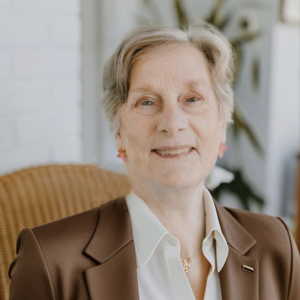
When children are struggling, it’s telling us that the family system is not providing the support they need.
– Dr. Gloria Vanderhorst
There is a quiet assumption woven into modern parenting: that resilience is something children acquire through exposure, achievement, or pressure. Push them a little harder. Enroll them in one more activity. Help them “toughen up.”
But according to psychologist Dr. Gloria Vanderhorst, who has spent nearly five decades working with individuals, couples, and families, resilience does not develop through pressure. It develops through relationship—specifically, through the everyday emotional exchanges that shape a child’s sense of safety, belonging, and self.
At a time when many families describe themselves as overwhelmed, reactive, or disconnected, Dr. Vanderhorst’s perspective offers a reframing: the issue is not simply individual stress. It is systemic. And it is relational.
The Emotional Climate Children Grow Up In
When a child struggles—emotionally, behaviorally, or socially—it is often treated as an isolated issue. A problem to fix within the child.
This is not about assigning fault. It is about understanding context. Children do not develop in isolation; they develop within emotional systems. The tone of those systems—hurried or grounded, reactive or reflective—matters.
And today, those systems are under strain.
Families are navigating a constant influx of external stressors: economic uncertainty, global instability, and social fragmentation. Even seemingly small stressors—like rising everyday costs—carry emotional weight. They influence how adults feel, think, and respond.
Children absorb this. Not necessarily through words, but through atmosphere.
“They read the room,” Dr. Vanderhorst says. “They understand the emotional dynamics around them.”
The question, then, is not only what we say to children, but what we communicate without saying anything at all.
The Hidden Cost of a Full Schedule
Modern childhood is often structured around productivity: sports, lessons, enrichment, and social engagement. These activities are designed to support growth—and they often do.
But there is a threshold beyond which activity begins to displace something essential.
“What I see today,” Dr. Vanderhorst notes, “is that families are busy in their cars. That’s where they spend their time together.”
Meals, once a daily point of connection, have shifted. Families eat on the go, between commitments. Evenings are compressed into logistics. Conversations become transactional.
Who needs to be where?
What time is practice?
Did you finish your homework?
These exchanges keep the system functioning. But they do not necessarily foster connection.
And connection is not built through coordination. It is built through presence.
Children need time that is not structured around performance. Time to be with their parents without an agenda. Time to talk, to reflect, to exist without being directed.
“There is value in being bored,” Dr. Vanderhorst says. “Self-reflection takes place—even for little kids.”
Without that space, children may become highly engaged externally, but underdeveloped internally. They know how to perform, but not always how to process.
When Devices Replace Interaction
Layered onto this dynamic is the growing presence of digital devices in early childhood.
Dr. Vanderhorst describes seeing very young children—three, four years old—fully absorbed in screens, moving through the world without looking up. The concern is not simply the amount of screen time. It is what is being displaced.
“Children interact with the device,” she explains. “They’re safe with the device. And then they don’t take the risk of interacting with others.”
Human connection involves uncertainty. It requires reading facial expressions, responding to tone, and navigating misunderstandings. These are not innate skills; they are developed through repeated experience.
Devices offer predictability. They respond consistently. They do not require emotional negotiation.
Over time, this can shift a child’s comfort zone. Interaction with people may feel more effortful, less intuitive.
At the same time, extended device use—sometimes 10 or more hours a day in older children—can reinforce isolation. Not necessarily visible isolation, but emotional distance.
And that distance has consequences.
We Are Wired for Connection
Dr. Vanderhorst emphasizes that human beings are not designed for isolation.
“We’re born connected to another human being,” she says. “We thrive in connection. Our bodies are healthier when we are connected.”
This is not just a psychological observation. It is physiological.
Connection regulates the nervous system. It influences stress hormones, heart rate, and immune function. Chronic disconnection, by contrast, can contribute to dysregulation—emotionally and physically.
What is emerging, Dr. Vanderhorst suggests, is not only an emotional crisis but also a physical one. As patterns of isolation increase across generations, the impact extends beyond mental health into overall well-being.
This makes the family system not just a social structure, but a biological one.
It is where regulation begins.
What Children Learn by Watching Adults
Children do not learn about relationships through instruction alone. They learn by observation.
They watch how parents speak to each other, how they resolve tension, and whether they make time for one another.
“They know when mother and father are enjoying each other,” Dr. Vanderhost says. “That calms the child’s nervous system.”
When parents operate as logistical partners—coordinating schedules but not engaging emotionally—children notice that, too.
In many households, couples struggle to find even a few uninterrupted minutes together. Conversations are dominated by responsibilities. Emotional connection is deferred.
Over time, this becomes the model.
Children internalize not only how relationships function, but also whether they are worth investing in at all. Dr. Vanderhorst points to broader societal patterns—declining interest in long-term partnership among younger generations—as a possible extension of these early experiences.
If the connection is not visible, it may not feel essential.
The Case for Small, Intentional Connection
Dr. Vanderhorst’s recommendation is not to overhaul family life, but to reintroduce something small and consistent.
Fifteen minutes. That is the assignment she often gives to couples: find 15 minutes in the day to connect without an agenda.
No scheduling, problem-solving, or multitasking.
Just attention.
“What is that person thinking and feeling?” she suggests as a starting point.
This kind of interaction does two things. It strengthens the relationship between adults, and it creates an emotional climate that children can feel.
It signals that the connection is not secondary. It is foundational.
Children’s Emotional Lives Are Not Inconveniences
When children experience distress—whether from peer conflict, academic pressure, or internal frustration—the adult response often reflects discomfort with emotion itself.
We want to fix it. Minimize it. Move past it.
“Stop crying.”
“It’s not a big deal.”
“You’re okay.”
These responses are usually well-intentioned. They aim to soothe. But they can also communicate something unintended: that certain emotions are not acceptable.
Dr. Vanderhorst challenges this.
“Children are entitled to be emotional,” she says. “Even intensely emotional.”
Emotions are not problems to eliminate. They are experiences to move through.
When a child is allowed to express emotion—and is met with presence rather than dismissal—their nervous system begins to regulate. They feel seen. Understood. Over time, this builds capacity.
Resilience, in this sense, is not the absence of distress. It is the ability to experience distress without becoming overwhelmed or alone in it.
From Reactivity to Curiosity
One of the most difficult shifts for parents is moving from reactivity to curiosity.
When a child is dysregulated, it often triggers something in the adult: frustration, urgency, helplessness. The instinct is to respond quickly.
But quick responses are not always attuned responses. Dr. Vanderhorst encourages slowing down—not to ignore behavior, but to understand it.
What is the child experiencing?
What might this emotion be connected to?
What are they trying, in their own way, to communicate?
This does not mean permissiveness. It means engagement at a deeper level.
“When I am seen and heard,” Dr. Vanderhorst notes, “I feel grounded.”
The same is true for children.
The Role of Self-Awareness
Parents do not enter these interactions as neutral observers. They bring their own histories—patterns shaped by how they were raised, what emotions were allowed, and how conflict was handled.
“Parts of our emotional capability have been cut off,” Dr. Vanderhorst explains.
Developing awareness of these patterns is a critical step. Not to assign blame, but to expand capacity.
This can begin simply.
Set aside time—10, 20, 30 minutes—to sit without distraction. Allow thoughts and feelings to surface. Notice what arises without immediately explaining it away.
What feels uncomfortable?
What feels familiar?
What reactions seem automatic?
This kind of reflection creates space between stimulus and response. It allows for choice.
And in parenting, that space matters.
Stabilize Yourself First
There is a common analogy used in emergencies: put on your own oxygen mask before assisting others.
Dr. Vanderhorst applies the same principle to emotional life.
“Get yourself centered first,” she says. “Then you can interact and assist your child.”
This does not require perfection. It requires awareness.
If an adult is overwhelmed, their ability to respond calmly is limited. Taking even a brief moment to regulate—through breathing, pausing, or stepping away—can shift the interaction.
Children do not need flawless parents. They need regulated ones.
Repair as a Core Skill
No parent navigates these dynamics without missteps. There will be moments of impatience. Dismissal. Disconnection.
What matters is not the absence of these moments, but what follows them. Dr. Vanderhorst emphasizes the importance of resisting the immediate impulse to justify.
“We tend to defend ourselves,” she says. “Even when no one else is there.”
Instead, she suggests allowing space for recognition.
If something we’ve said or done has caused harm, it is appropriate to feel that. To sit with it. To acknowledge it without explanation.
“It should create sadness,” she notes. From there, responsibility becomes possible. And repair can occur.
This might look like returning to the child and saying, in simple terms: I didn’t handle that well. I’m sorry. I want to understand what you were feeling.
These moments are powerful. They teach children that relationships can hold mistakes—and that accountability is part of connection.
Letting Go of Perfection
For many parents, awareness brings an accompanying emotion: guilt.
A recognition that things could have been done differently. Those moments were missed.
Dr. Vanderhorst’s response is both direct and compassionate.
“You’re human,” she says. “Everyone has done that.”
The invitation is not to bypass that feeling, but to move through it; Allow grief if it arises while recognizing the impact of past actions. And then, importantly, stop short of self-justification.
Responsibility, in this context, is not about self-criticism. It is about alignment.
What do I understand now that I didn’t before?
What can I do differently moving forward?
Change does not require a perfect past. It requires a present willingness.
A Different Model of Resilience
The prevailing model of resilience emphasizes endurance: the ability to withstand difficulty without breaking.
Dr. Vanderhorst offers a different model where resilience is relational.
It develops when a child experiences consistent emotional safety. When they are allowed to feel, to express, and to be met with presence. When they observe a connection between the people around them. When repair follows rupture.
These are not dramatic interventions. They are small, repeated moments.
A conversation at bedtime.
Fifteen minutes of undivided attention.
A pause instead of a dismissal.
A willingness to listen without fixing.
In a culture that often equates busyness with care, these moments can feel secondary.
But they are not secondary. They are foundational. And they are available—beginning, as Dr. Vanderhorst suggests, “right in this moment.”