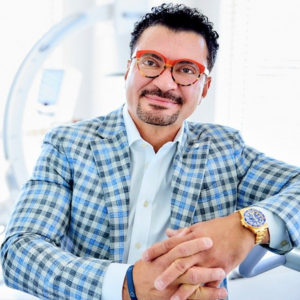

Pain is not part of getting older. Pain happens when the body can’t recover fast enough from what daily life demands of it.
– Dr. Hany Demian
For millions of people living with chronic pain, the message from the healthcare system is often discouragingly consistent: This is just part of getting older. The phrase may sound pragmatic, even comforting in its certainty, but according to Dr. Hany Demian, it reflects a fundamental misunderstanding of both pain and aging—and it leaves patients stranded without answers.
Demian, a board-certified spine surgeon, has spent much of his career treating people who have been told there is nothing left to do. They arrive having tried medications, injections, physical therapy, and sometimes surgery, only to find themselves cycling back into pain clinics with no durable improvement. Over time, he began to question why so many technically “successful” treatments failed to restore function or quality of life.
The problem, he says, isn’t that pain is inevitable. It’s that recovery has been overlooked.
A Healthcare System Built to Respond, Not Sustain
At the heart of Demian’s critique is a structural issue: modern healthcare systems are designed to react to disease rather than preserve health. Patients are typically welcomed only once a problem can be named, coded, and treated. Prevention—and especially early intervention—rarely fits into this model.
“If you’re not sick, why are you here?” is an attitude Demian sees embedded in routine care. Conversations about sleep, nutrition, exercise habits, stress, or long-term physical goals often don’t happen until pain becomes disruptive enough to demand attention. By then, the body has frequently lost its ability to keep up with the demands placed on it.
In this framework, pain is treated as a condition rather than a signal. The focus shifts to suppressing symptoms instead of understanding why the body can no longer repair itself at the pace it once did.
Pain as an Energy Problem
Demian frames chronic pain not as a normal feature of aging, but as a failure of recovery driven by depleted energy. Daily life—walking, lifting, working, exercising—creates microscopic breakdowns in bone, muscle, and connective tissue. In a healthy system, the body rebuilds faster than it breaks down. Pain emerges when that balance tips.
“When recovery slows, pain happens,” he explains. The reason recovery slows, in his view, lies at the cellular level.
Mitochondria—the structures within cells responsible for producing energy—play a central role in tissue repair. When mitochondrial function declines, cells lack the energy required to rebuild efficiently. The result is not only persistent pain, but widespread disruption affecting sleep, blood pressure, inflammation, and overall resilience.
From this perspective, chronic pain is rarely confined to one body part. It becomes a multi-system problem, even when symptoms appear localized.
Why Chronic Pain Rarely Resolves on Its Own
Many people assume pain becomes chronic because an injury didn’t heal properly. Demian suggests the reality is more complex. Over time, stress, poor sleep, nutritional deficiencies, hormonal disruption, and inactivity compound one another. The body’s recovery systems become overwhelmed.
As recovery capacity diminishes, pain stops resolving between episodes. Instead, it lingers. Inflammation increases. Sleep becomes fragmented. Reduced movement leads to deconditioning, which further limits the body’s ability to heal. Pain becomes self-reinforcing.
In this cycle, addressing one symptom in isolation—whether through medication or procedure—often fails to create lasting change.
The Spine’s Central Role in Decline—and Recovery
The spine, Demian explains, sits at the center of this downward spiral. Pain in the neck or back disrupts sleep, limits movement, and increases stress hormones. Over time, these effects ripple outward, impacting mental health, metabolic function, and immune balance.
When spinal pain prevents movement, people become less active. Reduced activity worsens conditioning and increases inflammation. That inflammation, combined with poor sleep and stress, further impairs recovery. The cycle continues.
Even when spinal interventions succeed anatomically, patients may not improve functionally if the broader system remains unaddressed. This realization led Demian to question why spine care so often stops at structural correction rather than extending into recovery support.
The Limits of “More” in Modern Medicine
As interest in longevity, supplements, and regenerative therapies has grown, Demian has observed a new challenge: excess without strategy. Many patients arrive taking multiple supplements or peptides simultaneously, often influenced by online trends rather than individualized assessment.
In the interview, he emphasizes that biology is context-dependent. Some interventions reduce inflammation, while others rely on it. Some suppress appetite, which may undermine recovery when nutritional rebuilding is needed. Without careful sequencing, even promising tools can work against one another.
“It’s not just what you take,” he notes. “It’s when you introduce it.”
This applies not only to supplements, but to procedures and therapies as well. Timing, dosage, and individual physiology matter more than novelty.
Looking at the Whole Person
Demian’s approach evolved as he noticed that patients continued to struggle when care focused narrowly on pain. Over time, he expanded his lens to include sleep patterns, nutrition, exercise habits, hormonal balance, and stress load.
Rather than viewing these factors as peripheral, he considers them foundational. Without adequate sleep, recovery stalls. Without movement, conditioning declines. Without proper nutrition, tissues lack the raw materials required to rebuild.
This shift reflects a broader philosophical change: treating pain not as an isolated problem, but as a manifestation of system-wide imbalance.
Aging Reconsidered
One of the more provocative ideas Demian discusses is the reframing of aging itself. He challenges the assumption that decline is unavoidable, arguing that many changes attributed to age are actually consequences of accumulated recovery deficits.
While time affects the body, he believes the pace and severity of decline are highly modifiable. Factors such as sleep quality, physical conditioning, nutrition, and hormonal health play outsized roles in how people age functionally.
From this standpoint, aging is not simply something that happens—it’s something influenced by daily decisions and long-term habits.
Defining Health Through Function, Not Diagnosis
A recurring theme in the interview is the importance of personal goals. Demian encourages patients to think beyond vague aspirations like “living longer” and instead define what they want to be able to do in the future.
For some, that means continuing to exercise. For others, it’s lifting grandchildren, maintaining independence, or preserving intimacy. These goals, he argues, should guide care plans long before disease dictates the agenda.
Without clear goals, healthcare becomes reactive. With them, it becomes intentional.
The Role of Accountability and Guidance
Demian acknowledges that addressing lifestyle factors can feel intrusive, especially when patients expect a purely procedural solution. But he believes accountability is essential. In his experience, patients often improve when someone helps them connect daily habits to long-term outcomes.
Change, he notes, rarely happens without support. People may know what they should do, but still need guidance to implement it consistently. Sometimes that guidance involves difficult conversations—but ones that ultimately serve the patient’s interests.
A Human-Centered Future for Pain Care
Despite rapid advancements in robotics and artificial intelligence, Demian remains skeptical that technology alone can solve the problem of chronic pain. While tools may enhance precision and access, he believes healing requires human judgment, empathy, and continuity.
Patients need reassurance, context, and partnership—especially when progress is gradual. A purely automated approach, he suggests, cannot replace the nuanced understanding required to guide recovery over time.
Listening to Pain Differently
At its core, Demian’s perspective reframes chronic pain as information rather than inevitability. Pain signals that recovery systems are overwhelmed, not that decline must be accepted.
Addressing pain, then, means looking upstream—at energy production, movement capacity, sleep, nutrition, and stress—rather than downstream at symptoms alone.
For patients accustomed to being told to “live with it,” this shift can be transformative. Pain may still be complex, but it is no longer a life sentence. And aging, rather than a passive process, becomes something that can be actively shaped—through attention, intention, and care for the systems that allow the body to recover.