

SudokuBliss asked Americans about how much they sleep, when they go to bed, how rested they feel, and the habits that may help – or hurt – their sleep. Researchers then used the responses to create a sleep score ranging from 0 to 100 for each city.
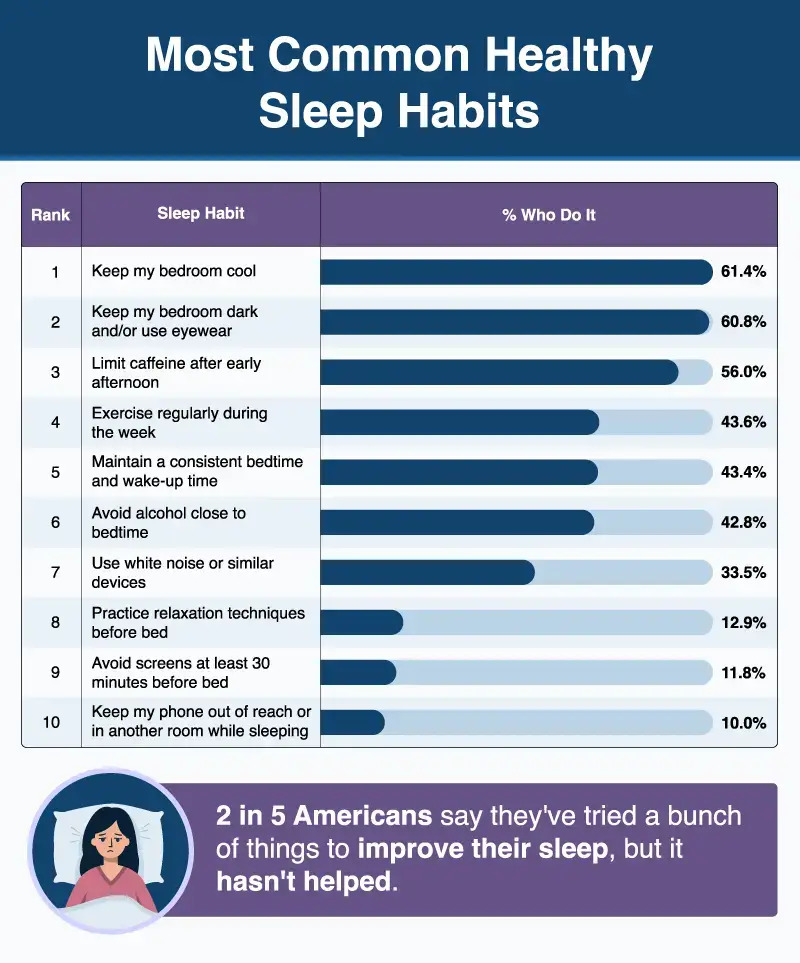
Overall, just half of those surveyed said they usually get enough sleep. About a third pointed to stress, worries, and daily responsibilities as reasons they struggle to fall asleep. Meanwhile, two in five said they’ve tried several ways to improve their sleep without success.
San Diego tops the list, and by a wide margin
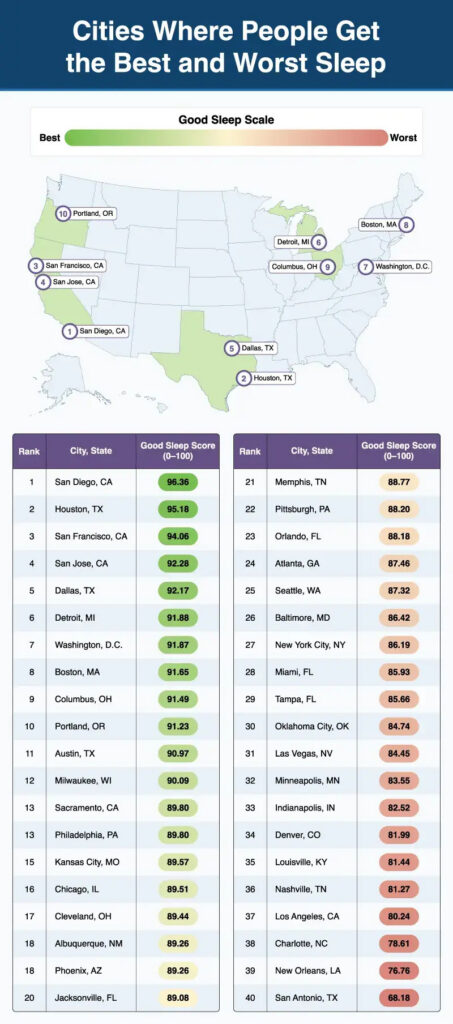
San Diego earned the highest sleep score in the survey at 96.36.
Almost one in four residents said they rarely use their phone before bed, a habit sleep experts have long recommended limiting. Light from screens in the evening can interfere with the body’s natural sleep-wake cycle and make it harder to fall asleep.
Houston came in second with a score of 95.18. More than half of residents surveyed (54.6%) said they sleep seven to nine hours a night, the amount generally recommended for adults.
San Francisco rounded out the top three with a score of 94.06. One-third of residents said they wake up feeling rested at least five days a week, suggesting that good sleep isn’t just an occasional occurrence for many people there.
San Antonio, New Orleans, and Charlotte are struggling
At the other end of the ranking is San Antonio.
Residents there were the most likely of all 40 cities surveyed to describe their sleep as “very bad.” They were also the least likely to report waking up feeling rested.
New Orleans ranked just ahead of San Antonio. More than half of residents surveyed (51.9%) said they’ve tried multiple strategies to sleep better without success – a sign that improving sleep isn’t always as simple as changing one nighttime habit.
Charlotte rounded out the bottom three. Nearly two in five residents said stress, worries, or responsibilities frequently keep them from falling asleep.
What separates better sleepers from everyone else?
The survey wasn’t designed to determine exactly why people in one city sleep better than those in another. But across the responses, several patterns emerged.
Sleep timing was one of them.
People who reported falling asleep between 10 and 11 p.m. and waking between 6 and 7 a.m. also reported the best sleep overall, suggesting that consistency and timing may matter alongside the number of hours spent in bed.
Our attachment to screens may be part of the problem, especially when work follows us into our most personal moments. A separate study by email deliverability company ZeroBounce found that roughly 80% of respondents check work email during at least one decidedly off-the-clock moment – including in bed, in the bathroom, on dates, at weddings and funerals, and even while driving.
That makes disconnecting before bedtime easier said than done. Still, some of the most common sleep-friendly habits reported in the SudokuBliss survey are refreshingly simple:
- 61.4% keep their bedroom cool.
- 60.8% keep the room dark or use an eye mask.
- Others avoid caffeine later in the day, exercise regularly, maintain consistent bedtimes and wake-up times, and avoid alcohol before bed.
These aren’t elaborate sleep hacks or expensive wellness trends. They’re small behaviors that can become harder than they sound when work, family, stress, and screens compete for those last hours of the day.
What if your city didn’t make the top of the list?
The findings offer a useful reminder: where you live may shape your surroundings, but many of the habits associated with better sleep can happen anywhere.
Start with your environment. A cooler, darker bedroom was among the most common habits reported in the survey. Cutting off caffeine earlier in the day and keeping a more consistent sleep schedule may also help.
Then there’s the issue that’s harder to solve with an eye mask or a thermostat: stress.
About a third of people surveyed said stress, worries, and responsibilities interfere with their ability to fall asleep. For them, the problem may begin long before their head hits the pillow.
Creating some distance between the day and bedtime can help. Reading a physical book, stretching, journaling, or doing a crossword instead of scrolling through a phone can create a gentler transition into sleep.
San Diego may have taken the top spot in this particular ranking, but perhaps the more useful finding is what showed up across cities.
Better sleep doesn’t necessarily require an elaborate routine. Sometimes, it starts with a few decidedly unglamorous habits – a dark room, a cooler temperature, less late-day caffeine, a consistent bedtime, and putting the phone away.
And those are habits you can try tonight, no matter what city you call home.
Methodology
The study surveyed 2,021 Americans across 40 U.S. cities, with about 50 respondents per city. The national findings have an estimated margin of error of ±2.2 percentage points at a 95% confidence level. Because city-level samples were smaller, the rankings are best viewed as broader indicators rather than precise differences between cities.