

By Terrell L. Strayhorn, PhD, MBA
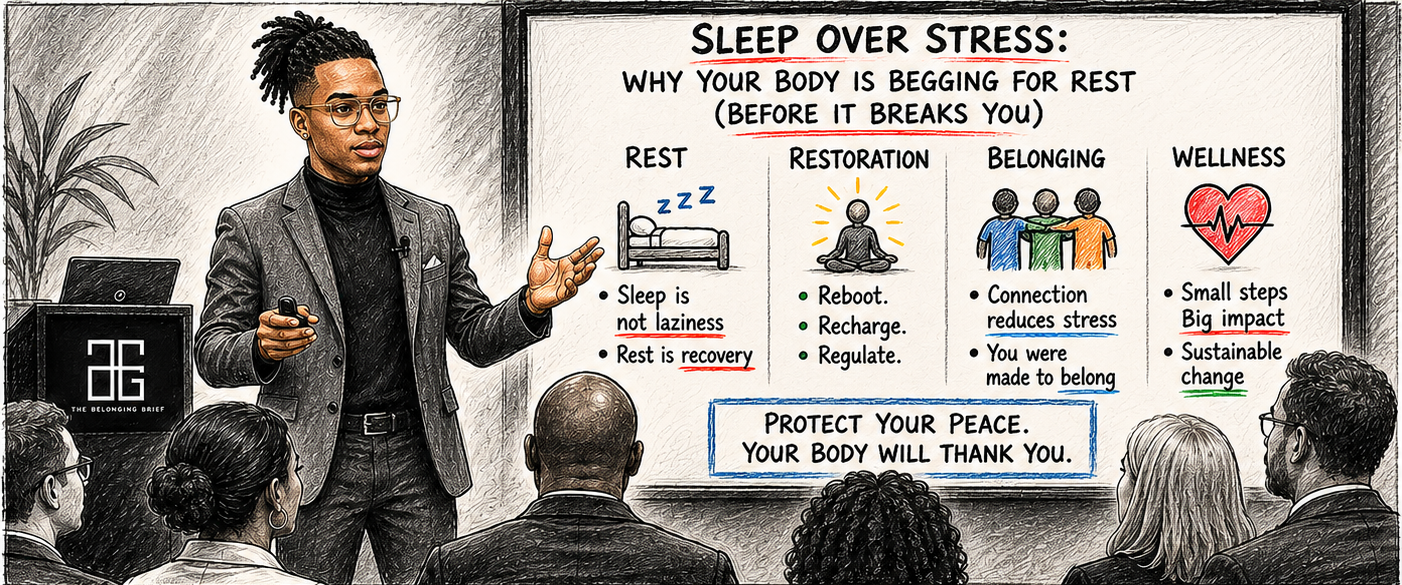
There’s a reason so many people are tired even after sleeping. Tiredness is not always about sleep deprivation. Sometimes it’s about emotional overload, chronic stress, nervous system exhaustion, and living in a world that rewards urgency more than restoration. Restoration matters because the body keeps score. And the body keeps score because the brain is always listening to the environments we create around ourselves, especially the environments we create inside ourselves.
People often think lasting wellness requires dramatic change. Going from ‘no gym’ to ‘2 hours daily’ overnight. Cutting carbs, sugars, sweets, and meats from our diet in a flash. Dramatic change sounds really exciting, but it rarely lasts. Lasting change usually begins with something smaller, quieter, and more sustainable. Sustainable change begins with micro-steps. Micro-steps matter because behavior change is less about intensity and more about consistency. Consistency shapes habits, and habits shape health outcomes gradually over time.
That truth becomes especially important when we think about sleep and stress management. Stress affects sleep. Sleep affects stress. And when both are compromised, the nervous system can start operating like a smoke alarm that never turns off. We become irritable, emotionally reactive, forgetful, disconnected, anxious, exhausted, and increasingly unable to regulate ourselves. Regulation matters because human flourishing is not just about surviving the day. It’s about having enough internal capacity to experience joy, connection, creativity, peace, and presence.
Neuroscience tells us that the brain and body are deeply connected. Connected systems require care. Care does not always mean expensive retreats, wellness products, or perfectly curated routines on social media (although, yes, they can help). Sometimes care looks like putting your phone down 30 minutes earlier at night. Earlier rest improves sleep quality. Better sleep quality improves emotional regulation. Better emotional regulation improves relationships, work performance, patience, and overall well-being, just to name a few.
This is where belonging enters the conversation. Belonging matters because stress is not only biological. Stress is also relational. Humans are wired for connection, and when people feel unseen, unsupported, or emotionally unsafe, the nervous system responds accordingly. Let’s be clear–loneliness and chronic disconnection can elevate cortisol levels, disrupt sleep, and increase vulnerability to anxiety and depression. Research continues to show that belonging is associated with positive psychological and health outcomes, including reduced stress and improved well-being. My work on the neuroscience of belonging further explains how connection influences the brain, behavior, and overall human functioning.
The challenge is that many people are trying to rest in environments that constantly stimulate stress. Stress stimulation is everywhere. Notifications. Doomscrolling. Financial pressure. Workplace uncertainty. Family obligations. Political tension. Social unrest. The expectation to always be available. Always being available teaches the brain that rest is unsafe or unproductive. Unsafe rest leads to shallow sleep. Shallow sleep leaves the body physiologically activated and “on alert” even while lying still in bed.
But this is where micro-steps become powerful. Powerful change often begins with permission. Permission allows people to stop viewing wellness as punishment and start seeing it as protection. Protection of the mind. Protection of the body. Protection of our peace. Protection of the relationships that help us thrive.

One of the greatest myths in wellness culture is that transformation must happen overnight. Overnight transformation sounds inspiring, but biology usually works slower than motivation. Motivation fades. Systems endure. Enduring systems are built through small, repeatable behaviors that gently retrain the nervous system toward safety, stability, and restoration.
For instance, one deep breath will not eliminate chronic stress. Chronic stress, however, can begin to loosen its grip through repeated moments of intentional breathing, mindfulness, movement, and sleep hygiene practices. Practices become rituals. Rituals become patterns. Patterns become lifestyles.
I have seen this in students, executives, faculty members, parents, coaching clients, and high-performing professionals who look successful on paper but privately feel emotionally depleted. Depletion often hides behind productivity. Productivity without recovery eventually becomes burnout. Burnout disconnects people from themselves and from others. And ‘others’ truly matter because healing rarely happens in isolation.
This is why the smallest wellness decisions can become revolutionary acts of self-preservation. Choosing to dim the lights before bed. Choosing to pause before reacting. Choosing to stretch for five minutes after a stressful meeting. Choosing to forgive rather than holding on. Choosing to text a trusted friend instead of carrying emotional weight alone. Aloneness is where stress grows loudest. Community is often where healing begins.
If you want better health outcomes, do not underestimate the power of micro-steps. Small actions repeated consistently can change brain patterns, emotional responses, and physical health over time. Not overnight, but over time. That’s the key phrase because wellness is not a finish line. Wellness is a practice.
Here are three micro-steps you can start today:
- Put your phone away 30 minutes before sleep. Blue light and constant stimulation keep the brain alert. Create a short “power down” routine that signals safety and rest to your nervous system.
- Practice one minute of intentional breathing twice daily. Slow breathing calms the body’s stress response. Try inhaling for four seconds, holding for four, and exhaling for six.
- Reach out to one person you trust each day. Connection is medicine. A short text, call, or meaningful conversation can reduce stress and reinforce your sense of belonging.
Sleep is not laziness. Rest is not weakness. And small steps are not small when they help you reclaim your peace, protect your health, and restore your humanity. Read this article…then, go rest. I’m rooting for you!