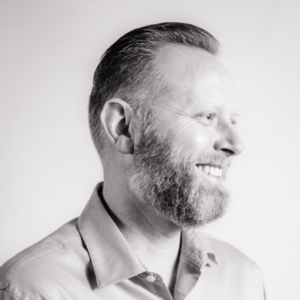

If you don’t love what you do, it doesn’t matter how much money you make. And you can’t do it alone; you need the right people behind you.
– Jason Turner
By the time a company hits 50 employees, the stressors have usually changed shape. Early-stage anxiety is often about survival—cash flow, product-market fit, whether anyone will buy what you’ve built. Later-stage pressure is quieter and more relentless: systems, hiring, quality, supply chain, culture drift, and the personal toll of being the person everyone looks to when something breaks.
Jason Turner—an electrical engineer and company co-founder—describes the arc many founders romanticize, but few fully prepare for: starting from scratch, scaling through operational complexity, building U.S.-based manufacturing, protecting innovation with patents, and then deciding to sell the company in 2025. His story isn’t a “how to get rich” narrative. It’s a close-up on how founders stretch themselves across years of uncertainty—and what it takes not to snap.
“Find a need, fill a need” isn’t a slogan—it’s a stress test
Turner traces the company’s origin to a practical problem, not a grand vision. In 2015–2016, he and his co-founder Ryan Schicone were working in hotel energy management—systems designed to dial down energy use when rooms are rented but not occupied. Hotels asked if they could integrate existing window coverings into those systems. That request exposed a gap: while automated window coverings existed, Turner and Schicone were surprised by how “behind the times” the underlying technology felt, especially compared to the internet-connected control systems they already knew.
The seed wasn’t “let’s disrupt an industry.” It was closer to: this should work better than it does. Turner describes it through a line he’d carried since seeing the film Robots: “Find a need, fill a need.” In practice, that mindset is less motivational than diagnostic. It forces founders to ask:
- Is the pain real and recurring—or just interesting?
- Does the solution require new behavior, or does it slot into what people already do?
- Will the market reward better engineering, or does it buy on habit, brand, and distribution?
In their case, the need was clear enough to justify building a motor and control approach that aligned with modern networked systems. The company started with engineering confidence—but quickly ran into the non-engineering realities that break teams.
Starting before you’re ready: the risk isn’t the leap, it’s the length of the fall
Turner is candid about the fear. He and Schicone left a Fortune 500 employer during a period of leadership change and shifting roles—work that “wasn’t as fun anymore.” They both had families. Turner’s mother asked the question many parents ask, because it’s the rational one: Why leave a good job?
They didn’t have “everything in place.” They had a product they believed in, and a bet that if it failed, they could find new jobs. They also found local investors who gave them runway—an early reminder that founder resilience is often a community project, not a solo trait.
There’s an important psychological nuance here. Starting isn’t simply an act of courage; it’s an act of information poverty. You don’t yet know which problems will be hard, which will be easy, and which will be hard in ways you can’t anticipate. Turner jokes about nearly getting into a fistfight over printing checks in QuickBooks—a small scene that captures something bigger: early-stage stress doesn’t only come from strategic decisions. It comes from “silly stuff” that suddenly matters because you’re responsible for all of it.
He also notes something many founders only admit in hindsight: if they had known how hard it would be, they might not have started. That’s not regret; it’s honesty about the endurance required. And it’s one reason founder burnout can look like a personal failing when it’s often a predictable outcome of chronic uncertainty plus responsibility without adequate recovery.
Scaling leadership: engineering confidence doesn’t translate to organizational health
As the company grew, Turner describes a shift that many technical founders face: realizing competence in the product doesn’t equal competence in the business.
“We’re not accountants,” he says plainly. Sales, pricing, distribution, hiring—these weren’t side quests. They were the work.
One pivotal change was strategic: moving from a regional operation selling directly to end users to becoming a brand with distribution and a dealer network. That transition demands a different pricing model, a different understanding of customer relationships, and a different leadership posture. You’re no longer the person selling a product; you’re building a system where others sell it, install it, support it, and represent it.
This is where founders often break—because scaling requires letting go of the parts of the business that once made you feel competent. It also requires admitting what Turner frames as a core leadership skill: recognizing weaknesses early enough to bring in people who are better than you.
COVID and the factory lesson: timing can be cruel, and that’s the point
PowerShades opened a factory and began manufacturing in February 2020. That date reads like a plot twist because it was. Supply chains didn’t just strain; they distorted.
Turner describes a founder’s version of insomnia: lying awake knowing payroll is due, while the world’s logistics system is collapsing in unpredictable places. Even “basic” inputs can become scarce—cardboard boxes, electronic components, raw materials. And the causes often sit far outside your control: consumer demand spikes, global shipping snarls, geopolitical shifts.
For founders, the psychological risk isn’t just volatility—it’s responsibility without causality. You are accountable for outcomes you didn’t create and can’t fully influence. That mismatch is a proven recipe for stress and, over time, burnout.
Turner’s response isn’t a heroic narrative. It’s pragmatic: keep learning, keep adapting, keep moving. “Drinking from a fire hose” is how he describes those years.
Unlearning the “nice” trap: fail fast, but don’t dehumanize it
One of the most instructive moments in Turner’s interview comes when he talks about “fail fast.” In founder culture, that phrase can become performative—an excuse to be reckless, or a badge of speed. Turner frames it differently: failing fast meant not waiting too long to fix misalignment, especially with people.
They hired individuals who were skilled on paper but struggled with interpersonal dynamics. Like many leaders, they delayed hard decisions, hoping coaching would solve what was actually a role fit or values fit problem.
His takeaway is both simple and difficult: the longer you keep the wrong person in the wrong seat, the more expensive it becomes—emotionally, culturally, operationally.
Failing fast, in this context, isn’t about churning people. It’s about respecting the team enough to protect the environment they work in—and respecting the individual enough not to keep them in a situation where they can’t succeed.
Culture that holds: flexibility as a performance strategy, not a perk
Asked what helped retention, Turner doesn’t lead with slogans. He talks about time, autonomy, and the reality that people do their best work on different rhythms.
Not everyone thrives 8 to 5. Some people are sharper later. Some do deep work better at home. Manufacturing roles require presence on the floor, but where flexibility is possible, Turner describes giving people “space”—with the clear expectation that work gets done, meetings happen, and availability exists when needed.
That approach aligns with what research has been showing for years: autonomy and control over one’s schedule can reduce stress and improve engagement, especially when paired with clarity and accountability. Flexibility isn’t a culture “nice-to-have.” It’s a resilience tool.
AI in the real world: acceleration—and new forms of risk
Turner’s view on AI is blunt: if you think it isn’t changing your industry, you’re “in denial.” He describes using AI to speed up development work and reduce the “housekeeping” burden—forecasting, trending, and accelerating tasks that used to take months.
But he also draws a boundary that many companies are still learning the hard way: innovation protection. In patent-driven environments, careless AI use can expose “secret sauce” or blur ownership and confidentiality. His point is not anti-AI; it’s pro-governance. Tools that increase speed also increase the cost of a sloppy process.
For founders, the meta-lesson is familiar: every new capability arrives with a new class of failure modes. You don’t avoid the tool; you build the guardrails.
The decision to sell: when resources become the bottleneck
Selling is often portrayed as an endpoint. Turner frames it as a capacity decision.
As the company grew, he and his team saw “so much more potential” than their existing resources could unlock. Competing with industry “900-pound gorillas” required purchasing power, supply chain leverage, and scale economics—like buying fabric directly from mills and ordering materials by the container rather than in smaller lots.
When they were approached by Springs, he says culture fit showed up early—people they liked and trusted, plus infrastructure they could plug into. The post-acquisition reality is not portrayed as easy. Integration is described as intense, with teams “wearing multiple hats” to merge systems. But the logic is clear: scale isn’t just about headcount. It’s about access to the machinery of scale—procurement, distribution strength, operational depth.
Redefining success: the quiet metric founders don’t talk about
When asked how success changed for him, Turner doesn’t deliver a clean quote for a motivational poster. He says he’s “still trying to figure that out.” That uncertainty is revealing—and useful. Founders are often taught to measure progress in milestones: revenue, growth, and exit. But those milestones don’t automatically translate into psychological closure.
The closest he comes to a definition is impact: seeing larger competitors begin to build versions of what his team pioneered (including a power-over-ethernet motor concept that hadn’t existed in the industry before). In other words, success is moving the field, not just winning a market.
What this story suggests about founder sustainability
Turner’s interview doesn’t offer a single hack. It offers a pattern:
- Start with a real need—but expect the need to evolve into operational complexity.
- Build trust deliberately—with co-founders, families, investors, and teams—because endurance is relational.
- Scale by replacing yourself—not in identity, but in function: hire expertise where you’re weak.
- Treat culture as infrastructure—flexibility, clarity, and fit are operational tools.
- Use technology with governance—AI can speed work; it can also leak value if boundaries aren’t real.
- Understand exits as capacity choices—sometimes “staying independent” is not the most sustainable path.
And threaded through all of it: the human cost of being the person who can’t fully clock out.
A grounded question for founders reading this
If your company doubled in size next year, what would break first: your systems—or your recovery?
Because the answer often predicts whether a founder scales with their health intact.