

By Amina Zamani
I met Dr. Jeff McNairy and knew almost instantly he was one of the sharpest minds I’d come across in a long time. We connected immediately over the science of change, the kind of shared language you don’t find often, and he’s someone woven into my world in a way I genuinely appreciate. When he walked me through the framework he’s built over decades of clinical work, I knew it was something I wanted to share. Most of us who are empathic have had this experience: picking up someone else’s emotional weight and mistaking it for our own.
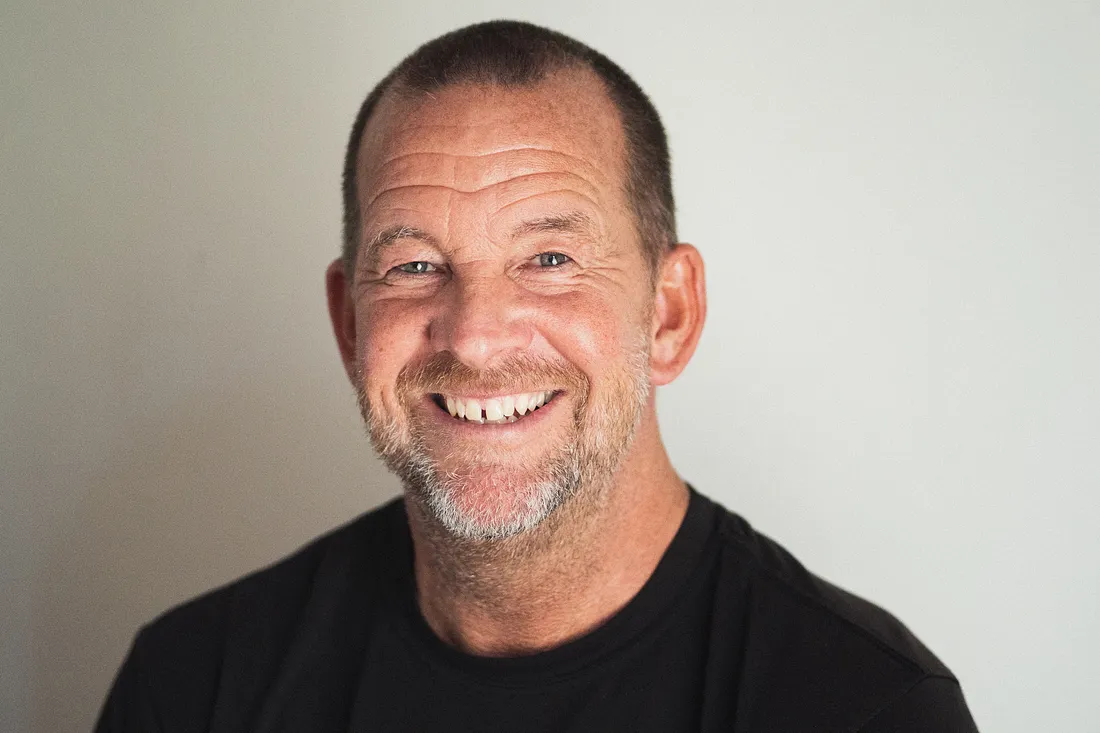
Dr. Jeff McNairy holds a doctorate in clinical psychology and a master’s in public health from UCLA. For more than thirty years he’s run clinical facilities and treatment programs, working at the intersection of trauma, behavior change, and the nervous system. But what sets him apart isn’t the credentials alone. It’s that the framework he’s become known for wasn’t handed to him in a textbook. He built it entirely from his own clinical observation, tested it for decades across thousands of clients, and only later found the neuroscience that backed up what his intuition had already told him.
That instinct for spotting what everyone else misses showed up early in his career. In his twenties, directing a reproductive health clinic, he noticed a vulnerable patient population wasn’t getting the trauma-informed care it needed, and with no track record to point to, he wrote and won a multi-year federal grant to build a prevention program from scratch. Later, running mental health services for native Hawaiian youth, he rebuilt the program around cultural identity and embodiment instead of a standard diagnostic checklist. The outcomes were strong enough to shape state policy. It’s the same instinct that eventually led him to the discovery he’s most known for today.
The Discovery
Jeff noticed the pattern first in himself. Growing up as the oldest of seven kids in a household stretched thin, he became the one who read every room before he said a word, the one who could sense tension shift before anyone spoke it out loud, the one who could calm a volatile situation just by walking into it. It wasn’t until years into his clinical career, watching the same trait show up again and again in his most high-functioning, high-achieving clients, that he realized what he’d actually been looking at: a survival adaptation, wired into the nervous system in childhood through what psychologists call the fawn response, not a personality quirk and not a diagnosis.
He calls it the Absorb-Project Divide, and it’s the foundation of everything he teaches. Some people offload their emotional discomfort onto everyone around them. Others absorb it, quietly, constantly, often without ever realizing they’re doing it. This is the hidden engine behind so much people-pleasing, codependency, and chronic emotional labor in high-achieving women, and it’s often mistaken for being a highly sensitive person when it’s actually a trained behavior, which means it can be retrained.
His core line, the one that anchors every talk he gives: “Empathy without boundaries becomes exhaustion.“
What makes this work land so powerfully isn’t just the clinical framing. It’s that Jeff treats intuition itself as a legitimate, trainable form of intelligence, not something separate from science but something science is only now catching up to. He often describes his own approach as half neuroscience, half instinct, a practice that sits right at the intersection of mindset work and nervous system regulation. It can sound almost esoteric on the surface, tuning into energy, reading what a room is holding, but underneath it is a rigorous, repeatable method that produces measurable shifts in how his clients function, lead, and relate.
The Neuroscience Behind It
None of this is just vibes. When we absorb someone else’s distress, the amygdala, the brain’s threat detector, fires as if the distress were our own, flooding the body with cortisol and pulling us out of clear thinking. The prefrontal cortex, the part of the brain responsible for reasoning and perspective, goes quiet exactly when we need it most. This is part of why chronically overfunctioning women often describe feeling foggy, reactive, or not like themselves after certain interactions. It isn’t a character flaw. It’s biology.
The encouraging part is what neuroplasticity tells us: the brain’s wiring isn’t fixed. The same circuits that learned to absorb everyone else’s emotional weight in childhood can be retrained in adulthood. Simple practices like affect labeling, naming a feeling as it arises, have been shown to calm amygdala activity and bring the prefrontal cortex back online. Add in the growing body of work on polyvagal theory and interoception, our internal sense of what’s happening in our own body, and a clear picture emerges: boundary-setting isn’t just an emotional skill, it’s a trainable neurological one.
The Framework: The 5-Point Reset
What follows is Jeff’s clinical framework combined with research and practices I’ve developed to help my clients, including a catchphrase I’ve used on network TV: name it to tame it.
- Check your baseline. Before engaging with anyone, ask yourself one simple question: how much do I have to give today? Some days you have a full tank. Some days you’re running on empty. Know which one it is before you walk into the room.
- Calibrate, don’t maximize. Not everyone needs the same amount of you. Giving everyone your maximum by default isn’t generosity, it’s a fast track to burnout.
- Name it to tame it. I’ve used this phrase for years, but Jeff expanded it into something different from how I’d used it before. My version was about naming what I feel. Jeff’s twist is naming what the other person might be feeling, out loud or just to yourself, before it becomes yours. That small act of naming calms the amygdala’s alarm response and brings the rational, choosing part of the brain back online. Instead of automatically absorbing what’s in the room, you pause, name it as theirs, and then choose whether to take it on at all.
- Set the boundary with yourself first. You can’t control what someone hands you energetically. You can control what you agree to carry.
- Let backlash be a good sign. People might not like it when you stop overfunctioning. That’s fine. You don’t need everyone to like you, you need to like yourself. If someone gets upset because you’re no longer carrying their emotional weight, don’t read that as proof you did something wrong. Read it as proof it’s working: they’re feeling the absence of a job you used to do for free.
Why This Matters Now
The wellness space is saturated with people talking about energy and intuition in vague, unfalsifiable terms. Jeff’s edge is that he can back the same lived, felt, intuitive experience with real clinical training, a doctorate-level understanding of the nervous system, and decades of outcome data across an enormous client base. He isn’t selling mysticism dressed up as science, or science stripped of all feeling. He’s fluent in both, and that fluency is exactly what makes his method so rare, and so effective for people who’ve tried everything else.
Why This Landed for Me
I’ve spent nearly two decades working with high performers who read a room before they’ve said a word. I’ve been that woman: the one everyone confided in, the one whose sensitivity made her excellent at her job and quietly ran her into the ground. This is the same territory I work in every day with my own clients, rewiring old belief patterns at the level of the nervous system, not just the mindset. What I appreciate most about Jeff’s work is that he never asks women to stop being perceptive or intuitive. He asks them to stop assuming that gift has to cost them everything.
If any part of this resonated, that’s usually the first sign it’s time to look closer. This is the exact territory I work in with my clients: belief rewiring, nervous system patterns, and the neuroscience of change. If you want to go deeper, reach out, and let me know which part of this hit home.
About Dr. Jeff McNairy
Dr. Jeff McNairy holds a doctorate in clinical psychology and a master’s in public health from UCLA. For more than thirty years, he has directed clinical facilities and treatment programs, working at the intersection of trauma, behavior change, and nervous system regulation. Early in his career, he secured a multi-year federal grant to build a reproductive health outreach program for an underserved population, and later developed culturally grounded mental health programming for native Hawaiian youth that went on to shape state policy. He is the creator of the Absorb-Project Divide framework.
Amina Zamani is a neuroplasticity specialist, executive coach, writer, and global speaker who helps individuals and organizations rewire limiting beliefs, unlock emotional resilience, and step into visionary leadership. She bridges neuroscience, soul, and systems thinking to catalyze both personal and generational transformation. Amina has worked with Fortune 500 executives, award-winning creatives, and founders across venture-backed startups. Her upcoming book explores the neuroscience and spirituality of money: how early emotional trauma shapes our financial behaviors, beliefs, and capacity to receive. She has been featured on CBS, USA Today, and Lifestyle Magazine, among others. Through her writing, media, and workshops, she champions a future where visibility becomes medicine and belief becomes biology.