

What if the problem is not stress, but how we recover from it? And what if we could meaningfully raise our well-being with tiny, doable moves that fit into real life?
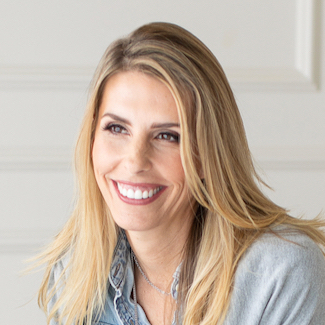
I recently sat down with Tal Ben-Shahar, New York Times bestselling author, founder of the Happiness Studies Academy, and one of the world’s most influential voices on human flourishing, to talk about happiness, stress, resilience, and his newest focus: MVIs, or minimum viable interventions.
Small changes can make a big difference when consistently applied.
—Tal Ben-Shahar
For the full interview, listen to our Evolving with Gratitude podcast episode. Also available on your favorite podcast platform.
Minimum Viable Interventions
Tal explained that MVIs are inspired by the business concept of an MVP, the minimum viable product, a beta version that’s good enough to be out in the world, even if not fully polished. He took this idea and applied it to personal development: minimum viable interventions are the smallest, shortest units of practice, supported by research, that help shift the needle toward greater well-being.
“If we introduce enough of these MVIs,” he said, “we can actually in a significant way shift the needle… make ourselves happier or healthier.”
Real-life examples he shared from his day:
- Thirty to forty-five seconds of high-intensity bouncing on a small trampoline, then back to work refreshed
- A quick set of push-ups
- Focus on the breath for three deep inhalations and exhalations
- Expressing gratitude for one minute, two minutes
- A hug
We will not always make it to a full workout or a long yoga class. MVIs give us accessible on-ramps that we can repeat with consistency, which is where the gains compound.
The S.P.I.R.E. Model
When Tal moved from studying happiness to teaching it, he built a definition that reflects what he learned from research and enduring wisdom traditions. Happiness, he says, is multi-dimensional and can be cultivated across S.P.I.R.E.:
- Spiritual well-being: meaning and presence, “present moment awareness,” which can come through religion or through mindful attention
- Physical well-being: movement, nutrition, sleep, and recovery, all of which support psychological health
- Intellectual well-being: curiosity and deep learning, the habit of asking questions, rereading, and truly engaging with ideas and art
- Relational well-being: time with people who care about us and whom we care about, kindness, giving, generosity
- Emotional well-being: embracing the full range of emotions and cultivating states like gratitude and joy
Where does gratitude belong? Tal teaches it under emotional well-being, and he also reminds us it threads through every part of S.P.I.R.E.: it deepens spirituality, strengthens relationships, supports learning through appreciation, and benefits physical health.
Stress is Not the Enemy
Tal is clear that stress itself is not the problem. He admitted that, like others, he once made the mistake of seeing stress as the enemy. The analogy that brings this idea home best is physical: when you go to the gym and stress your muscles, over time you actually grow stronger and healthier. If you put no stress on your muscles, the opposite happens, they grow weaker and atrophy.
In other words, “we need stress for survival, for surviving, and even more so for thriving.” Stress is not the problem, physiologically or psychologically. The problem begins when there is no recovery. Just as muscles grow in the in-between sets or days off, our growth and development happen in recovery.
Stress is not the problem, not physiologically nor psychologically. What’s the problem? The problem begins when we have no recovery.
—Tal Ben-Shahar
A healthy, happy, and successful life is one where there is stress, struggle, and difficulty, but also recovery. With that combination, Tal says, “that’s where we have growth, development, fulfillment of potential.” MVIs make that recovery and micro-rejuvenation more doable throughout the day.
Resilience 2.0
Tal builds on Nassim Taleb’s idea of antifragility as “resilience 2.0.” Resilience 1.0 is bouncing back to baseline. Antifragility is bouncing back higher, becoming “bigger, stronger, better” because of stressors. Our muscles do this. Our minds can, too.
Citing the work of Tedeschi and Calhoun, Tal explained that potentially twice as many people can experience post-traumatic growth (PTG) as post-traumatic stress disorder (PTSD) if certain conditions are in place. First, people need to know that growth is possible, so their realm of possibilities expands. If all they ever hear about is PTSD, it can become a self-fulfilling prophecy. In contrast, awareness of concepts such as PTG, antifragility, or resilience 2.0 opens up new internal conversations that make growth more likely. Second, it’s about knowing what actions increase that likelihood: expressing gratitude, seeking meaning, and leaning into relationships. In fact, each of the S.P.I.R.E. elements, individually and together, can contribute to growing through trauma.
We do not have to be passive recipients of hardship. We can cultivate what Tal calls “active optimism.”
Why This Matters Now
Tal’s current and upcoming work centers on turning evidence into everyday action. His most recent book, Happier, No Matter What, uses S.P.I.R.E. as a resilient, whole-life approach. His next book, Happy Habits, arrives December 2025 and brings MVIs to the forefront so we can “literally practice at any moment.”
If we want to thrive, we can start small and stay consistent. MVIs help us recover in the moments between the moments. S.P.I.R.E. reminds us that happiness is multi-dimensional and available through many doors. Together, they offer a humane way to grow stronger, even when life is hard.
In Bold Gratitude,
Lainie
Connect with and learn more from Tal Ben-Shahar
- Website: TalBenShahar.com
- Happiness Studies Academy: HappinessStudies.academy
- Books: Happier, No Matter What; Happy Habits (December 2025); and many more.
- Classes: TalBenShahar.com/classes
- LinkedIn: Tal Ben-Shahar