
There is a particular kind of exhaustion that comes not from eating too much or exercising too little, but from the relentless mental labor of managing rules. What you should eat. What you should not. When to push through a workout. When you have earned rest. For millions of people, that rule book has been running in the background for so long that they have completely lost the ability to hear their own body underneath it. The result is not discipline or health. It is disconnection.
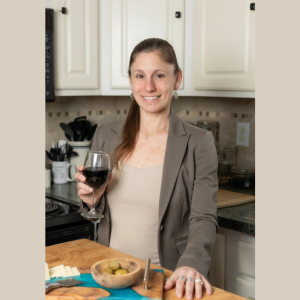
Dr. Theresa DeLorenzo, a registered dietitian (RD) with 25 years of clinical experience, a certified yoga therapist, and a 10-time marathon runner, has spent her career helping people find their way back. Through her private practice, she works with athletes, women navigating menopause, and individuals healing from body image disorders. Her approach, which she calls the Coalescence Method, brings together nutrition counseling and yoga therapy to restore something most of her clients did not even realize they had lost: the ability to trust themselves.
One Word Does More Damage Than Most People Realize
It starts, Dr. DeLorenzo says, with a single word. “Should.”
“The minute you think that, you have checked out,” she explains. “You’ve checked away from your body’s actual hunger cues.” The word “should” introduces a rule from outside the body, and the moment that happens, the conversation with the body stops. What follows is predictable: feelings of deprivation, a sense that certain foods are forbidden, and eventually the cycle that so many people know too well.
When a food is labeled off-limits, the body does not simply let the desire go. It intensifies. People white-knuckle through the week, arrive at a social event, and find themselves eating far more than they ever wanted to, followed by guilt, followed by a renewed commitment to restriction. The cycle repeats. Dr. DeLorenzo points out that this is not a failure of willpower. It is the body doing exactly what it is designed to do when it believes resources are being withheld.
Cravings Are Not the Enemy — They Are Information
One of the most practically useful things Dr. DeLorenzo offers is a reframe of what cravings actually are. Rather than signs of weakness or loss of control, she treats them as communication. “There are things in those foods that your body is actually looking for and seeking,” she says. A chocolate craving may signal a need for magnesium. A craving for cheese may be the body asking for calcium. An afternoon pull toward chips, in her own experience as a runner, often means sodium loss from a morning workout.
This is not permission to eat mindlessly. It is an invitation to pay attention. When someone can slow down, acknowledge what their body is asking for, and eat that food with full awareness, something unexpected tends to happen: satisfaction arrives sooner than they expected. The craving resolves. The compulsion to overeat disappears, not through restraint, but through presence.
“You have to taste it, savor it,” Dr. DeLorenzo says. “And you’ll be satisfied sooner than you think if you do that.”
The Hidden Cost of Living by the Rule Book
The physical consequences of chronic restriction are well documented, but Dr. DeLorenzo is equally attentive to the social and emotional toll that rarely gets discussed. When every meal is filtered through a mental checklist of allowed and forbidden, there is simply no room left to be present for anything else.
“You’re not there. You’re not present,” she says. “You lose that ability to be part of what life is.” She describes clients who cannot sit at a dinner table with friends without a running internal commentary about what they should or should not be eating. They are not part of the conversation. They are not enjoying the meal. They are managing, calculating, and bracing for the guilt that comes after.
She draws on her own history as a former gymnast who was told, at 14 years old, that she was too heavy to be spotted. “I counted how many strands of spaghetti I ate. I exercised for four hours a day. It’s so all-consuming. It’s isolating.” That experience is not a background color in her biography. It is the foundation of her clinical work and the reason she approaches her clients with the particular combination of expertise and lived understanding that defines her practice.
What the Coalescence Method Actually Does
The name itself is intentional. Coalescence means a merging, a coming together of things that have been separated. In Dr. DeLorenzo’s framework, what gets merged is the mind and the body — specifically, the rational, rule-following mind that has learned to override every signal the body sends, and the body itself, which has been trying to communicate all along.
Nutrition counseling alone can explain what the body needs. But Dr. DeLorenzo found that information alone was rarely enough. “Until you’ve practiced yoga therapy and have relaxed and used your breath to connect your mind and body, you’re going to be scared,” she says. The yoga therapy component of her method creates the physiological conditions in which that reconnection becomes possible.
In practice, a session begins with breath. “Take a deep breath and notice what happens in your body,” she says. “Your shoulders drop, your jaw drops, and you relax.” From that place of physical ease, she guides clients to identify a mantra, something personal and specific, and to stay connected to it throughout the session. The body, relaxed and undistracted, begins to surface what it actually needs. Hunger signals become audible. Tension reveals itself. The internal dialogue that has been buried under rules and noise gets a chance to be heard.
“Your body has messages for you, and we need to be open to receiving those messages.”
– Dr. Theresa DeLorenzo, RD
Why Yoga Therapy Is Not the Same as a Yoga Class
This distinction matters, and Dr. DeLorenzo is precise about it. A yoga class, even a good one, is a group experience with a set sequence and a shared pace. Yoga therapy is one-on-one, responsive, and built around where the individual is that day. “Where are you holding on to tension in your body?” she asks clients at the start of each session. That question alone, she points out, is already the work. It requires going inward. It requires noticing.
That skill, once developed in a yoga therapy session, transfers directly to eating. Clients learn to pause before a meal. To take a breath. To ask what the body actually wants right now, rather than consulting the plan. Over time, that pause becomes a habit. And the habit changes everything.
For athletes, the application extends to training decisions. Over-exercise raises cortisol, disrupts sleep, and compounds inflammation, creating a cycle that makes performance worse, not better. Dr. DeLorenzo works with runners and athletes to recognize when the body is asking for rest and to honor that request without fear. “Less can be more,” she says. “Your cortisol goes up, which is an inflammatory hormone. Now you put on more weight. Now you feel more inflamed. Now you hurt more, and it’s a vicious cycle.”
The Rewiring Takes Time, and That’s the Point
Perhaps the most important clinical reality Dr. DeLorenzo communicates to her clients is that this work is gradual by design. The neural pathways that support disordered thinking about food and movement were built over years, sometimes decades. They do not dissolve in a week.
“It takes rewiring your brain’s neurons,” she says, “to make sure that you’re doing it in a way that’s sustainable and at a pace that you’re comfortable with.” Her goal is not a dramatic reversal. It is a slow, consistent recalibration toward the middle, what she calls her guiding motto for clients: find the middle.
She offers clients direct access to her between sessions because the moments that require support are not always predictable. Standing in a grocery store aisle, trying to decide whether to buy a loaf of bread, can feel insurmountable for someone in early recovery from restriction. Dr. DeLorenzo meets that moment directly, not with a rule, but with a reminder: eat it mindfully, notice when you have had enough, and trust what you find.
Coming Home to Yourself
The outcome Dr. DeLorenzo describes in her most advanced clients is not a number on a scale or a perfected relationship with food. It is something quieter and more durable. “You’re actually like part of those things,” she says, describing clients who can now sit at dinner with their families and simply be there.
Not calculating. Not compensating. Not planning tomorrow’s restriction. Present.
One client, early in her work with Dr. DeLorenzo, was certain she could not eat two slices of cheese and stop. She was certain the bag of Hershey’s kisses would always empty itself. She was wrong, and discovering it changed her relationship not only with food but also with her own judgment. She went on to run her first marathon.
That is what becomes possible when the rule book goes down. Not chaos. Not loss of control. But a return to something that was always there: a body that knows what it needs and a self that is finally willing to listen.
Dr. Theresa DeLorenzo has spent 25 years teaching people that the answers were never in the rules. They were in the breath, the pause, and the willingness to hear what the body has been saying all along.