

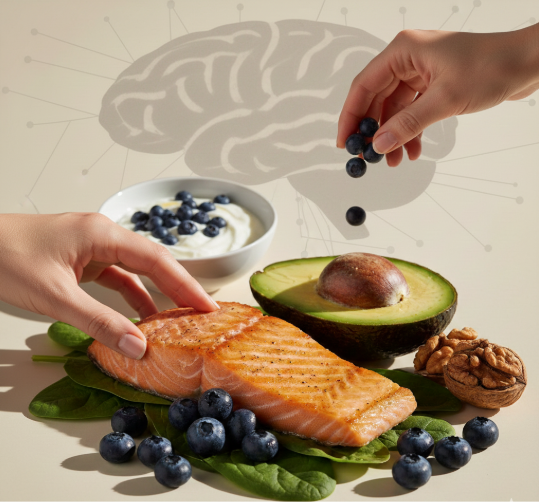
For years, I thought mental clarity was something you achieved through willpower, better time management, or more coffee. It took me a long time to realize that clarity isn’t just a mindset. It’s also a nutritional choice. The foods we eat influence our focus, our energy, and even our emotional steadiness. Once I understood that, my daily routine changed in small but meaningful ways.
Why Food Shapes the Way We Think and Feel
The brain is only two percent of our body weight, yet it uses about twenty percent of our energy. Every thought, decision, and moment of focus depends on a steady supply of the right nutrients. When the balance is off, we feel it. We get foggy, distracted, irritable, or mentally drained long before the day ends.
Science shows that even small dietary patterns can influence the brain’s ability to communicate, repair, and regulate itself. I learned this slowly by noticing how certain meals left me energized while others left me fuzzy and unfocused. It wasn’t about dieting. It was about paying attention.
The Eating Shift That Changed My Mindset
The first change I made was simple. I began treating food as part of my cognitive toolkit. Instead of waiting for my energy to dip, I started building meals that supported steady brain function. This meant fewer refined sugars, more whole foods, and snacks that kept my mood stable instead of spiking and crashing.
It also meant adding nutrients I had been unintentionally missing. One of the most helpful discoveries was the brain-boosting role of healthy fats.
Why Omega-3s Matter More Than We Realize
One of the most researched nutrients for brain health is Omega-3 fatty acids, especially DHA and EPA. But unfortunately, new research shows most of the world doesn’t get enough Omega-3.
These fats help support memory, mood stability, and overall cognitive function. I didn’t learn this from a medical manual; I noticed it after a few weeks of adding Omega-3-rich foods into my routine. My focus felt steadier. My thinking felt cleaner.
Instead of supplements, I started with simple, realistic food shifts:
- Including fatty fish like salmon once or twice a week
- Adding chia or flax seeds to breakfast
- Reaching for walnuts instead of sugary snacks
These weren’t big diet overhauls. They were small choices that gave my brain more of what it needed to feel clear and grounded. Over time, they became habits I barely needed to think about.
Small Shifts, Big Impact
The most surprising part of the journey wasn’t the science behind the foods. It was how little change was required to feel a difference. A slightly better breakfast. A smarter afternoon snack. More water. More fiber. Less urgency around “perfect” eating.
Mental clarity is not about perfection. It’s about consistency. And the more consistent I became, the more I noticed subtle improvements: fewer energy crashes, shorter moments of overwhelm, and a sense of focus that lasted longer than it used to.
A Microstep to Try This Week
Thrive Global is built around Microsteps, small, science-backed actions that create meaningful change. Here’s one that helped me:
Microstep:
Add one Omega-3-rich food to one meal this week.
It can be a spoonful of chia seeds, a handful of walnuts, or a serving of fish. Notice how you feel not just physically, but mentally.
What Happened When I Stopped Overthinking Food
Once I stopped searching for the “perfect diet” and started making small, intentional shifts, my relationship with eating became calmer. My energy felt more stable. My mind felt lighter. And I realized something important:
Supporting your brain isn’t complicated. It just requires paying attention to the foods that help you think clearly, stay grounded, and show up as your best self.
Mental clarity doesn’t start in the mind.
Often, it starts on the plate.