


“Food is meant to give us energy. It was never meant to drain our energy.”
— Shirley Billigmeier, creator of the Innergetics method
There is a moment Shirley Billigmeier remembers clearly from early in her marriage. She had finished a meal and watched her husband finish his, and then watched him simply stand up and walk back into his day, untroubled. She asked whether he was thinking about it, wondering about the next meal. He looked at her, genuinely puzzled, and said he had no reason to think about it. He had eaten. He was nourished. He was moving on.
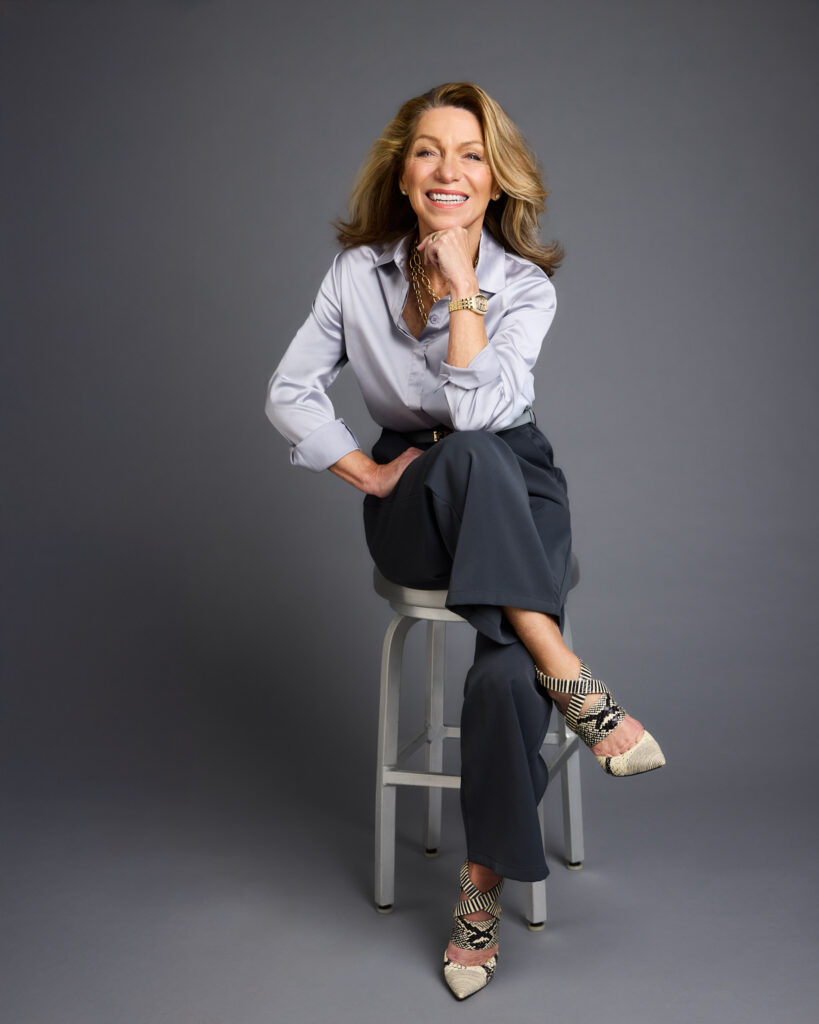
That small exchange became the first time Billigmeier, creator of the Innergetics method and a food-freedom specialist who has spent more than four decades helping people end food obsession, understood that the constant mental noise around food was not normal. It was, in her words, out of order.
Across a wide-ranging conversation with co-host Lisa Urbanski, Billigmeier laid out a way of thinking about eating that runs almost entirely against the grain of diet culture. She does not weigh her clients. She does not tell them what to eat. And she argues that much of what we have been taught about healthy eating is part of the problem rather than the solution.
Why “Healthy Choices” Can Quietly Make Things Worse
Billigmeier makes a claim that sounds almost contrarian at first: the phrase “healthy choices” is part of what keeps people stuck. Her reasoning is about ownership. When an outside authority decides that you should eat one thing and avoid another, the choice is no longer yours, and people begin using those external rules as a kind of fragile boundary. The trouble comes the moment you step outside the plan. Then, she says, the judgment and the guilt arrive, not because anything was actually wrong, but because you failed to follow what someone else defined as healthy for you.
Her phrase for this is memorable: “whoever owns the choice owns the power.” She points out that nutritional rules constantly shift and flip-flop, not because the research is wrong, but because different studies look at different groups of people, while each of us is born with over ten thousand taste buds entirely unique to us. The practical takeaway is to reclaim total and complete choice of all foods, so that you can want what feels genuinely good in your body rather than performing someone else’s definition of good.
Food Noise Is Information, Not an Enemy to Silence
The term “food noise” has entered the mainstream recently, and Billigmeier has a precise and somewhat surprising view of it. She does not want to bury food noise the way she does not want to bury hunger. Both, she says, are information coming up from within you. The noise reveals the beliefs and absorbed rules you are carrying. What she listens for is the point where that noise tips from useful information into obsession.
The dividing line is what she calls the eating occasion. While you are deciding what you want, eating it, and enjoying it, the chatter is simply part of your decision. But once you are no longer hungry and you stand up, a different kind of voice can start: I shouldn’t have eaten that, maybe I’ll eat less next time, maybe I did something wrong. That, she says, is the obsession, and it does nothing but drain energy that food was meant to give you. Her concrete tool is to put up a mental stop sign as you leave the eating occasion. When the second-guessing surfaces, you check it: I am no longer hungry, I am not deprived, and now I move into my life.
The Client Who Finally Came Home to Her Family
Some of the most affecting material in the interview came from a story about a college student in Austria. Before working with Billigmeier, this young woman could not relax in the evenings, and going home to visit family was consumed by thinking about food, worrying, overeating, and beating herself up. She loved her family, but the obsession kept her from actually being present with them. After their work together, the student texted Billigmeier following a weekend at home to say it was the first time she had ever truly been with her family, enjoying them without the food chatter and the hiding.
Billigmeier uses this story to illustrate her central frame: eating in order versus eating out of order. The point that matters for the reader is that food obsession does not stay contained to mealtimes. It quietly taxes relationships, presence, and ordinary joy. The thing to notice in your own life is not just what you eat, but what the thinking about food is costing you everywhere else.
How Eating “Out of Order” Drains the Color Out of Life
One of the most unexpected ideas Billigmeier shared is that using food to manage feelings actually flattens life. When you reach for a bite to smooth over boredom or a small dip in mood, the intensity of eating sits above the normal range of human experience, and over time, it dulls everything else by comparison. She described a client who eventually said her life felt gray, because the small lifts from eating had become the only thing bringing color to it.
What happened as that client put eating back in order is the part worth holding onto. She began to actually feel the lows, trusting that her own thoughts and actions could move her through them, and she could feel real joy again. Life regained its color. The connection to broader understanding is simple and humane: the belief that life should always feel intensely great is, as Billigmeier puts it, a false belief. Letting yourself feel the ordinary range of a day, without reaching for a lift, is what lets the genuine highs register again.
You Don’t Have to Love Your Body. You Have to Listen to It.
Billigmeier offers relief to anyone who has heard “love your body” and felt like a failure for not managing it. She distinguishes between your body and what she calls storage, which she describes as stored information, the residue of eating when you weren’t hungry. You are meant to love your soul, your existence, your being, she says, not your storage. For one client who had always resisted the love-your-body directive, this distinction was an enormous relief.
Rather than fixating on size and weight, which she says people cannot change in the moment and which only produces a stuck, uncomfortable feeling, she puts those thoughts on the shelf and works with the hunger scale instead. Her logic is plain: when you eat in response to genuine hunger and stop when you are satisfied, the rest tends to follow. The action for the reader is to move attention away from the mirror and the scale and toward the quieter question of whether you are actually hungry.
The Wisdom We Were Born Knowing
What stays with you after listening is how much trust the whole approach asks you to rebuild, not in a new plan, but in yourself. Billigmeier keeps returning to the image of an infant who knows exactly when to start eating, when to stop, and whether they like the taste, gifts she believes we were all given at birth and simply stopped listening to. The one thought worth carrying is hers: once you know you are no longer hungry, stand up and move into your life. The work, and the freedom, is in what you do next. As Shirley Billigmeier reminds us, the goal was never another set of rules. It was the quiet return of your own wisdom.Shirley Billigmeier reminds us, the goal was never another set of rules. It was the quiet return of your own wisdom.
This article describes one practitioner’s approach and is meant for general education, not as a substitute for professional care. If your relationship with food, eating, or your body feels distressing, support is available. In the U.S., you can reach the National Alliance for Eating Disorders helpline at 1-866-662-1235 to speak with a licensed therapist, or find international resources through Eating Disorders Families Australia and Beat in the UK.