
There is a particular kind of employee that keeps leaders up at night — not because of poor performance, but because of exceptional performance. This person hits every target. Management praises them. They are protected, promoted, and given room that no one else gets. Meanwhile, the people around them are quietly suffering, losing trust in their leaders, and updating their resumes. By the time someone pays attention to the damage, it has already spread through the entire organization like a weed growing through concrete.
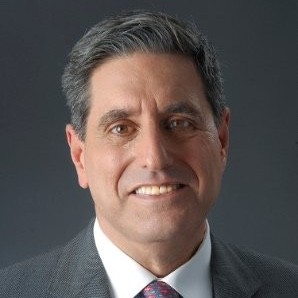
David S. Cohen, founder of DS Cohen and Associates and author of Selecting the Best, has spent decades helping organizations understand why this pattern keeps repeating — and what it costs when leaders mistake results for character. Cohen’s work sits at the intersection of organizational behavior, values alignment, and hiring strategy, and his framework for identifying what he calls “viruses” inside an organization is one of the most practical tools available to leaders who want to build cultures that actually last.
Why Confidence in an Interview Is Not the Same as Competence on the Job
The problem, according to Cohen, begins long before a toxic high performer ever gets the chance to damage a team. It begins at the hiring table. Cohen describes a distinction that most organizations miss entirely: the difference between what someone can do and what someone will do.
“Can do is only can do,” Cohen explains. “It doesn’t mean I can do it, but will I choose to do it is really what we should be looking for.”
Psychometric assessments, polished resumes, and confident interview performances all capture what Cohen calls a snapshot — a still image of a person at a single moment in time. But a snapshot does not tell you how that person behaves when no one is watching, when they disagree with a colleague, or when they are under pressure. Cohen uses the analogy of a camera versus a film reel. A photograph captures what someone looks like. A motion picture shows you what they actually do, across time, across situations, across relationships.
Most interviewers are watching the photograph. Cohen trains people to watch the film. That means asking behavioral questions that require candidates to describe specific past actions — not outcomes, but the moment-by-moment behaviors that produced those outcomes. When someone keeps circling back to results and resists describing the process, that resistance is itself information. Cohen recalls one candidate who threatened to walk out of the interview when pressed to go beyond outcomes. That candidate got two job offers and lost one of them within six months.
The Two-by-Two Grid That Every Leader Needs to Understand
Cohen uses a straightforward framework to categorize the people inside any organization. On one axis, behaviors. On the other, results. The quadrant where someone lands tells you everything about what to do next.
Those who are high on both behaviors and results are what Cohen calls heroes. They are the people you build around. Those who are low on both are what he calls deadwood, and the path forward there is obvious. The more complicated cases sit in the other two quadrants.
People who are high on behaviors but low on results are what Cohen calls Bambi. They live the values. Everyone respects them. They are not yet delivering the numbers. Cohen’s advice is to reskill them, redirect them, and find the role where their knowledge and character can produce results. Letting these people go sends a devastating message to the rest of the organization: living the values will not protect your job. That message, once sent, is very hard to walk back.
Then there is the bottom right quadrant: high results, low behaviors. Cohen calls these people viruses. “Like a virus, every time you reward them, you send the message to everybody else in the organization that this is the right behavior. Getting results counts more than doing the right thing. Our values are wall decor.”
This is the quadrant where the most damage happens, and it is the one most organizations consistently fail to address.
What Happens to an Organization When the Rules Apply to Everyone Except One Person
The Gallup organization recently published research suggesting that organizations in the United States are losing two trillion dollars a year based on bad employee experiences. Cohen points directly at the virus condition as a core driver of that number. When one person is allowed to operate by different rules, something specific and measurable happens to the people around them.
“You lose respect for the leader,” Cohen says, “but you have a confident trust that they’ll always behave differently to people that get the results they want.”
That distinction matters. Trust and respect are not the same thing, and organizations need both to function. When employees can predict that their leader will protect certain people regardless of behavior, they develop a cynical kind of trust — they trust that the system is unfair, and they adjust accordingly. Some disengage. Some go on sick leave. Some quietly start looking for other jobs. Cohen recalls working with one organization where a marketing manager was behaving in ways that were genuinely abusive, particularly toward female staff members. Cohen advised the CEO not to roll out the company values publicly until the situation was addressed, because values that are not lived by everyone become a lie. When the CEO finally let the marketing manager go, two top performers came forward and said they had been days away from accepting offers at competitors. The virus had nearly taken the talent with it.
The financial cost of replacing a single employee is commonly underestimated. Organizations often cite 25 or 30 percent of that person’s salary. Cohen pushes back on that math. “It’s what has been the morale, how much when people, that seat was empty, you overworked other people, they had to do more with less and you caused them stress.” Add in severance, recruitment fees, onboarding time, and the emotional cost to the team, and the real number climbs much higher than any spreadsheet reflects.
“If you have the courage to do the right thing, the results turn out to be a lot better because people are looking for you to do the right thing — and not having the courage to do the right thing causes people to have a bad experience.”
David S. Cohen, Founder, DS Cohen and Associates
Why Rewarding a Virus Teaches Everyone Else the Wrong Lesson
Behavior, Cohen explains, is a function of its consequences. This is not a philosophical observation. It is a practical description of how organizational culture actually works. When a toxic high performer receives recognition, promotion, or simply the absence of accountability, the organization has issued a ruling. Whether leadership intends it or not, the message received by everyone watching is that this behavior works.
“What you have done by celebrating this person’s victories and not paying attention to the behaviors — you have rewarded this person so they feel without reservation that their behaviors are successful,” Cohen says. “So the consequence of you giving this person recognition, letting them stay on the job, whatever, promoting them to a new position, you’re reinforcing that their behavior is acceptable.”
Changing that pattern requires changing the consequences, not just the rhetoric. Values statements posted on a wall or included in an employee handbook are not values in any meaningful sense until decisions are made in alignment with them. Cohen makes this point with unusual directness, describing one CEO who called company values “aspirational” and said he did not really care how his top executive behaved as long as the results kept coming. Cohen told him the values were no longer aspirational the moment they were published. They were a promise. “Once you put them out there, you’ve got to live them. It’s a promise you’re making to your employees about how you expect to be treated.”
That CEO ended the engagement. Within three months, key HR staff left. Middle managers who had been holding the organization together started walking out. The results the CEO was protecting cost him far more than they were worth.
The SBOT Framework: A Better Way to Interview for Behavior
For leaders who want to avoid hiring viruses in the first place, Cohen offers a specific and practical method. He calls it SBOT: Situation, Behavior, Outcome, Timeframe.
Most interviews, Cohen observes, are too focused on outcome. Candidates are asked what they accomplished. They answer with results. The interview confirms what a resume already said, and the hiring manager walks away impressed without having learned anything about how the candidate actually operates with other people.
SBOT changes the frame. The hiring manager asks the candidate to describe a specific situation, then drills into the exact behaviors used in that situation, then explores the outcome, and finally establishes when all of this happened. That last element, timeframe, is something Cohen emphasizes that most people overlook entirely. If a candidate’s example of great team behavior happened ten years ago and has not appeared in any context since, the likelihood of that behavior recurring is low.
“If the behavior happened over two years ago, less likely it’s going to happen now,” Cohen says. “So what was the situation? What was the behavior? What was the outcome? What was the timeframe? SBOT.”
The goal is not to trick candidates or to be adversarial. It is to replace the confidence and polish of a well-rehearsed interview performance with actual evidence of how someone behaves across real situations over time. A candidate who can only talk about outcomes and resists questions about process is showing you something important, even if the resume is impressive.
Getting It Right the First Time Is Always Cheaper Than Fixing It Later
Cohen closes with something that functions as the organizing principle behind all of his work. Organizations that are focused on 90-day results, on quarterly performance, on protecting whoever is delivering the numbers right now, are making a trade that they do not always recognize as a trade. They are exchanging long-term organizational health for short-term metrics. And the bill arrives eventually.
Companies that endure, Cohen points out, are built on behavioral alignment that holds across decades. He references European institutions that have lasted for hundreds of years not because they chased short-term performance at any cost, but because they built and maintained alignment between their stated values and how decisions were actually made. “Those organizations look at long-term results, but also are very, very strict about looking at the behavioral alignment to the values of the organization because they know that that alignment to the organization’s values will cause good long-term employees which have long-term results.”
For leaders who have already created a culture where a toxic high performer has been protected, Cohen does not say the situation is hopeless. His first recommendation is coaching. Many people who behave destructively in the workplace have never been clearly told that their behavior is a problem, because their results have always rescued them. Change the consequences and give the person a genuine opportunity to adjust. If the behavior continues, the conversation becomes clearer.
What Cohen returns to, again and again, is the cost of not acting. Not firing the virus is not a neutral decision. It is an active choice with active consequences, and those consequences compound. David S. Cohen has seen it happen too many times across too many organizations to mistake it for anything other than what it is: a short-term protection that becomes a long-term disaster.