
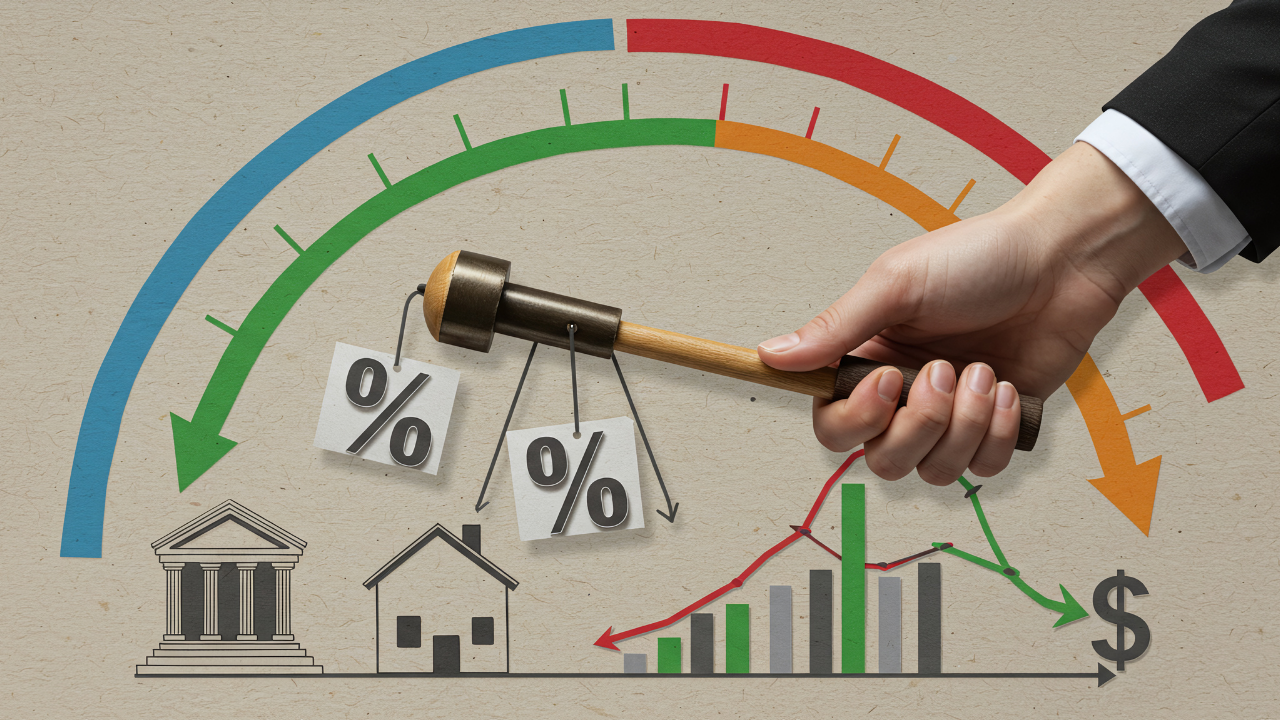
Waiting for the ‘perfect’ interest rate usually means missing the best buying conditions.
– Adiel Gorel
Rising interest rates have become one of the most talked-about financial concerns of the moment. Headlines warn of affordability crises, social media amplifies fear, and many potential buyers feel frozen—convinced they’ve “missed the window” to build wealth through real estate.
But when viewed through a longer-term lens, interest rates may not be the villain they’re made out to be. In fact, they may be distracting many people from one of the most powerful wealth-building tools quietly available: the long-term fixed-rate mortgage—and the way inflation reshapes its impact over time.
Drawing from decades of experience, real estate investor and educator Adiel Gorel offers a calm, practical perspective that cuts through the noise and reframes how people think about borrowing, timing, and patience.
The Overlooked Power of Fixed-Rate Loans
One of the most underappreciated financial advantages in the United States is the long-term fixed-rate mortgage, particularly the 30-year fixed loan. While most people understand it exists, far fewer understand what it actually does over time.
With a fixed-rate loan, the monthly payment never changes—even as inflation steadily raises prices, wages, and rents across the economy. Over the years, this creates a quiet but powerful shift: the real burden of the loan shrinks while the asset it finances often grows in value.
Rather than fighting inflation, borrowers with fixed-rate loans often benefit from it. As purchasing power changes, the loan stays exactly the same.
Why Inflation Changes the Math
Inflation is usually framed as a threat, but in the context of fixed-rate debt, it can work in the borrower’s favor. As the value of money erodes, future loan payments become easier to manage relative to income and asset values.
This effect doesn’t require waiting decades. In many cases, within 12 to 14 years, a fixed-rate loan begins to feel surprisingly small compared to the value of the property and the income it generates. Over time, this dynamic creates flexibility—whether through refinancing, selling selectively, or paying off remaining balances.
Why Today’s Rates Feel Scarier Than They Are
Much of the fear around current interest rates comes from short memory. Rates today feel high only when compared to the unusually low-rate period during the COVID era. Historically, however, rates around 6 percent are far from extreme.
In the 1980s, interest rates reached the mid-teens, and wealth was still built. What mattered then, and still matters now, is not achieving the lowest possible rate, but locking in a fixed rate and allowing time to do its work.
Media narratives tend to focus on short-term comparisons and emotional reactions, rather than long-term cycles. But cycles are exactly where opportunity often appears.
What Changes When Rates Rise
When interest rates increase, demand often cools—and that shift can benefit buyers. Competition eases, inventory improves, and sellers and builders become more flexible.
In calmer markets, incentives return. Builders may offer price adjustments or interest rate buy-downs that lower the effective cost of borrowing. Buyers gain negotiating power, more choice, and less pressure to rush into decisions.
Ironically, when rates eventually fall again, demand often surges, competition intensifies, and prices rise quickly—making it harder, not easier, to buy.
Why Waiting for “Perfect” Conditions Can Be Costly
Many people believe they should wait until rates drop before acting. But when rates fall, markets often heat up overnight. Buyers flood back in, headlines turn optimistic, and the window for thoughtful, patient investing narrows.
A more durable strategy is understanding cycles: buying when conditions are quieter, locking in a fixed loan, and refinancing later if rates improve. Time, not timing perfection, tends to create the greatest advantage.
The Role of Flexibility in Long-Term Loans
Longer-term loans, such as 30-year fixed mortgages, offer something many people underestimate: options. A borrower can always choose to pay extra and shorten the effective life of the loan, but they cannot extend a shorter loan if life becomes unpredictable.
This flexibility lowers pressure during slower periods while preserving the ability to accelerate payoff later. Over decades of ownership, that optionality can make a significant difference in both financial stability and peace of mind.
Rethinking Debt Through a Long-Term Lens
Not all debt is the same. Consumer debt tied to depreciating items behaves very differently from fixed-rate mortgage debt on quality real estate.
When used strategically, mortgage debt can become a tool rather than a burden—especially when inflation, time, and asset appreciation work together. The goal is not avoiding all debt, but understanding which types of debt support long-term stability and growth.
Why Early Cash Flow Isn’t the Whole Story
Many investors worry about thin or slightly negative cash flow in the early years. While cash flow matters, it is not the only metric that defines success.
As rents rise and fixed payments stay the same, cash flow often improves naturally. Over time, the combination of rising income and shrinking real debt burden can dramatically change the financial picture. Those who wait for perfect numbers at the start often miss the compounding effect of time.
A Different Way to View the Market
The most important takeaway is not about rates themselves, but about perspective. Markets move in cycles. Fear tends to peak near opportunity, while optimism often arrives after prices have already risen.
Understanding long-term fixed-rate loans, inflation, and patience allows people to step out of reaction mode and into strategic thinking. Wealth is rarely built by waiting for certainty—it’s built by understanding structure, time, and discipline.