
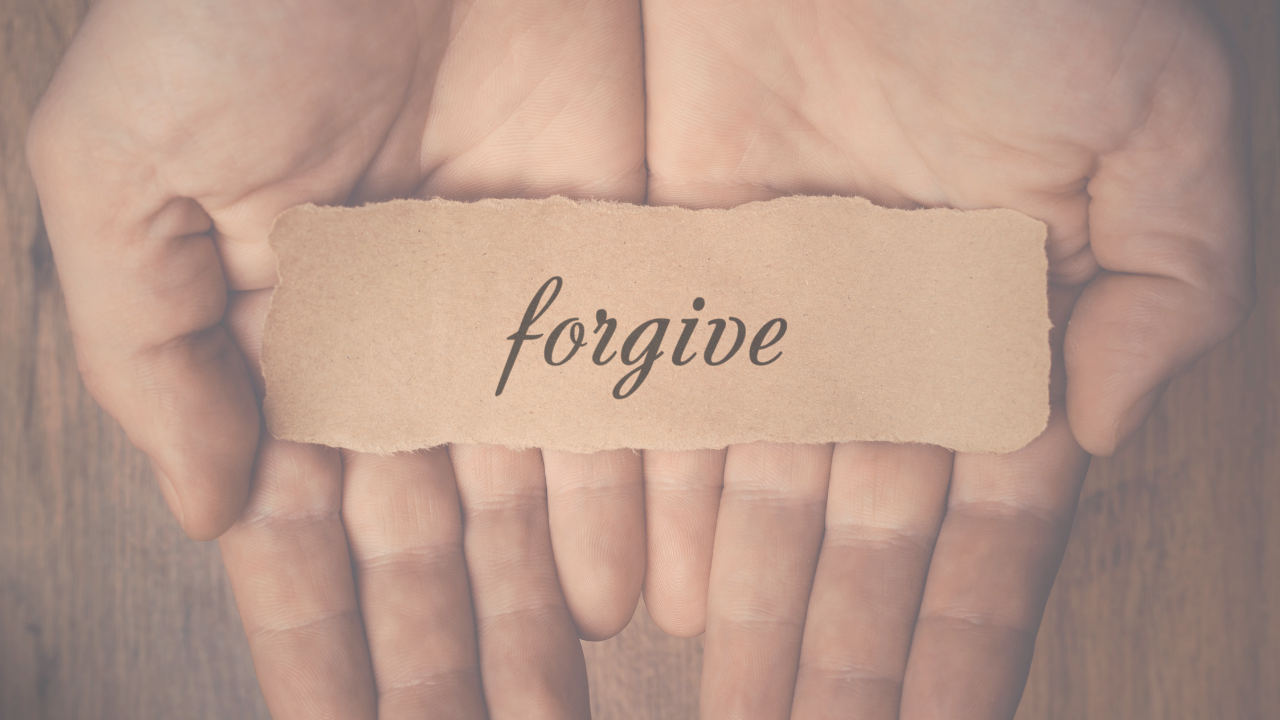
“Forgiveness isn’t about excusing what happened—it’s about freeing yourself from carrying pain that was never meant to be yours.”
Forgiveness is often misunderstood as something we do for other people. In reality, it is one of the most powerful tools we have for reclaiming our own peace.
When resentment, anger, or unresolved pain linger, they don’t stay neatly contained in the past. They quietly program the subconscious mind, shaping how we react, how we relate, and how much emotional freedom we allow ourselves to experience. Over time, these internal programs can become so automatic that we mistake them for personality traits rather than learned responses.
Forgiveness interrupts that cycle—not as a one-time gesture, but as a repeatable practice that restores choice.
Forgiveness Is Not Weakness — It’s Strength
Many people resist forgiveness because they believe it excuses harm or minimizes what happened. In truth, forgiveness is not approval. It is release.
Letting go does not mean forgetting, reconciling, or removing boundaries. It means choosing not to let the past continue to dictate your emotional state in the present. Forgiveness is an act of self-respect: reclaiming the energy that resentment quietly consumes.
When forgiveness is framed this way, it becomes clear why it is so powerful—and why it often feels difficult at first.
How Emotional Pain Programs the Subconscious
When painful experiences occur during emotionally charged moments, the subconscious mind stores them as protection mechanisms. A belief such as “This was unforgivable” can lock the nervous system into a constant state of alert.
Long after the event has passed, the body may still react—tightness in the chest, tension in the stomach, irritation at a name or memory—because the mind believes it is keeping you safe. Logic alone cannot override these reactions. The body remembers what the mind is trying to forget.
Forgiveness works because it rewrites how these memories are stored, gradually reducing their emotional charge.
Why Forgiveness Often Requires Repetition
For deeper wounds, forgiveness is rarely a single decision. It is a process.
Each time forgiveness is consciously practiced, the emotional response weakens slightly. Over time, the body no longer reacts in the same way. This repetition retrains the nervous system, teaching it that the threat has passed and the burden can be released.
This is not failure—it is how healing actually works.
Start Small to Build the Habit
Forgiveness becomes sustainable when it starts small.
Forgiving minor irritations—someone cutting you off in traffic, a rude comment, a misunderstanding—trains the mind to default to peace rather than reaction. As this pattern strengthens, larger emotional wounds become less overwhelming.
Forgiveness stops being something you brace for and becomes something you practice naturally.
Forgiveness and Boundaries Work Together
Forgiveness frees you from the past. Boundaries protect you moving forward.
You can forgive someone fully and still choose not to give them access to your life. That decision is not punishment—it is clarity. Emotional freedom requires both compassion and self-respect.
When forgiveness is paired with boundaries, peace becomes sustainable rather than fragile.
Why Anger Feels So Heavy
Anger directed outward is still experienced inwardly. The body does not distinguish between attacking another person and attacking yourself.
This is why prolonged anger creates physical tension, emotional exhaustion, and mental fog. The system was never designed to carry that weight long-term. Forgiveness releases the load the body no longer wants to hold.
From Reaction to Awareness
Most emotional suffering comes from involuntary reactions—responses that happen before awareness arrives. A trigger appears, and suddenly the body is flooded with anger, defensiveness, or overwhelm.
Forgiveness increases awareness. It brings unconscious reactions into consciousness, creating a pause where choice becomes possible. That pause is where freedom lives.
Self-Forgiveness: The Quiet Turning Point
For many people, self-forgiveness is harder than forgiving others. We often extend compassion outward more easily than inward, holding ourselves to impossible standards long after they no longer serve us.
When forgiveness becomes a lifestyle, self-forgiveness eventually follows. The mind begins to question why it is still attacking itself when compassion has become the default.
Persistent frustration, unexplained irritability, and constant self-criticism are often signs of unresolved self-resentment waiting to be released.
Forgiveness as a Daily Practice
Forgiveness does not require grand gestures. It requires consistency.
Simple moments—choosing not to react, releasing irritation quickly, noticing emotional shifts without judgment—build emotional strength over time. This is the real “forgiveness flex”: the ability to stay grounded, open, and free regardless of what arises.
When forgiveness becomes automatic, peace stops being conditional.
The Freedom on the Other Side
People who practice forgiveness consistently often describe similar shifts:
- fewer emotional triggers
- clearer thinking
- stronger boundaries
- less dependence on external validation
- a deeper sense of calm and self-trust
Forgiveness does not erase the past. It changes your relationship to it.
And that change is where peace, power, and emotional freedom begin.