

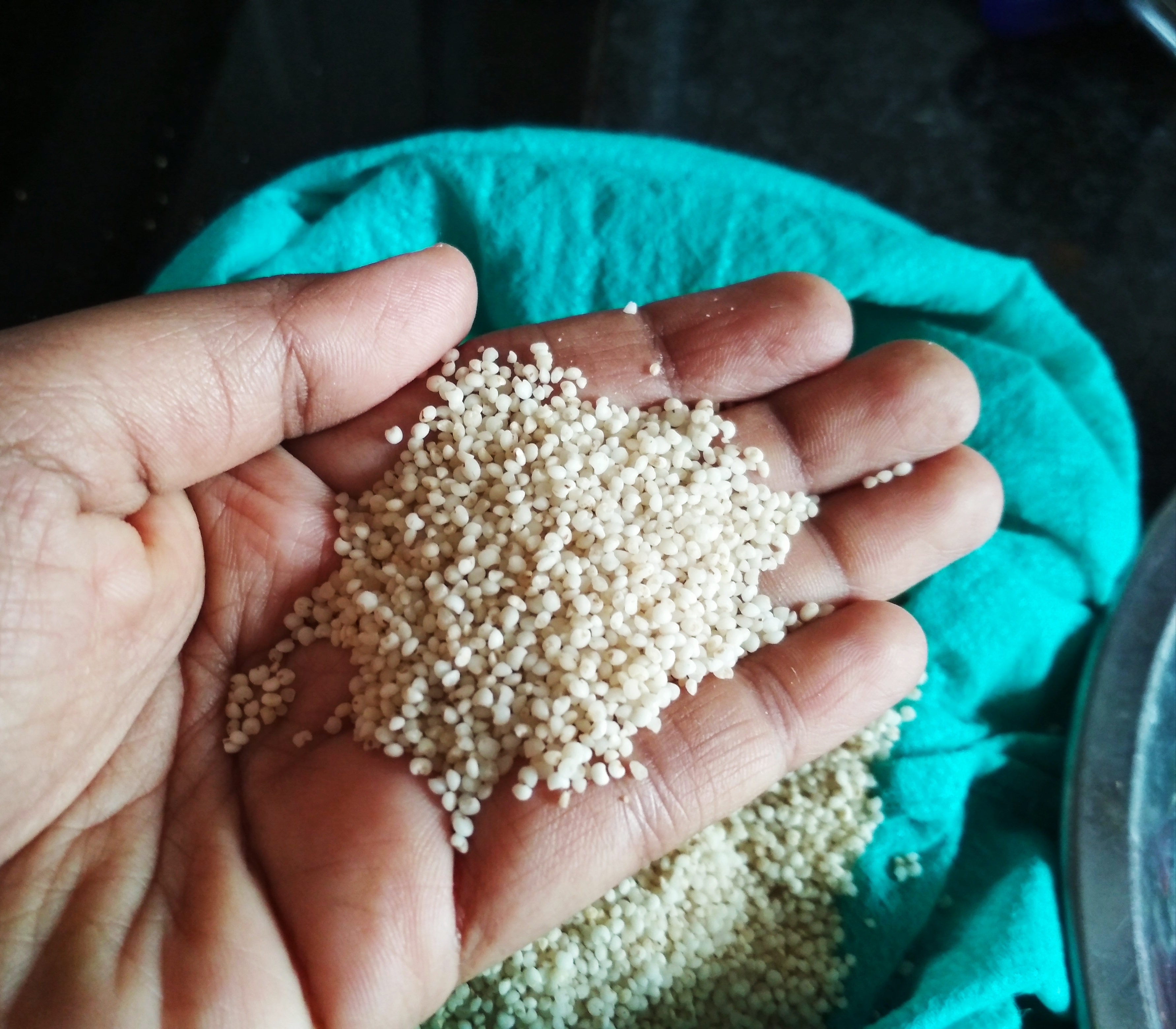
Millets are the most oldest crops grown in India, however they are less consumed with no knowledge about its nutritional benefits. With our culture adapting to most western countries and food being one of them, we fail to look back into how rich our land crops can benefit us.
If you’re into healthy eating and include quinoa and other fad food, you might probably want to reconsider it. You might be spending around Rs.1000 to buy a kilogram of the nutritious grains like Quinoa, but do you know that the millets cost less than Rs.100 a kilogram and are almost as nutritious as the Western import?
Must be wondering why so much hype all of a sudden for Millets?
The millet-growing communities of India, who form the poorest 60% of the Indian population need to be strengthened and acknowledged. We need to encourage consumption of the crops grown in our land for the fact that it is less expensive, affordable, highly nutritious and doing our bit by buying from our farmers and increasing their economic status. Their right to nutritious food, sustainable livelihoods, dignity, health and cultural heritage needs to be ensured.
In the hope of becoming fit, we start consuming whatever ‘super-food’ is trending in the West (wheat-grass, quinoa, broccoli etc), ready to spend a bomb, and indifferent to the goodness of our own food. The reason for this is lack of awareness about the nutritional benefits, the not-so-sumptuous taste and the tag of “a poor man’s food” gives less insight which is not true.
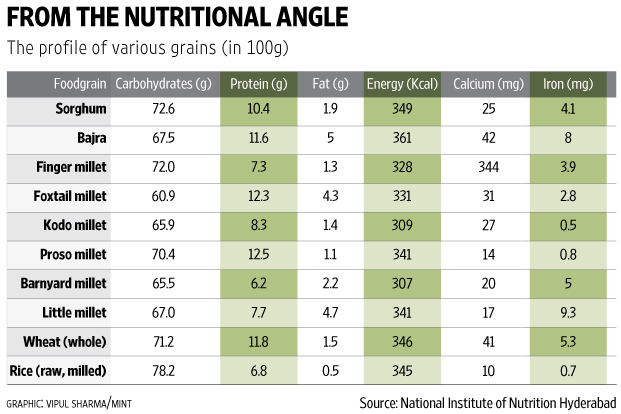
Here are some excellent facts of how Millets have been an amazing source of good nutrition:
- Millets are high in fibre, which slow the rate of digestion and keeps stomach full for a longer period of time. In a way they prevent from overeating and help in WEIGHT LOSS.
- The magnesium found in millets specifically relaxes the muscles of blood vessel and decrease blood pressure, thereby regulating HYPERTENSION. It also acts as blood thinner to prevent blood platelet clumping, thereby reducing the risk of STROKE and CORONARY ARTERY DISEASE (heart) and also indirectly reduces the severity of ASTHMA and MIGRAINES.
- Because of its high level of magnesium, millet is a great food for women who suffer from unbearable pain and cramps during their menstrual cycle. So Ladies, you already have a quick fix along with exercises.
- Millets increase insulin sensitivity for people suffering with DIABETES and also helps to control the sugar levels for non-diabetics especially type 2 diabetes.
- Being rich in fibre and phytonutrients, the combination is believed to reduce the risk of developing COLON CANCER and CROHN’s disease. Studies have also proven that it helps in lowering the risk of BREAST CANCER by 50%
- For those who are GLUTEN SENSITIVE, this makes millet a perfect food for them since it is completely gluten-free.
- Pregnant and lactating women are advised to consume Ragi in high amounts to increase the production of breast milk in their body. This enables the mother to feed the child for a longer period of time.
- The high amount of antioxidants present in millets fights free radicals present in the body which slows down the ageing process.
- Millets are high protein grains and contain an amino acid which slows down muscle degradation and helps to build leaner muscles. For people who have rapid muscle loss when skipping few days of exercise and for the older population, you might have to reconsider consuming millets.
- Insomnia and stress are common these days, millets can be our savior. It raises the serotonin level in the body which helps in reducing stress. Experts suggest a cup of millet porridge every night can help to get sound and peaceful sleep.

Millets are safe when consumed in a moderate amount As said anything in excess might turn poisonous stands for millets too and can have adverse effects. Millets contain a hormone which inhibits Iodine uptake and utilization by the thyroid gland. Deficiency of Iodine leads to Goitre wherein the thyroid gland enlarges and causes dry skin, anxiety, depression and slow thinking. Hence people with thyroid problems need to restrict their consumption of millets. In short, MILLETS are not advisable for people with THYROID issues.
The right cooking technique and a good recipe can lift any ingredient. It is easy to include millets in the diet as they are very versatile. The key to eating right lies in food diversity, not becoming a victim of a food fad.
Millets were part of our grandparents’ diet, it’s only in the past few decades that their consumption has reduced. We need to embrace the goodness of millets. Fortunately, it is readily available for us. For those of you who thought that millet was just bird food, it is actually also a power food for us and I hope the article has justified it.