
Last year, seven out of ten family offices wrote a check directly into a private company. Not into a fund. Not through a manager. Direct. The 2025 Global Family Office report confirms it, and Goldman Sachs data shows that nearly 40% plan to put even more capital into private and public equity this year. The appetite for private markets has never been higher. The infrastructure to support that appetite has not caught up.
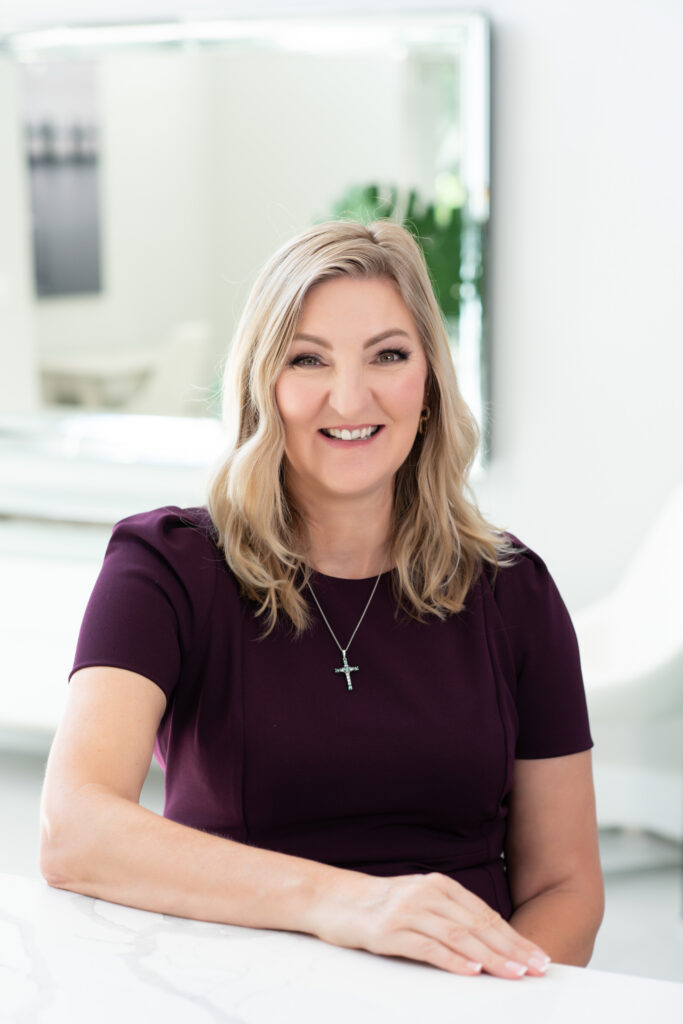
That gap — between enthusiasm and process — is where fortunes quietly disappear. Susan Lindique, founder and CEO of Avestics Group, a woman-led and woman-owned fund management firm built around alternative assets, has seen it up close more times than she can count. As a chartered accountant and chief investment officer of her own single family office, she has personally raised, invested, financed, or managed more than a billion dollars across more than a hundred private acquisitions. When she talks about evaluating a private deal, it is not a warning from the sidelines. It is hard-won knowledge from someone who has put her own capital on the line at scale.
Why Families Are Bypassing Fund Managers and Going Direct
The shift to direct investing did not happen by accident. According to Susan Lindique, three fundamental things changed in the marketplace that made this movement inevitable.
First, families ran the numbers. The traditional 2-and-20 fund model — where managers charge a 2% management fee and take 20% of returns — has cost investors dearly. Lindique is direct about it: families realized they were giving away nearly a third of their portfolio returns to fund managers. Once they did the math, the decision to go direct became obvious.
Second, access changed. Fund managers used to control exclusive deal flow. Founders brought opportunities to them because that was where the capital lived. That dynamic has shifted. Today, deal flow comes directly to family offices because the market has recognized where patient capital actually sits. Founders want families on their cap stack precisely because family capital does not come with the same pressure timelines that institutional funds impose.
Third, and perhaps most overlooked, the families themselves have changed. As Lindique puts it, families are fundamentally people who start businesses, operate businesses, and build businesses. A founder seeking investment understands instinctively that a family office investor gets what it takes to build something from the ground up. That shared language matters enormously in private markets.
An Overflowing Inbox Is Not the Same as Good Deal Flow
The irony in private investing is that having too many opportunities can be just as dangerous as having too few. A 2025 BlackRock survey found that the number one thing holding families back from greater private market exposure is not capital — it is the sourcing of quality opportunities. Yet most of those same families are drowning in pitch decks.
Susan Lindique’s answer is both simple and demanding: before looking at a single deal, define your investment thesis with precision. At Avestics Group, the focus is clear — infrastructure, data centers, energy, and cutting-edge technology in AI, blockchain, digital assets, robotics, and industrial sectors. Biochemical and medical are off the table entirely. That clarity is not a limitation. It is a filter.
“The moment that you are clear on what you want to invest into,” Lindique explains, “your inbox will all of a sudden disappear.” The deals that do not fit your thesis stop demanding attention because you have already decided they are not for you. Lindique advises families to stay in their lane — if you know real estate, stay there; if you know industrial, stay there — and only expand into new territory when you bring in someone with exceptional expertise in that space.
The Six Assumptions Every Private Check Makes
When a family writes a five-million-dollar check into a Series B company, they are quietly making six enormous assumptions. Susan Lindique walks through each one, explaining exactly how she verifies them — and why skipping any one of them can cost years of returns.
The first is financial projections. Lindique is emphatic: you never pressure-test projections in isolation. What matters are the underlying assumptions behind those numbers. Understanding where a founder is today, where they expect to be in five or ten years, and whether that trajectory is genuinely realistic requires knowing the industry well enough to call out what does not add up. That is yet another reason she returns to the investment thesis — when you know your sector, you can quickly determine whether someone is onto something real or simply riding a trend.
The second is the competitive moat. Every founder claims to have one. Lindique’s method is to go directly to the marketplace — talk to customers, identify competitors, and ask the hard question the founder often will not: who else is doing this? If a founder tells her they have no competitors, she pushes back immediately. “Maybe you live in a world that doesn’t exist,” she tells them, “because every single person has a competitor.” Real conversations with real customers reveal whether a competitive advantage is genuine or constructed.
The third is management team execution. A founder alone cannot scale a business. Lindique looks carefully at who is behind the founder — their experience, their years in the field, what each person brings to the table. If there is no team yet, she asks who they are planning to bring in and what expertise those people will contribute. Backing a founder means backing the whole human infrastructure they are building around themselves.
The fourth is the cap table and governance. These two elements, Lindique says, are among the most critical in any deal. She wants to know who else is on the cap table, how much dilution has already occurred, and whether there is enough equity left in the deal to make it worthwhile. Governance questions follow closely — legal compliance, regulatory positioning, and what it would actually take to bring a new financial or digital product to market.
The fifth is the regulatory environment. Lindique weights this factor as heavily as 80% in some cases. If a business operates in a heavily regulated space and leadership has not fully accounted for compliance requirements, a single regulatory development can kill the entire business — and the investment along with it. She uses biomedical as her clearest example: companies can spend a decade in clinical trials and have the entire project terminated by a regulatory body at the finish line.
The sixth is the exit strategy. This is where Lindique loses patience the fastest. She hears “IPO or acquisition” constantly. Her response is always the same: tell me the details. What strategic partnerships have you already built? What does your path to an IPO actually look like? She points to one example from the market: a well-known company that was private for 24 years before going public. Exit timelines in private markets are not projections. They are possibilities — and liquidity risk is the one risk that can quietly sink an entire portfolio.
“Building portfolio up one by one, step by step is a very wise thing — and that is the difference by really building wealth and long-term legacy compared to somebody who’s just going to invest and never even know what they’re investing into. That’s the real difference.”
— Susan Lindique, Founder and CEO, Avestics Group
Why Liquidity Risk Does More Damage Than Any Bad Deal
Of all the assumptions a private investor can get wrong, Susan Lindique believes illiquidity does the most lasting damage — not because of the loss itself, but because of what the locked capital prevents.
She recounts a conversation from a trip to Silicon Valley that stayed with her. She was introduced to someone running a fund that bought secondaries — venture capital positions from other funds that needed an exit. She asked how long that original fund had been in its first position. The answer stopped her cold: fourteen years, with no exit, and another five to seven years expected before any liquidity. The capital would be locked for close to two decades.
“I think they must be absolutely mad,” Lindique says plainly. Capital that cannot move cannot compound elsewhere. It cannot seize a better opportunity. It cannot respond to a changing market. The invisible cost of illiquidity is not just the time it takes — it is every other investment you could not make because the money was already committed.
Her framework for managing this risk is not complicated, but it requires honesty. Know your own exit timeline. Know how long you can genuinely afford to wait. And before you invest, make peace with the possibility of loss. “With any investments, make sure that if you lose your money tomorrow, you have to be good with that,” she says. No one predicted COVID. The framework you build before a crisis is the only protection you have when one arrives.
The Tax Layer Most Families Miss Entirely
Private portfolio management carries a layer of complexity that the fund model quietly absorbed — and that direct investors often discover too late. Susan Lindique spends significant time working through tax implications before any deal closes, and her advice is precise.
The tax treatment on a private investment changes depending on where the investor is located, where the company operates, what structure the investment uses, and what entity type holds the position. A US investor putting capital into a US company faces a different tax reality than an investor based in Europe, Australia, South Africa, or Asia. Layered on top of geography are entity structures: whether the investment is held personally, through a company, through a trust, or through a self-managed superannuation fund, each carrying its own implications for what comes out at the end.
Lindique’s habit is to model six or seven different tax scenarios for any significant deal before committing. The exercise is not about finding loopholes. It is about answering a single, honest question: after everything is accounted for, what is the net dollar I actually receive? The answer sometimes changes whether a deal makes sense at all.
How Focus and AI Replace the Institutional Team
A common fear among families going direct is that doing this properly requires a full institutional infrastructure: sourcing staff, due diligence analysts, a data team, a tax team, and the overhead that comes with all of it. Susan Lindique says that fear is outdated.
The rise of AI has fundamentally changed the calculus. Properly deployed, AI can give a small, focused team ten or twenty times the output they could achieve manually. It can track deal flow, monitor market dynamics, flag geopolitical shifts that might affect a holding, surface competitor activity, and build the kind of dashboard that used to require a whole floor of analysts. The key word, Lindique emphasizes, is properly. Most people use AI the way they use a chat tool. The families who use it as an operating system for their investment process will have a meaningful structural advantage.
Her other prescription is focus — not as a nice idea, but as a competitive strategy. She draws on a principle she encountered in the biography of Elon Musk: do not try to do a hundred things. Do a few things exceptionally well. “You don’t need to have 100 deals that you invest into to make a good fortune,” she says. A handful of high-conviction, deeply researched, institutionally sourced investments built over time will outperform a deal collection ten times its size.
Process Is the Only Thing That Lets You Sleep
Susan Lindique closes every conversation about private investing by coming back to the same place. Not returns. Not deal flow. Sleep.
When a family moves from collecting deals to running a real process — with a defined thesis, systematic due diligence, an honest understanding of liquidity, and the right technological infrastructure to monitor what they own — something shifts. “You know that the deals that you invest into, you can go to sleep very easily because you don’t have to worry that you’re going to lose your money,” she says. The peace that comes from that is not a soft benefit. It is a signal that the process is working.
That process also opens the door to what Lindique believes private investing is ultimately about: legacy. Not returns on a spreadsheet, but something that lasts and means something. Whether that means generational wealth, impact investing, or supporting causes that matter, the discipline of a real investment framework is what makes any of it possible. “That’s what it’s all about,” she says. “Any family that’s building up anything meaningful will tell you it’s all about legacy.”
Susan Lindique has made more than a hundred private acquisitions with her own capital on the line. The lesson she returns to every time is the same one that separates the families who build wealth from the ones who simply accumulate deals: process matters more than the pitch.